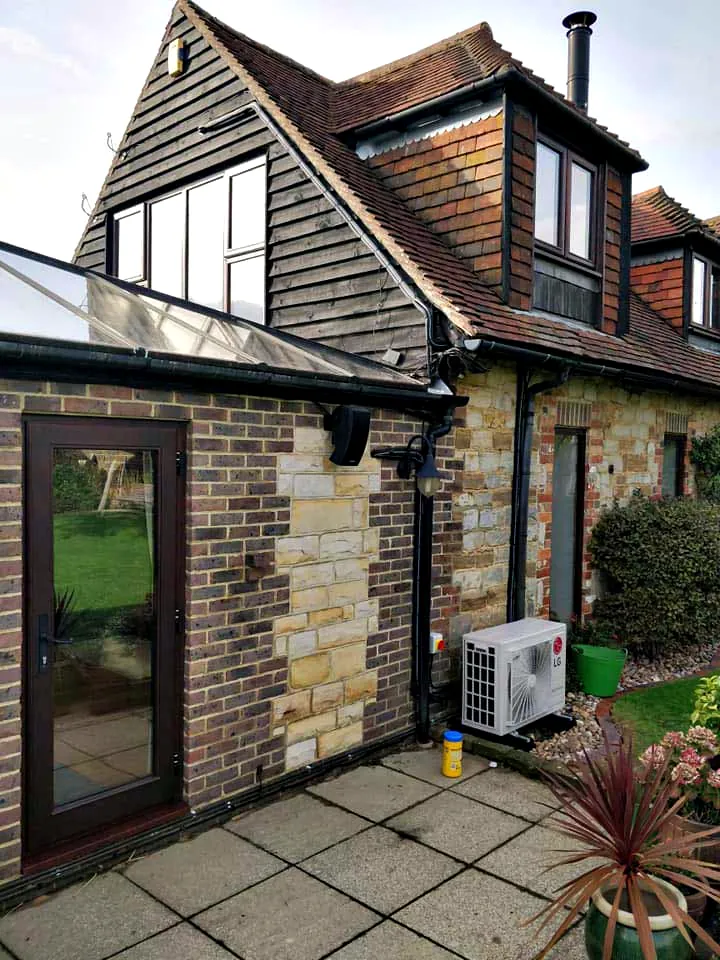
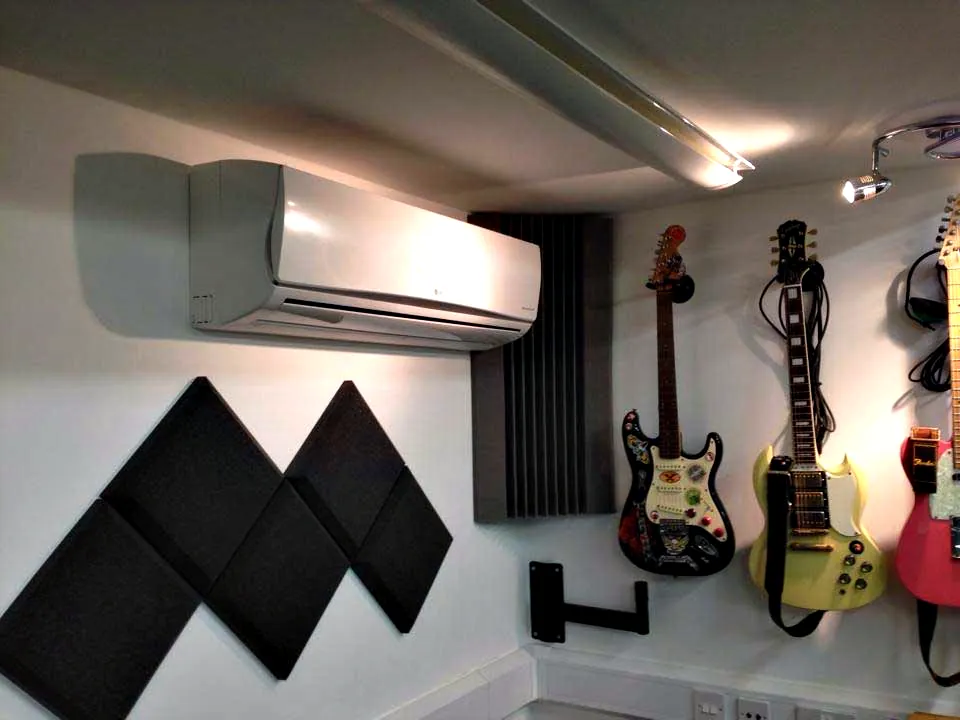
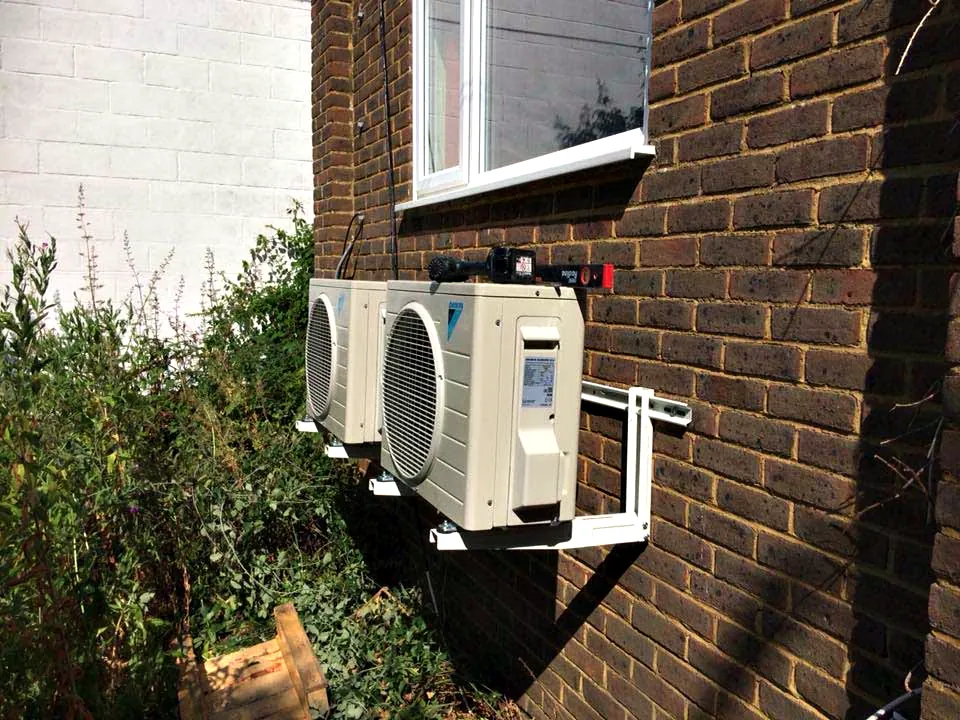
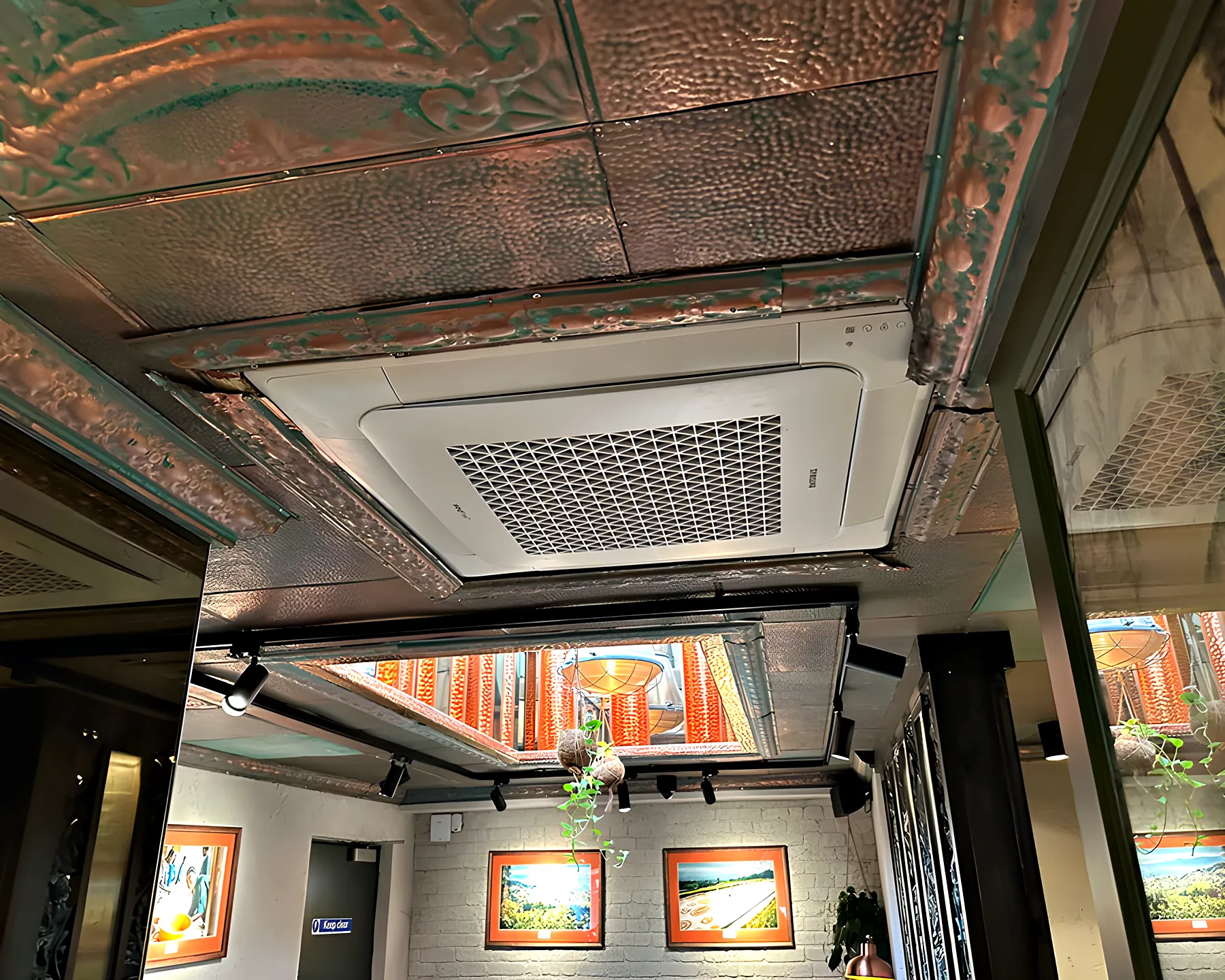
From the walled city to the harbour villages, we survey and install air conditioning in Chichester homes, shops and offices, planning each outdoor unit and pipe route around the building.
REFCOM F-Gas CertifiedMHI 3 Diamond DealerEvery Major Brand ServicedFamily Run Since 2010Free No Obligation QuotesOut Of Hours EngineersREFCOM F-Gas CertifiedMHI 3 Diamond DealerEvery Major Brand ServicedFamily Run Since 2010Free No Obligation QuotesOut Of Hours Engineers
Air Conditioning In Chichester
Chichester's Buildings and What They Mean for Air Conditioning
Chichester is a cathedral city and the county town of West Sussex, and the council's own conservation area appraisal counts it among the country's best preserved historic cities. Inside the city walls, which date from the end of the 3rd century AD and still stand, North Street, East Street, South Street and West Street meet at the Market Cross of 1501 and divide the old city into four quadrants. For anyone planning air conditioning here, that history shapes the job as much as the size of the room does.
Around the Market Cross most buildings are Georgian in character, built of red brick or finished in render, under steep roofs of handmade clay tiles. Older walls across the city use local brick, flint from the Downs and greensand stone, all of them solid and none of them forgiving of a careless core hole. In The Pallants the terraces stand right on the pavement, so the front of the house is rarely the place for an outdoor unit, and the route the pipework takes matters as much as the unit itself.
JAC Air Conditioning Ltd surveys and installs air conditioning in Chichester from our Sussex office in Horsham. Jay and Oscar, our engineers, look at the walls, the yard or garden, the roof void and the way pipework could travel before they price anything, and we check the planning position before we drill. The quotation that follows is free, written down and names the units it covers.
Each part of the city calls for a slightly different approach, mostly because of what the walls are made of and how much space there is behind the house.
01
Houses Inside the Walls
In The Pallants, North Street, West Street and the other streets of the quadrants, most houses date from the 17th and 18th centuries and are built of red brick, sometimes with blue headers, with sash windows, fine doorcases and steep clay tile roofs. In The Pallants the terraces rise two or three storeys from the back of the pavement with no front gardens. Many of these houses are listed, so an outdoor unit or new pipe route may need listed building consent as well as planning permission. The unit usually goes into a rear yard or courtyard out of sight of the street, with pipes following existing routes or mortar joints instead of new chases through old brick.
02
Late Georgian Terraces Outside the Walls
Somerstown, with Parchment Street, Cavendish Street and Washington Street, along with Franklin Place and the New Town around St John's Street, is made up of brick, flint or stuccoed terraces of two and three storeys. Franklin Place is one long two storey terrace of painted stucco under slate roofs. The fronts are narrow, so the outdoor unit normally goes at the back on a short, tidy pipe run, and solid walls of this kind need slow, careful core drilling. The whole area lies in the conservation area, so a unit that can be seen from the street may need permission.
03
Whyke, St Pancras and the Hornet
Whyke, the Caledonian Road area, St Pancras and The Hornet have mid to late 19th century terraces and pairs of semi detached villas in brick, flint and stucco, followed by larger Edwardian and early 20th century houses with gables, bays and porches behind low brick front walls. Rear gardens here give a quieter, hidden place for the outdoor unit, well away from the street elevation. Bay windows and decorated fronts are part of the character, so we keep pipework to the side or rear walls.
04
Newer Housing in the North West Quadrant
Off North Walls, and between Tower Street and Chapel Street, there is housing built in the 1950s and 1960s after older buildings were lost in wartime and later. Pipe routes through these newer walls are often simpler than in the Georgian terraces around them. The houses still fall inside the Chichester Conservation Area, so a unit placed where it can be seen from the street is worth checking first.
Historic Chichester
The Historic Building Route
Much of central Chichester lies within the Chichester Conservation Area, which holds a high concentration of listed buildings. These are the steps we take, in order, before an air conditioning unit goes near one.
01020304050607of 07
Step 01 of 07
Find Out Whether the Building Is Listed
Search the National Heritage List for England held by Historic England. If you are still unsure, Chichester District Council keeps the listed building descriptions for the district and can confirm.
Check for a Conservation Area and an Article 4 Direction
Much of central Chichester lies within the Chichester Conservation Area. Some conservation areas have Article 4 directions that bring smaller works under planning control, so we check with the council before any work begins.
Expect Listed Building Consent on a Listed Building
Historic England's advice is that air conditioning and comfort cooling are likely to affect a listed building's special interest, so listed building consent will usually be needed. Listing covers the whole building, inside and out, unless the list entry says otherwise.
In a conservation area an outdoor unit may need planning permission, so we check the position with Chichester District Council before anything goes up. A unit on show to the street is the part of an installation most likely to be questioned.
Chichester District Council offers a planning surgery and a written advice service before you apply. Where a listed building is affected, an officer from the Design and Conservation Team takes part.
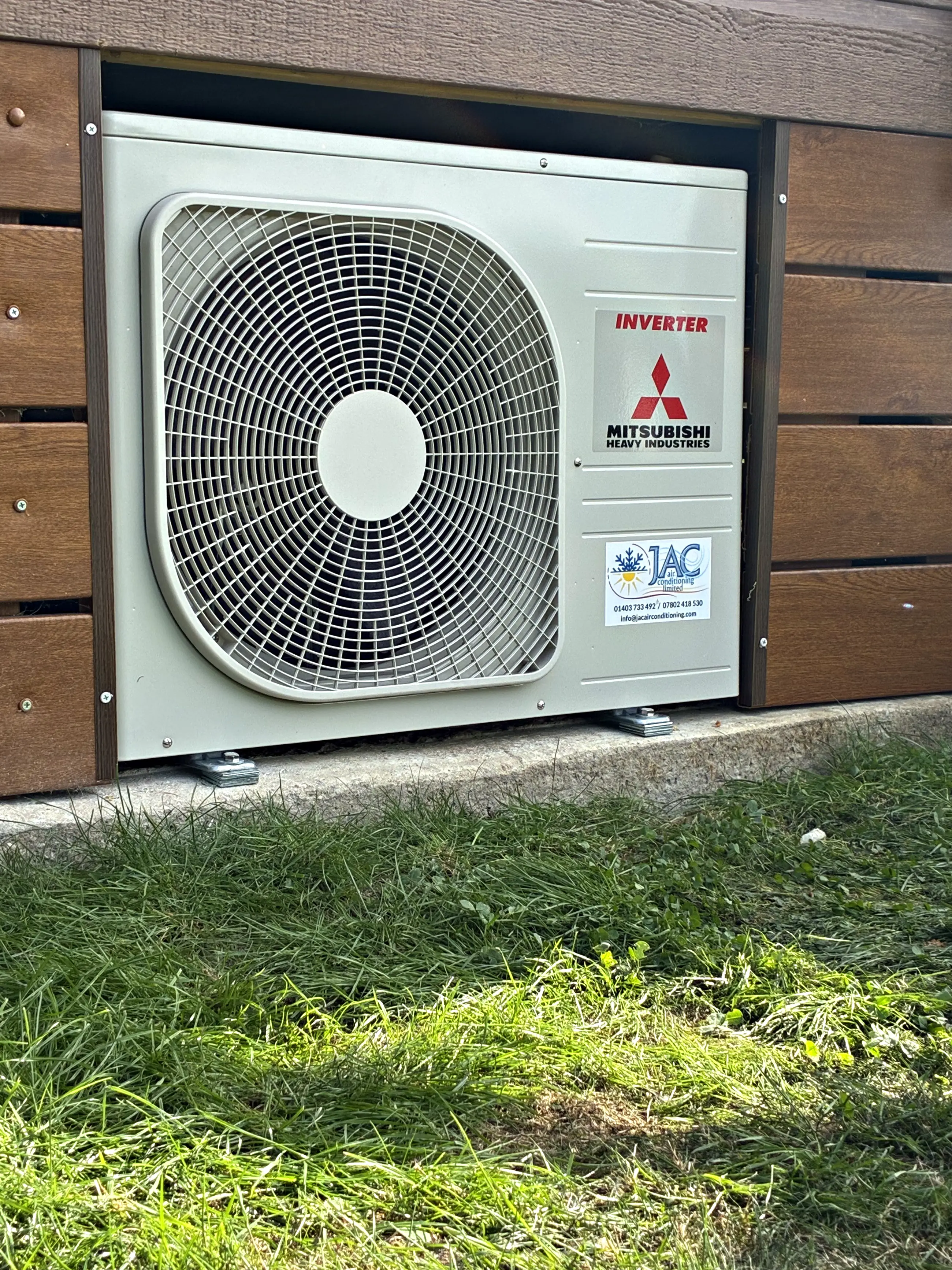
Historic England suggests screening, a plant room or a suitable colour to help an outdoor unit blend in, provided the airflow the manufacturer asks for stays clear and noise is considered. On a terrace that usually means a rear yard, courtyard or garden, out of view of the street.
Guidance from Historic England’s technical advice
Step 07 of 07
Keep the Work Reversible With Minimal Fixings
Reuse existing service routes, avoid cutting chases into old walls, use as few fixings as possible and fix into mortar joints, which can be repointed, rather than into brick or stone. Plan for the equipment to be removed one day without harm.
Keep scrolling to walk the routeThat completes the route
A guide to the published advice, not a legal assessment. We check with Chichester District
Council before any work on a listed building or in a conservation area, and we drill nothing until the answer is in.
The Systems We Fit in Chichester and Who They Suit
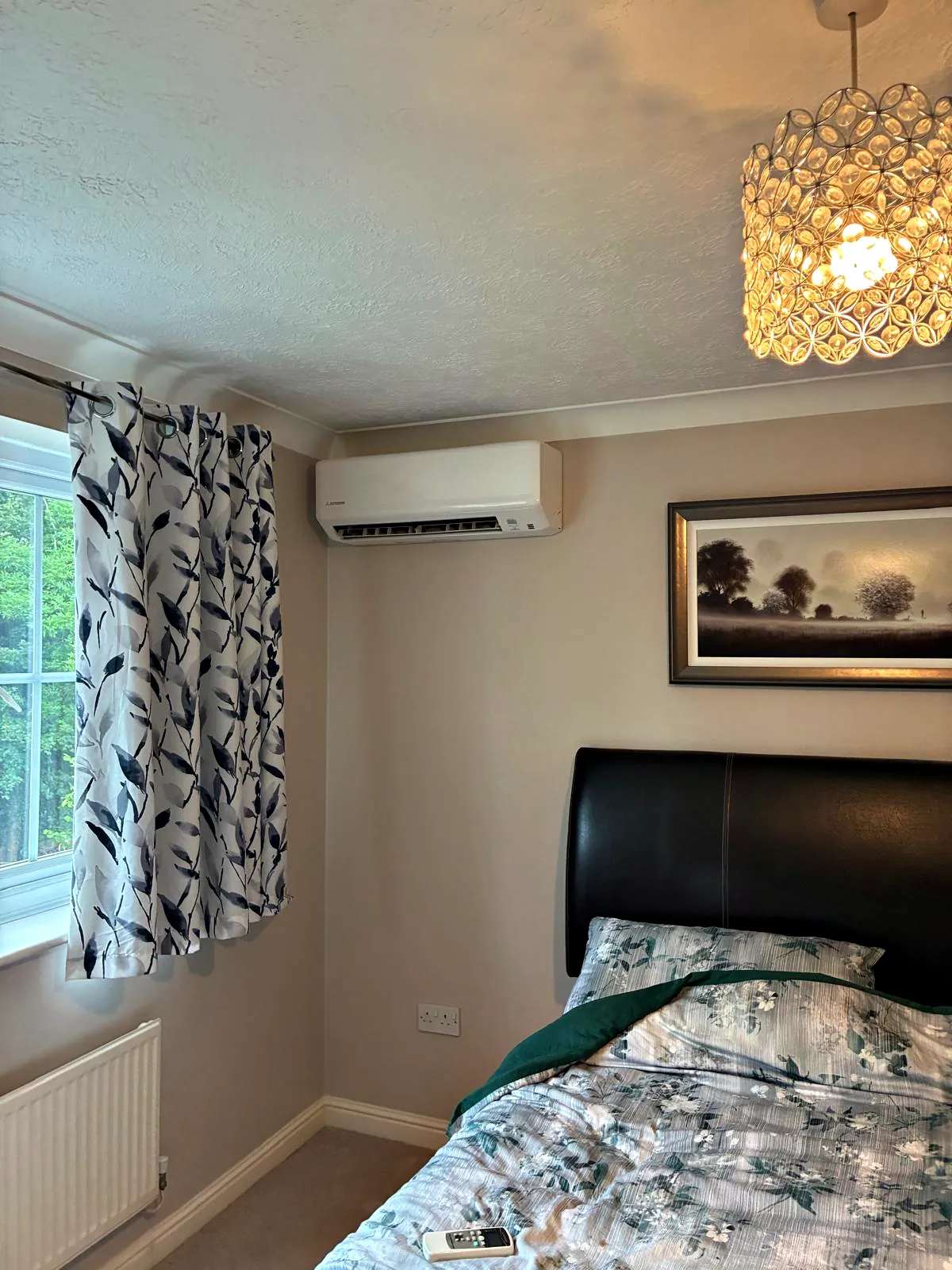
For a single bedroom or study, a wall mounted split is usually the neatest choice: one indoor unit high on an internal or rear wall, connected to one outdoor unit in the yard or garden. In a terraced house with several rooms to cool, a multi split lets two or more indoor units share one outdoor unit, which keeps the back of the house down to a single piece of equipment. Where a loft or ceiling void allows, a ducted system leaves only grilles in the rooms, which can suit a period interior where wall units would look out of place.
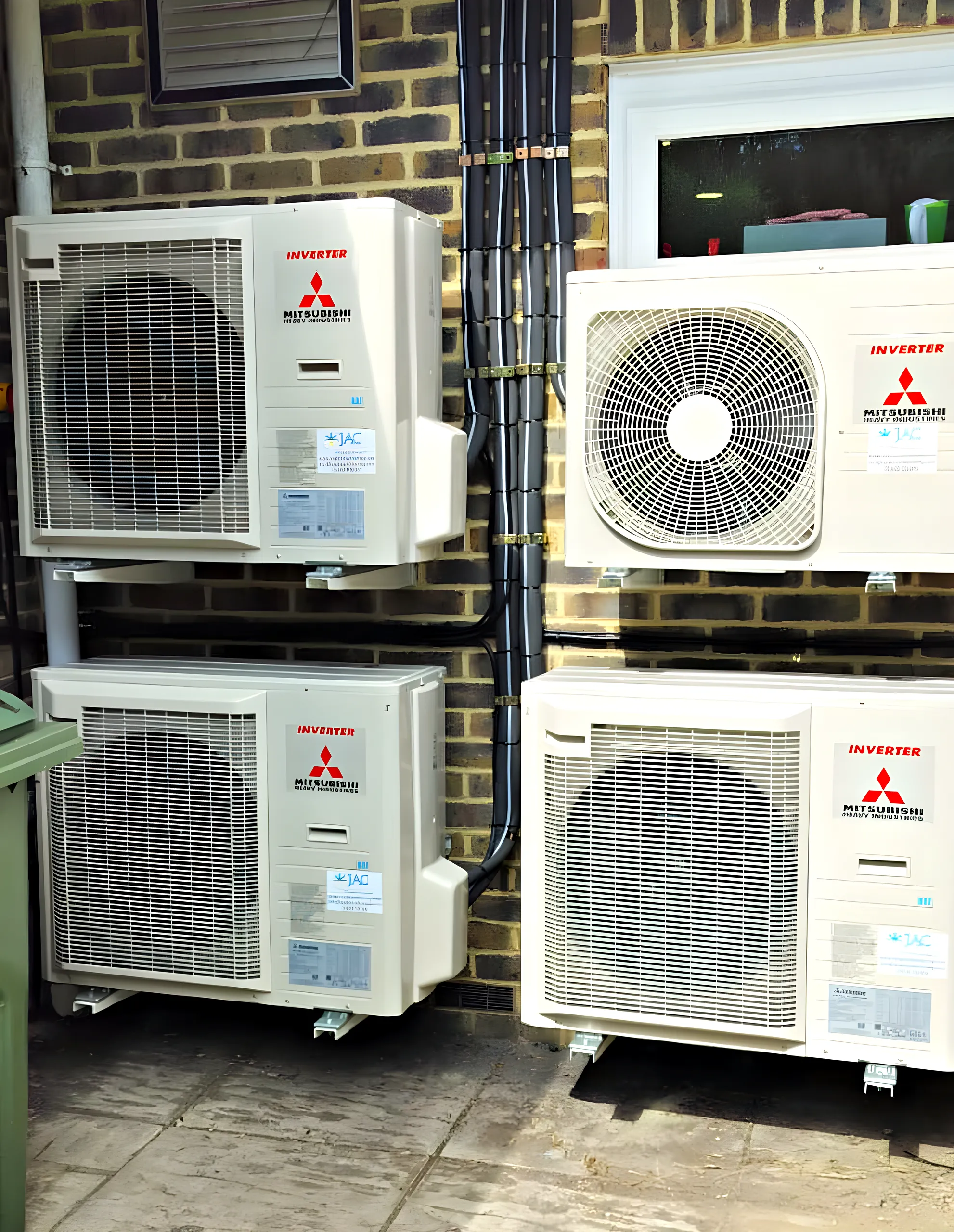
The split systems we fit for homes heat as well as cool, so it can take the chill off a north facing room in winter and keep a sunny top floor bedroom comfortable in summer. We install Mitsubishi Heavy Industries, Mitsubishi Electric, Daikin, Fujitsu, GENERAL, Samsung and LG, and we are a Mitsubishi Heavy Industries 3 Diamond Dealer. The choice of unit comes after the survey, once we know the room, the walls and where the outdoor unit can go.
The city sits on the flat coastal plain, with the South Downs as its backdrop to the north. South of the walls the River Lavant runs through culverts and ditches, and flood prevention works have reduced the periodic flooding that was once a regular feature of those parts of the city. In gardens in those parts of the city, we prefer a wall bracket or raised feet for the outdoor unit so it sits clear of the ground.
Single split for one room
Multi split for several rooms and one outdoor unit
Ducted system where a loft or void can hide it
Planning, Listed Buildings and the Chichester Conservation Area
Much of central Chichester lies within the Chichester Conservation Area, first designated in 1970 and extended several times since. Its character appraisal, revised and adopted by Chichester District Council in 2016, runs from the four quadrants inside the walls out to Whyke, Westgate and the university area around Oaklands Park. A separate conservation area surrounds the former Graylingwell Hospital to the north of the city. In any of these places, an outdoor unit on show to the street is the part of an installation most likely to be questioned.
The conservation area holds a high concentration of listed buildings, including two Grade I houses, Pallant House and John Ede's House, and a very high number of Grade II* buildings. Historic England advises that air conditioning and comfort cooling are likely to affect a listed building's special interest, so listed building consent will usually be needed. Listing covers the whole building, inside and out, unless the list entry says otherwise, so the indoor side of the work needs as much thought as the outdoor unit.
Some conservation areas also have Article 4 directions, which bring smaller works under planning control, so we ask the council before any work begins. Chichester District Council offers a planning surgery and a written advice service before an application, and where a listed building is involved an officer from its Design and Conservation Team takes part. The National Heritage List for England, held by Historic England, shows whether a building is listed, and the council can confirm if you are unsure.
On listed and historic buildings we plan the work so it can be undone later. That means reusing existing service routes, avoiding chases cut into old walls, keeping fixings to a minimum and fixing into mortar joints, which can be repointed, rather than into the brick or stone itself. Historic England also suggests screening, a plant room or a suitable colour to help an outdoor unit blend in, provided the airflow the manufacturer asks for stays clear and noise is considered.
Look up the building on the National Heritage List for England
Ask whether an Article 4 direction applies
Use the council's pre application advice
Keep the outdoor unit out of view of the street
Commercial Air Conditioning in Chichester
North Street, East Street and South Street are the city's principal shopping streets, and a large number of small independent retailers give the centre much of its character. These shops sit within the conservation area, so a ceiling cassette or wall unit for a sales floor has to be planned around the same listed building and conservation questions as a house. We schedule the noisier stages around opening hours and site the outdoor plant at the rear wherever the building allows.
The north west quadrant is mainly commercial offices, particularly County Hall, home to West Sussex County Council. Beyond the walls, the University of Chichester campus sits in the Old Somerstown and Oaklands Park area, where its original college building is now University House, and Chichester Festival Theatre in Oaklands Park, opened in 1962, is a Grade II* listed building. Offices, teaching rooms and venues each bring their own mix of cooling loads, opening times and access.
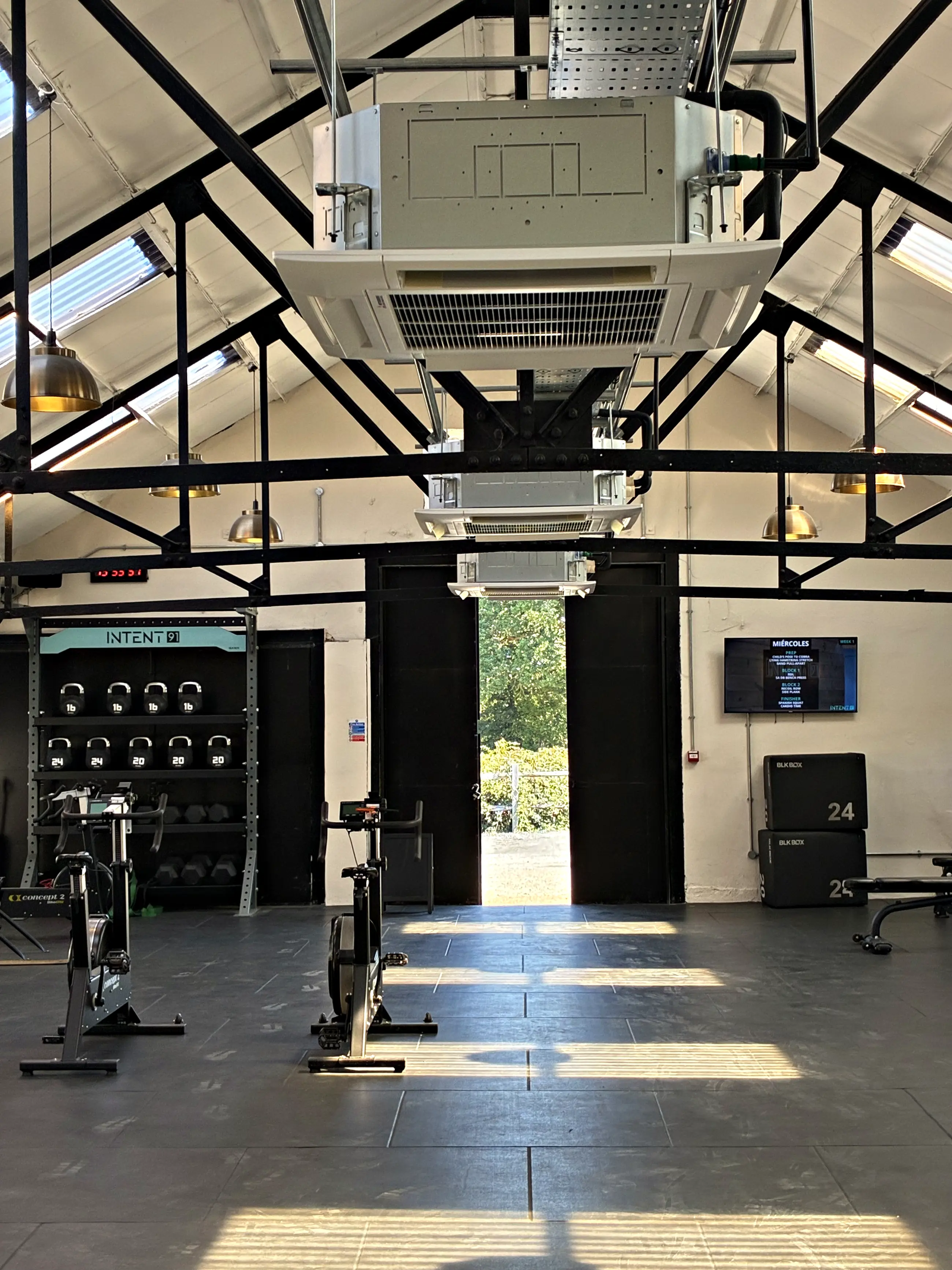
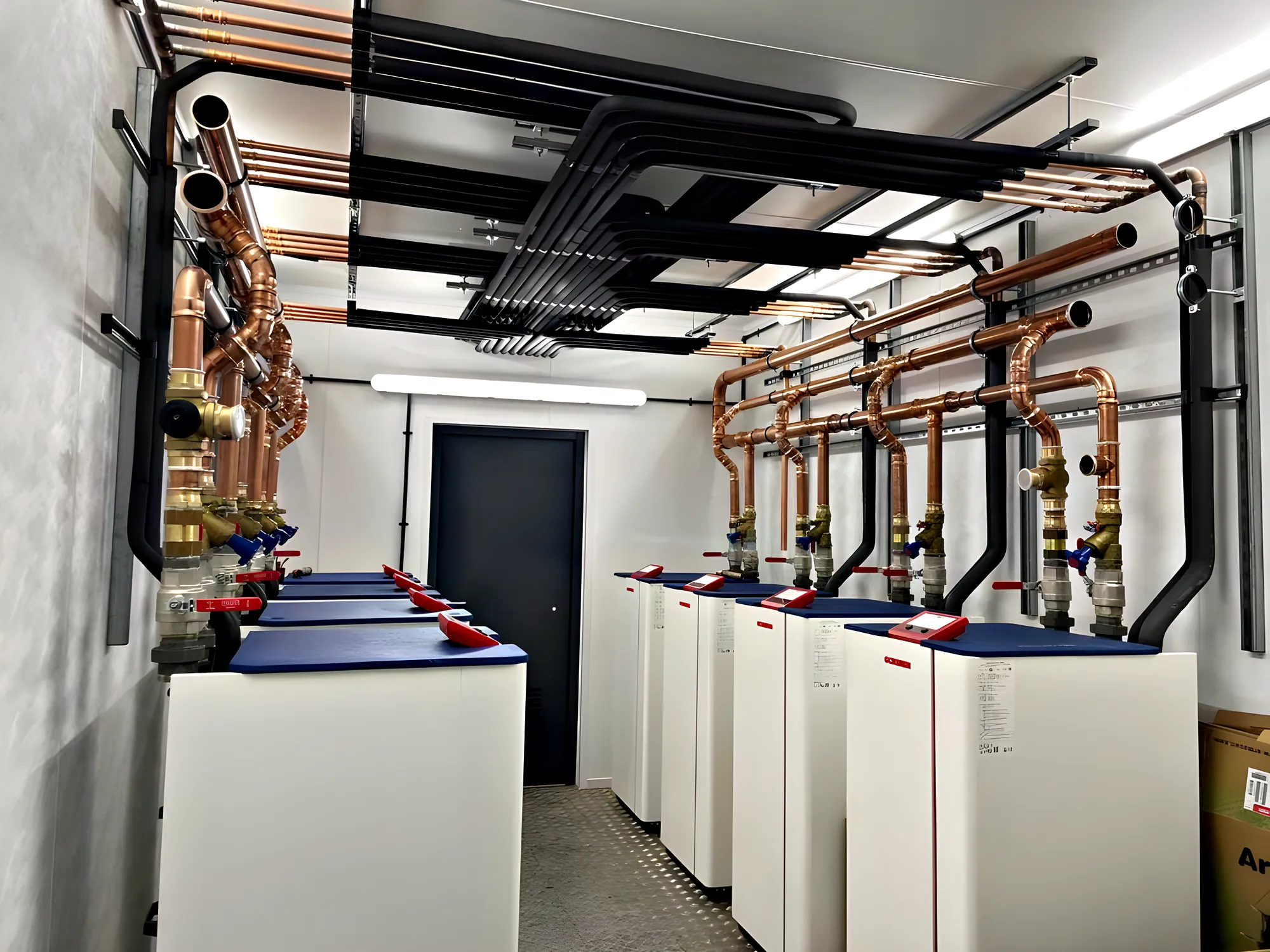
Just north east of the city, the parish of Westhampnett includes most of the Goodwood estate, with its golf courses, cricket club, motor racing circuit and airfield. For offices, hospitality, server rooms and other business premises around Chichester, we provide commercial air conditioning from the first design through to planned maintenance, including the F-Gas leak checks the law requires on larger systems, with the records kept for you.
Air Handling Refurbishment and Maintenance in Chichester
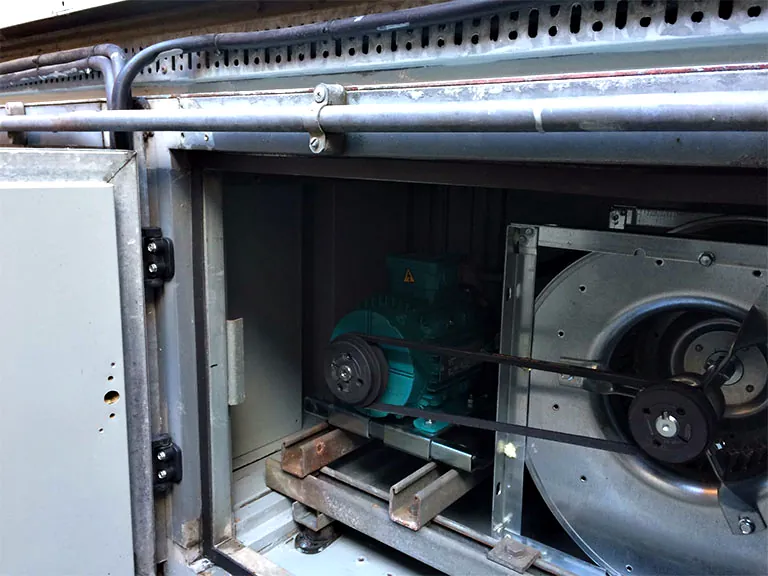
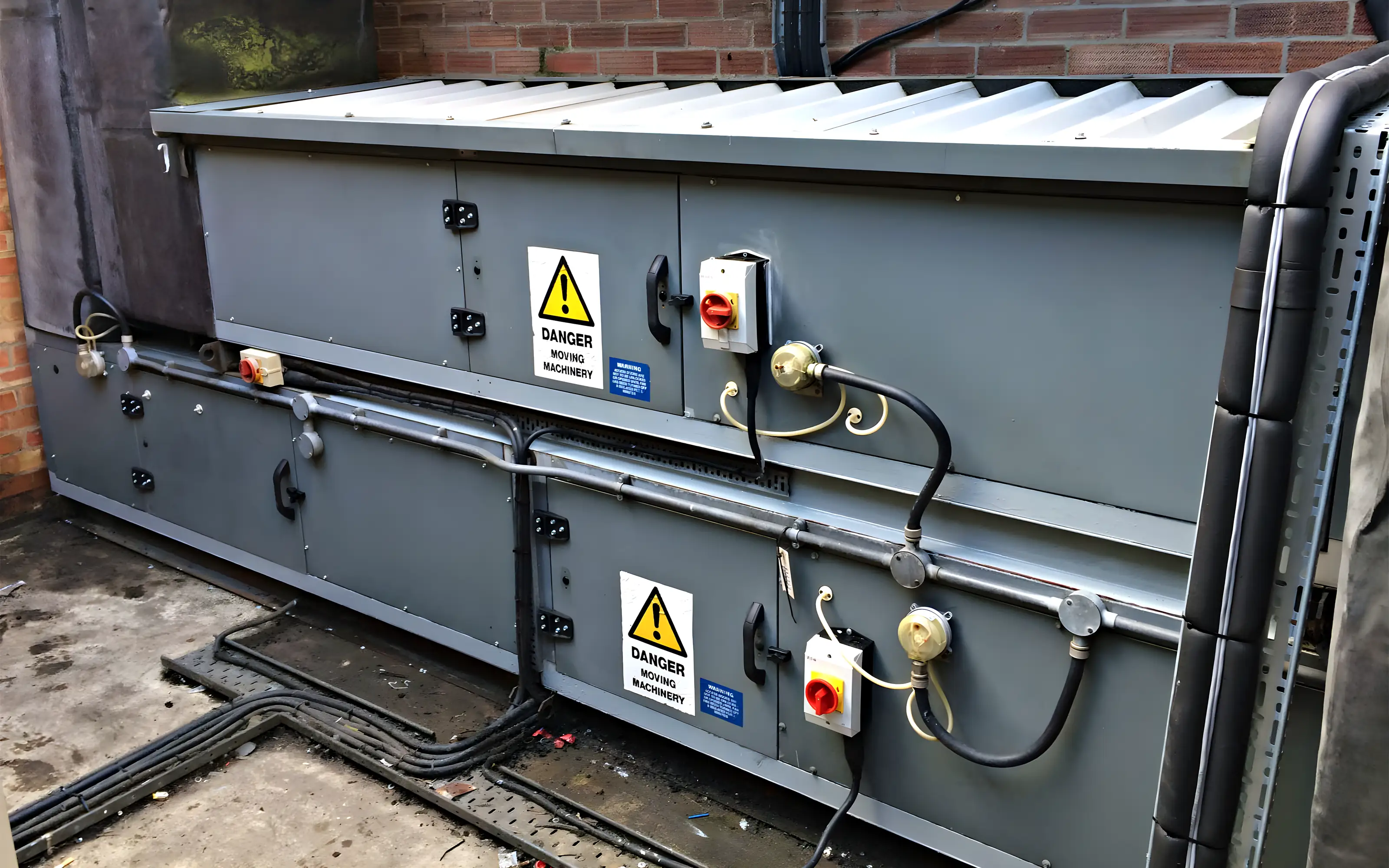
Teaching rooms, theatres and the larger offices of the north west quadrant are the kind of building where an air handling unit often supplies fresh air to many rooms at once, sometimes through a heat recovery section that warms the incoming air with the air going out. Air handling maintenance in Chichester keeps that exchange clean and balanced.
Inside the city walls a crane and a long shutdown can be hard to arrange, so air handling refurbishment in Chichester is often the practical choice. Commercial AC servicing in Chichester, for the shops on North Street, East Street and South Street, can share the same planned maintenance visits.
Visits and Servicing From Our Horsham Office
Chichester is just under 25 miles south west of our office on Worthing Road in Horsham, measured in a straight line, so a survey here is a planned visit booked through the office. Nicola arranges the date and time, and Jay or Oscar comes out to measure up, look at the walls and agree with you where each unit would go.
Once a system is running, air conditioning servicing keeps it efficient and keeps the manufacturer warranty valid. A service covers the filters, coils, condensate drain, fans, electrics, refrigerant pressures and controls, and you receive a written record after every visit. We service and repair every major brand, so an older system in a Chichester shop, office or house can be looked after too, even if someone else fitted it.
For a breakdown, ring the office on 01403 733 492 during the working day, or the engineers' mobile on 07802 418530 for emergencies and out of hours calls. All refrigerant work in Chichester is carried out under our REFCOM F-Gas company certificate, REF1019419, which is valid to 25 May 2028.
Nearby
Villages Around Chichester We Cover
We also visit the villages around the city, from the shores of Chichester Harbour to the parishes to the north and east.
FishbournePO19
Two miles west of the city, Fishbourne is home to Fishbourne Roman Palace, the largest known Roman residence north of the Alps.
BoshamPO18
A coastal village about two miles west of Chichester on Chichester Harbour, an Area of Outstanding Natural Beauty.
East LavantPO18
One of the villages of Lavant parish, about two miles north of the city, taking its name from the River Lavant.
Mid LavantPO18
Mid Lavant shares the Mid and East Lavant Conservation Area with its neighbour, so outdoor unit positions here deserve the same checks as in the city.
WesthampnettPO18
A pre Norman village a mile north east of Chichester with many listed buildings, among them the Saxon church of St Peter.
BoxgrovePO18
About three and a half miles north east of the city, just south of the A285 on the line of the Roman Stane Street.
TangmerePO20
Three miles north east of Chichester, home to the Tangmere Military Aviation Museum on the former RAF Tangmere site.
OvingPO20
A small village about two and a half miles east of the city, with Colworth, Drayton, Merston and Shopwhyke in its parish.
HunstonPO20
A parish on the B2145 road two miles south of Chichester.
DonningtonPO20
A small village on the B2201 two miles south of the city centre, whose parish reaches north into the Stockbridge area of Chichester.
ApuldramPO20
A small parish on the upper reach of Chichester Harbour about two miles south west of the city, with harbour access at Dell Quay.
North MundhamPO20
A village on the B2166 two miles south east of Chichester, with Runcton inside its parish.
What We Do Here
Our Services in Chichester
The same engineers on every job, from a single bedroom unit to a plant room.
Do I need permission to fit air conditioning to a listed house in Chichester?
It may well need listed building consent. Historic England's advice is that air conditioning is likely to affect a listed building's special interest, and listing covers the inside as well as the outside unless the list entry says otherwise. Many houses inside the city walls are listed, so we check the list entry and speak to Chichester District Council before we drill. The council's pre application advice can include an officer from its Design and Conservation Team.
My terrace sits right on the pavement. Where would the outdoor unit go?
Usually at the back. Terraces in The Pallants and Somerstown have little or no space at the front, so the outdoor unit normally goes in a rear yard, courtyard or garden, out of view of the street. From there we plan a short pipe run into the room, following existing routes or mortar joints where we can, so the front of the house is left exactly as it is.
Is my house in the Chichester Conservation Area?
If you live inside or close to the city walls, there is a good chance it is, because much of central Chichester falls within it. The appraisal also takes in Somerstown, Whyke, The Hornet, St Pancras, Westgate and the university area around Oaklands Park. Chichester District Council publishes the conservation area details and the character appraisal, and we check your address against them as part of the survey.
Can you drill through flint and old brick walls without damaging them?
Yes, with care. Chichester's older buildings use local brick, flint from the Downs and greensand stone, and solid walls like these need slow core drilling with the right bit. Where the building is historic we prefer to reuse an existing opening or pass through a mortar joint, and afterwards we seal and make good the hole so it is neat and weathertight from both sides.
Do you cover the villages around Chichester, such as Bosham and the Lavants?
Yes. We visit Bosham, Fishbourne, Apuldram and Donnington towards the harbour, East and Mid Lavant to the north, and Westhampnett, Boxgrove, Tangmere, Oving, Hunston and North Mundham to the east and south. Bosham lies within the Chichester Harbour Area of Outstanding Natural Beauty, and Mid and East Lavant share a conservation area, so we look at the planning side there as carefully as in the city.
Can you install air conditioning in a Chichester shop without closing it?
In most cases, yes. We plan commercial installations around trading hours, so noisy work such as core drilling can be done before opening or on a quieter day. Shops on North Street, East Street and South Street sit within the conservation area, so we also look for an outdoor unit position at the rear or out of view from the street, and we check the planning side before we start.
If you would like air conditioning in a Chichester home, shop or office, call 01403 733 492 or email info@jacairconditioning.com to arrange a survey. We will look at the building with you, explain where the units could go and what the planning position is likely to be, and send a free written price afterwards. About six miles away on the coast, our page on air conditioning in Bognor Regis covers the seaside town and its suburbs.