
Air Conditioning in Worthing, Flats and Houses
From stucco terraces on Marine Parade to interwar homes at the foot of the Downs, we plan air conditioning around who owns the wall, what the lease allows and how close the sea is.
A Seaside Town of Terraces, Villas and Flats
Worthing lies on the coastal plain between the English Channel and the South Downs National Park, with an almost continuous band of building along the shore. For hundreds of years it was a small mackerel fishing settlement, then it became a popular Georgian seaside resort and grew into a town in 1803. Great and Little Terraces on Marine Parade, from about 1785, are probably the earliest homes on the seafront, and Park Crescent, credited to the Regency architect Amon Henry Wilds in the late 1820s, was an attempt to give the town grand Regency compositions to rival Brighton and Hove.
Worthing also grew by taking in separate villages such as Tarring and Broadwater, and between the two world wars large areas of mostly two storey housing spread north to the foot of the Downs. An enquiry here might come from a stucco terrace facing the sea, a Victorian villa in Heene, a cottage in one of the old village cores or an interwar house on the slopes, and each of those buildings asks something different of an air conditioning engineer.
Above all, this is a town of flats. West of the town centre the properties along Marine Parade are mainly hotels and flats, on Crescent Road and West Buildings the large 19th century houses are mostly flats, and purpose built blocks range from the 1930s courts around Marine Gardens to modern developments on Marine Parade. In a flat the first questions are rarely technical: who controls the outside wall, what the lease says, and whether the building stands in one of the borough's conservation areas. We work through those with you before anyone plans a pipe route.
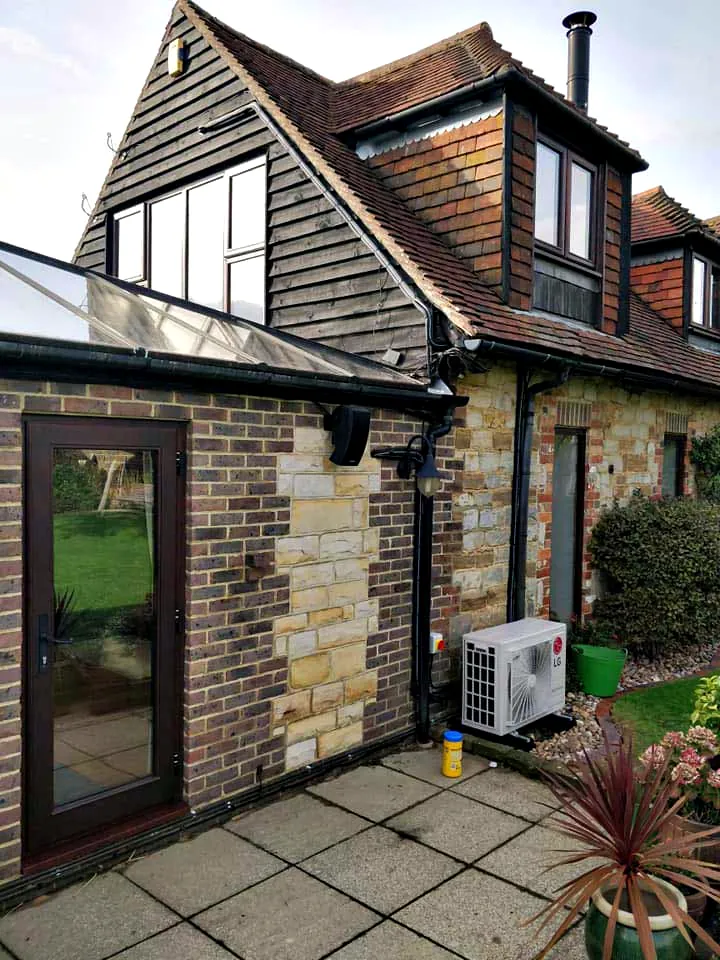
Worthing Buildings and Where the Units Go
The council's conservation area appraisals describe the town street by street, and each type of building suggests a different spot for the outdoor unit and a different way in for the pipework.
Stucco Terraces on the Seafront
Marine Parade, Park Crescent, Montague Place, Bedford Row, Liverpool Terrace and Heene Terrace have three and four storey terraces on narrow plots, with light painted stucco, bays or bows, timber sashes, railed balconies and slate roofs, and along the Marine Parade frontage most are now hotels or flats. Many are listed and these streets lie within conservation areas, so an outdoor unit on the sea facing front may need consent and is best avoided. We start with the rear or another position out of public view, which also keeps the unit away from the full salt air the front takes, and we speak to the council before any drilling.
Villas in Heene and Richmond Road
From 1884 the West Worthing Investment Company built detached and semi detached houses in Heene: stucco and slate in the north west, red brick with tile hanging and flintwork to the east, behind flint boundary walls. Richmond Road has white stuccoed villas of about 1845. These solid brick, stucco and flint walls frame sash windows, and where a house has been divided into flats the freeholder often owns or controls the outside walls, so check your lease: written consent from the freeholder is usually needed before any drilling.
The Old Village Cores
West Tarring keeps its medieval street pattern, with two storey buildings under steep roofs, several of them medieval timber frames later refaced in flint, brick or render, and white rendered 19th century houses behind low flint walls on Church Road. Salvington has old farmhouses, barns and flint cottages, now surrounded by bungalows. These cores are conservation areas with many listed buildings, and because a timber frame may stand behind the front, we locate the frame before choosing where the hole goes and put fixings into mortar joints wherever possible.
Interwar Blocks and Suburbs
Hastings, Romney and Winchelsea Courts went up around Marine Gardens between 1931 and 1937, in orange brick with rendered plinths and bands, flat roofs and projecting balconies, and Winchester Court on Heene Road (1935) keeps a uniform set of Crittall windows. Sea Lane in Goring is lined with detached houses, mostly of the 1930s. The Marine Gardens blocks sit in a conservation area designated in July 2024 whose appraisal treats the loss of original windows and the enclosure of balconies as harmful. Blocks like these are usually run by a freeholder or management company, so a unit on a balcony or facade usually needs the landlord's consent under the lease, as well as careful siting.
Seafront Blocks of Flats
Westbury Court in Heene is a pair of six storey flat roofed blocks, Woburn Court and Wykeham Court rise to four and five storeys, and plots on Marine Parade near Steyne Gardens have been redeveloped as larger modern blocks; Knightsbridge House has Marks and Spencer on its lower floors with sea facing flats above. In any of them, check your lease and ask the freeholder first. Where a block is a higher risk building, at least 7 storeys or 18 metres high with at least two homes, the work may need Building Safety Regulator approval unless an exemption applies, such as work done under a competent person scheme.
Flat or House, What Comes First
Answer two questions to see the route an installation usually takes in Worthing, from the lease and the council to the wall itself, and what we handle at the survey.
Question 1 of 2
Do You Own a House or a Flat?
On the Way
- 01
The Lease
A lease may ban alterations, allow them, or allow them only with the landlord’s written permission. A common clause is no cutting of external walls, which would rule out a new hole for the pipes, so check your lease before anything else.
- 02
Freeholder or Management Company Consent
Where consent is needed it is usually asked for in writing before work starts, with a description of the work, plans or photographs and the contractor’s details. The landlord may charge a fee if the lease allows, and consent may be needed even when planning permission is in place.
- 03
The Communal Wall
The outside walls of a block are often retained premises, owned or controlled by the landlord rather than by you. Alterations made without consent can make a flat harder to sell, remortgage or insure.
Question 2 of 2
Where Could the Outdoor Unit Sit?
On the Way
- 01
Seen From the Street
In a conservation area the council asks for equipment to be sited carefully, away from prominent places where it would be visually intrusive. A side or rear wall out of public view is usually the place to start.
- 02
The Wall
The Victorian villas of Heene and Richmond Road have solid brick, stucco or flint walls, and in old village cores such as West Tarring a flint, brick or render front may hide a medieval timber frame. We locate the frame before choosing where the hole goes, with fixings in the mortar joints wherever possible.
- 03
The Neighbours
An outdoor unit has a fan and makes some sound while it runs, so the position is chosen with the windows and gardens next door in mind. It is a courtesy worth making to tell your neighbours before the work.
Question 2 of 2
Is the House in a Conservation Area?
Your Route
A Flat, With the Unit on a Balcony
A balcony keeps the unit off the face of the building, but the wall behind it is still part of the block, so the landlord’s consent is usually needed for the hole and the position. The Marine Gardens appraisal treats the enclosure of balconies as harmful, so the siting is worth agreeing early.
- Read your lease for any clause on alterations or on cutting the external walls.
- Ask the freeholder or management company for written consent before any work starts, with a description of the work and photographs of the position.
- Agree the position on the balcony as part of the same consent, so the unit, the pipe route and the hole are all named.
- Ask the council whether planning permission is needed. The Planning Portal says the permitted development rights that cover many house projects do not apply to flats.
- Ask how building regulations are covered. gov.uk lists a fixed air conditioning system among the alterations that might need approval, which you do not need to get yourself when the work is done by someone registered with a competent person scheme.
- We look at the wall, the route for the pipes and where the outdoor unit can sit.
- We give you a description of the work and photographs of the position for your consent request, with our REFCOM F-Gas certificate number, REF1019419.
- We check with the council before we drill if the building is listed or in a conservation area.
- You get a written price with the units named on it.
- On a sea facing building we look first for a sheltered position at the side or rear, as one Mitsubishi Electric installation manual tells installers to avoid salty places such as the seaside.
Sources, in short: Leasehold Advisory Service, Planning Portal, gov.uk, Adur and Worthing Councils and Mitsubishi Electric. This is general guidance, not legal advice; your lease and the council have the final word, and the survey confirms the details.
Your Route
A Flat, With the Unit on the Roof
A flat roof can take a unit out of view from the street, but your lease should say who owns and controls the roof, and the pipes have further to travel to reach your flat.
- Read your lease for any clause on alterations or on cutting the external walls.
- Ask the freeholder or management company for written consent before any work starts, with a description of the work and photographs of the position.
- Ask who owns and maintains the roof, and whether access to it can be given for the work and for servicing.
- Ask the council whether planning permission is needed. The Planning Portal says the permitted development rights that cover many house projects do not apply to flats.
- Ask how building regulations are covered. gov.uk lists a fixed air conditioning system among the alterations that might need approval, which you do not need to get yourself when the work is done by someone registered with a competent person scheme.
- In a block of at least 7 storeys or 18 metres with at least two homes, building work may also need Building Safety Regulator approval unless an exemption applies (gov.uk).
- We look at the wall, the route for the pipes and where the outdoor unit can sit.
- We give you a description of the work and photographs of the position for your consent request, with our REFCOM F-Gas certificate number, REF1019419.
- We check with the council before we drill if the building is listed or in a conservation area.
- You get a written price with the units named on it.
Sources, in short: Leasehold Advisory Service, Planning Portal, gov.uk and Adur and Worthing Councils. This is general guidance, not legal advice; your lease and the council have the final word, and the survey confirms the details.
Your Route
A Flat, With the Unit on a Rear Wall
A rear wall out of public view is usually the place to start, on the seafront and in conservation areas especially, where the council asks for equipment to be kept away from prominent places.
- Read your lease for any clause on alterations or on cutting the external walls.
- Ask the freeholder or management company for written consent before any work starts, with a description of the work and photographs of the position.
- Check whether the building is in a conservation area; several near the front are, among them Marine Parade and Hinterland, Park Crescent and Steyne Gardens.
- Ask the council whether planning permission is needed. The Planning Portal says the permitted development rights that cover many house projects do not apply to flats.
- Ask how building regulations are covered. gov.uk lists a fixed air conditioning system among the alterations that might need approval, which you do not need to get yourself when the work is done by someone registered with a competent person scheme.
- We look at the wall, the route for the pipes and where the outdoor unit can sit.
- We give you a description of the work and photographs of the position for your consent request, with our REFCOM F-Gas certificate number, REF1019419.
- We check with the council before we drill if the building is listed or in a conservation area.
- You get a written price with the units named on it.
- On a sea facing building we look first for a sheltered position at the side or rear, as one Mitsubishi Electric installation manual tells installers to avoid salty places such as the seaside.
Sources, in short: Leasehold Advisory Service, Planning Portal, gov.uk, Adur and Worthing Councils and Mitsubishi Electric. This is general guidance, not legal advice; your lease and the council have the final word, and the survey confirms the details.
Your Route
A House in a Conservation Area
An outdoor unit may need permission here, and in certain conservation areas the council has made Article 4 Directions that remove the normal permitted development rights for alterations to houses; one covers Warwick Place in Steyne Gardens. Many of the seafront terraces on Marine Parade and Park Crescent are listed, and a unit on the sea facing front may need consent and is best avoided.
- Ask the council whether the unit needs permission, and whether an Article 4 Direction covers your street.
- If the house is listed, ask about listed building consent too.
- Look first at a rear or side wall out of public view.
- Tell your neighbours about the work.
- Ask how building regulations are covered. gov.uk lists a fixed air conditioning system among the alterations that might need approval, which you do not need to get yourself when the work is done by someone registered with a competent person scheme.
- We look at the wall itself, brick, stucco, flint or a frame behind, and plan the hole and fixings to suit.
- We choose a position out of public view where the house allows, and away from the windows next door.
- We check with the council before we drill if the house is listed or in a conservation area.
- You get a written price with the units named on it.
Sources, in short: Adur and Worthing Councils, gov.uk and Historic England. This is general guidance, not legal advice; your lease and the council have the final word, and the survey confirms the details.
Your Route
A House Outside a Conservation Area
A house that is neither listed nor in a conservation area usually raises fewer planning questions, but the position still matters, for the street and for the people next door. If you are unsure, the council can confirm.
- Choose a side or rear wall where the unit is not the first thing seen from the street.
- Tell your neighbours about the work.
- Ask how building regulations are covered. gov.uk lists a fixed air conditioning system among the alterations that might need approval, which you do not need to get yourself when the work is done by someone registered with a competent person scheme.
- We look at the wall itself, brick, stucco, flint or a frame behind, and plan the hole and fixings to suit.
- We choose a position out of public view where the house allows, and away from the windows next door.
- We check with the council before we drill if the house is listed or in a conservation area.
- You get a written price with the units named on it.
Sources, in short: Adur and Worthing Councils, gov.uk and Historic England. This is general guidance, not legal advice; your lease and the council have the final word, and the survey confirms the details.
Your Route
A House, Not Sure of the Designation
The council lists 27 conservation areas, from the seafront terraces to old village cores such as West Tarring, Broadwater and Salvington, and its conservation areas page names every one. We check before we drill.
- Look up your street on the council’s list of conservation areas, or leave it with us.
- Look first at a rear or side wall out of public view.
- Tell your neighbours about the work.
- Ask how building regulations are covered. gov.uk lists a fixed air conditioning system among the alterations that might need approval, which you do not need to get yourself when the work is done by someone registered with a competent person scheme.
- We look at the wall itself, brick, stucco, flint or a frame behind, and plan the hole and fixings to suit.
- We choose a position out of public view where the house allows, and away from the windows next door.
- We check with the council before we drill if the house is listed or in a conservation area.
- You get a written price with the units named on it.
Sources, in short: Adur and Worthing Councils, gov.uk and Historic England. This is general guidance, not legal advice; your lease and the council have the final word, and the survey confirms the details.
What We Fit in Worthing Flats and Houses
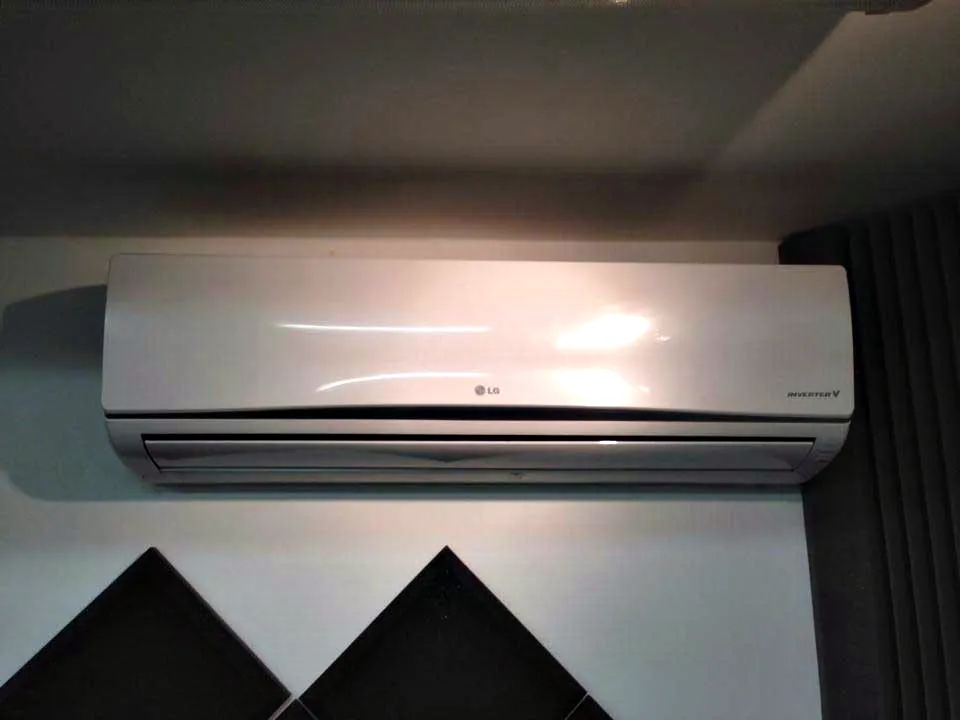
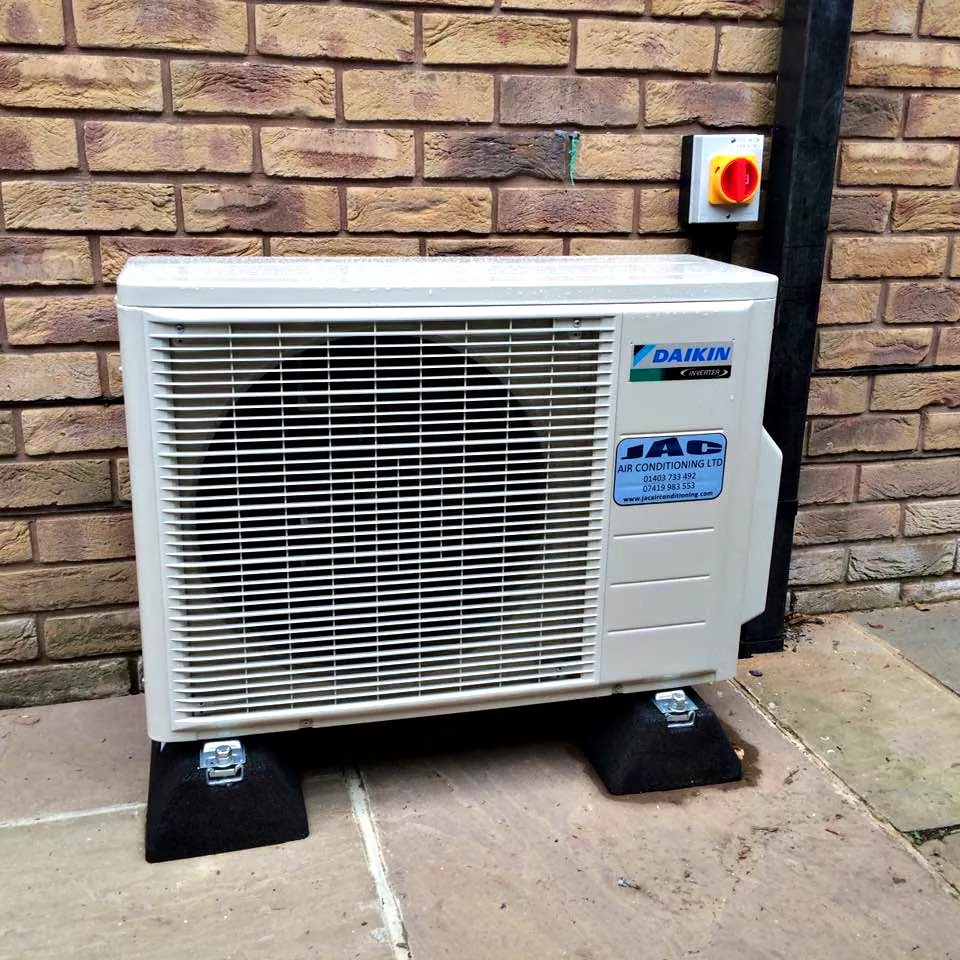
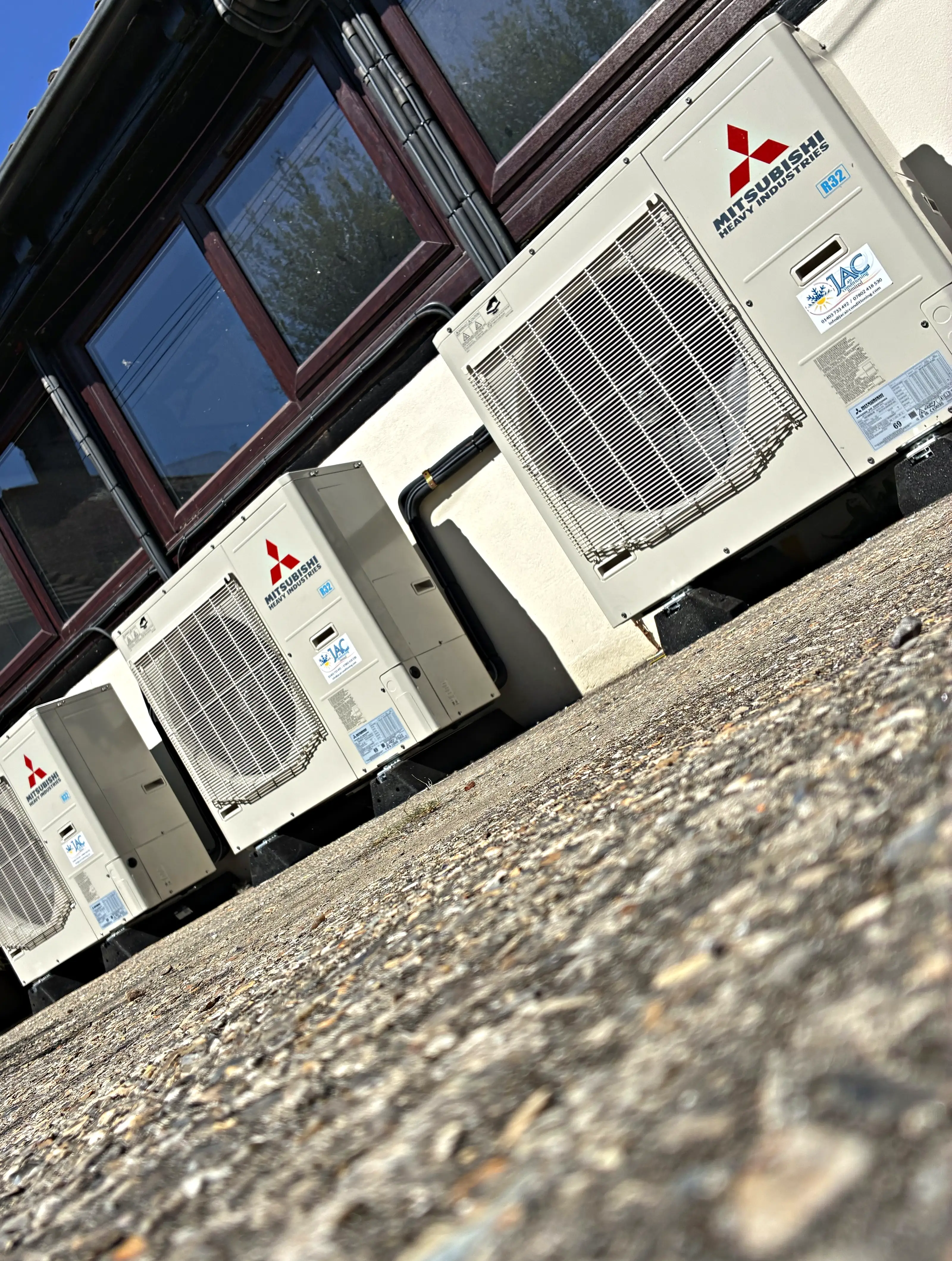
For most flats the answer is a wall mounted split system: a slim indoor unit, a short pipe run through one outside wall and a compact outdoor unit on a bracket or a balcony, wherever the lease and the building allow. When several rooms need cooling, a multi split serves them from a single outdoor unit, so there is only one position to agree with the freeholder.
Houses on the interwar estates and the larger villas have more room for choice, and a ducted system can suit a large open plan extension. The same system that cools a flat in July warms it in winter, and the Local Plan names higher temperatures, especially in summer, among the effects of climate change.
Leases differ, so we ask you to check yours early. A lease may ban alterations, allow them, or allow them only with the landlord's written permission, and that permission may be needed even when planning permission or building regulations approval is already in place. The Leasehold Advisory Service gives no cutting of external walls as a common restriction, and it notes that outside walls are often retained premises the landlord owns or controls.
Where consent is needed, it should be in writing before work starts; the landlord may charge a fee if the lease allows, and alterations made without consent can make a flat harder to sell, remortgage or insure. We can provide a written description of the work and photographs of the proposed positions to go with your request.
Sea air is the other Worthing question. The seafront has a shingle beach with sea defences south of the esplanade, and it is exposed enough that the pier closes in a Force 9 severe gale. One Mitsubishi Electric installation manual tells installers to avoid salty places such as the seaside, alongside places exposed to oil or steam. On a building that faces the sea we look first for a sheltered position at the side or rear, away from the full force of the salt air.
From survey to warranty registration, our air conditioning installation work covers sizing to the room, brazed and pressure tested pipework, a vacuum and commissioning, with a written quotation naming the units before anything is ordered. The gov.uk guidance lists a fixed air conditioning system among the alteration projects that might need building regulations approval, and we raise that at the survey too.
Conservation Areas, Listed Buildings and Flats in Worthing
Worthing Borough Council, part of Adur and Worthing Councils, is the planning authority for most of the town, and the South Downs National Park Authority covers the northern downland. The council lists 27 conservation areas, from Marine Parade and Hinterland, Park Crescent, Steyne Gardens and Montague Street near the front to Broadwater, West Tarring, Salvington, Durrington and Goring further out. Two of them, Castle Goring and Highdown, fall inside the National Park, so applications there go to the National Park Authority instead. Marine Gardens and environs was designated on 25 July 2024, the same day that Steyne Gardens was redesignated.
The council's heritage guide says people in a conservation area may need permission for alterations such as satellite dishes, and that equipment should be sited carefully, avoiding prominent places where it would be visually intrusive. In certain conservation areas, Article 4 Directions also remove the normal permitted development rights for alterations to houses; an existing direction covers Warwick Place in Steyne Gardens. For flats, the Planning Portal explains that the planning rules differ from those for houses and that the permitted development rights behind many common house projects do not apply, so if you are unsure, the advice is to contact the council.
The borough has more than 360 listed buildings, and Worthing Pier itself is Grade II listed. Fixing an outdoor unit, a bracket or a fresh pipe route to a listed building may require listed building consent, which is why we settle the position with the council before drilling and keep equipment out of sight from the street and the seafront.
- Your lease checked and the freeholder's consent in writing
- Outdoor units kept away from prominent, public positions
- The council asked before we drill a listed or conservation area wall
- Sheltered positions chosen away from the sea facing front
Shops, Offices and Seafront Venues in Worthing
The town centre grew into a sub regional shopping centre after the Second World War. Montague Street is now a pedestrianised shopping street, with the Guildbourne Centre of 1974 and the Montague Centre of 1990, which combines offices with a shopping arcade. Shops and offices in and around these streets need a steady temperature through the working day, and we plan installation and servicing visits around opening hours.
The Local Plan protects the main industrial estates and business parks, among them Broadwater Business Park, Northbrook Business Park, Northbrook Trading Estate, Downlands Business Park, East Worthing Industrial Estate, Goring Business Park, Meadow Road Industrial Estate and Yeoman Way, with Decoy Farm allocated to extend the main industrial estate. Worthing has a strong manufacturing base and a large service sector, and in 2018 its largest employment sectors were healthcare, retail, education, manufacturing and administrative services. Our commercial air conditioning work runs from ceiling cassettes in a single office to ducted plant across a whole floor and dedicated cooling for a server room.
Hotels and guesthouses are largely found around the seafront, which also holds the Dome, built in 1911 as the Kursaal and now a Grade II* listed cinema, the Lido of 1925, the Pier North Pavilion of 1926 and the Connaught Theatre. On listed and seafront buildings the same questions of consent and salt air come up as for flats, simply on a larger scale.
Where a business runs several systems, a planned maintenance contract brings servicing and F-Gas leak checks under one agreement and keeps the paperwork on your behalf. A system holding 5 tonnes CO2 equivalent or more, unless it is hermetically sealed and under 10 tonnes, needs a leak check every 12 months, or every 24 with automatic leak detection, and more often once it reaches 50 tonnes. Only a certified company may work on its refrigerant circuit, and our REFCOM certificate, REF1019419, is valid to 25 May 2028.
Air Handling Maintenance for Worthing Business Parks
Manufacturing units and offices on estates such as Broadwater, Northbrook and Goring business parks often run an air handling unit for fresh air alongside their air conditioning. Air handling maintenance in Worthing puts those units on a schedule, with the filters changed before they block and the airflow tested so the far end of the building still gets its share.
For a floor that has changed use, air handling refurbishment in Worthing can reset the airflow inside the existing unit, without the cost of a full replacement. Shops in the Montague Centre and venues along the seafront can add commercial air conditioning servicing in Worthing to the same planned maintenance contract.
Worthing Visits From Our Office in Horsham
Worthing lies south of our Horsham office, on the far side of the South Downs. Jay and Oscar, our engineers, look after every Worthing job from the first survey to any later repair, while Nicola in the office sets up each visit on 01403 733 492; for an emergency or out of hours, the engineers can be reached directly on 07802 418530.
An outdoor unit near the sea works in harsher conditions than one inland, so regular servicing counts for more on the coast. Each air conditioning servicing visit goes through the indoor filters and both coils, the condensate drain, fan motors, wiring, refrigerant pressures and controls, with a written record left afterwards; a regular service also keeps the manufacturer warranty valid. On coastal properties we look closely at the outdoor unit every time.
The coastline is at risk of tidal flooding and parts of the seafront are in Flood Zone 3, so close to the front we keep outdoor units up off the ground, on a wall bracket or a stand, rather than on a ground level pad. For a second home or business further east, see our page on air conditioning in Brighton, which looks at the city's own buildings.
Villages Around Worthing
Our Worthing visits reach along the coast and up onto the Downs, including villages just over the borough boundary in Adur and Arun.
- Goring by SeaBN12
Goring Hall, a Grade II listed red brick mansion first designed by Charles Barry and now a hospital, gives its name to one of Goring's two conservation areas.
- FerringBN12
A coastal village to the west, kept apart from Goring by the Goring to Ferring Gap, one of the borough's Local Green Gaps.
- West DurringtonBN13
A large greenfield site here has provided a significant amount of Worthing's new housing since 2006.
- High SalvingtonBN13
Its windmill is one of the important heritage sites named in the council's conservation and heritage guide.
- PatchingBN13
A small village on the southern slopes of the Downs inside the National Park, north of the A27 and a quarter of a mile from Clapham.
- ClaphamBN13
A rural village on the downslopes of the National Park, next door to Patching.
- West TarringBN14
Granted a market charter in 1444, long before Worthing town centre grew, and still laid out on its medieval street pattern.
- BroadwaterBN14
A church has been recorded on the site of Broadwater church since 1086, and by 1700 a village had grown along what is now Broadwater Street East.
- FindonBN14
A semi rural village in Arun District about 4 miles north of Worthing.
- SomptingBN15
A village in Adur District between Lancing and Worthing, at the foot of the South Downs National Park.
- LancingBN15
A large coastal village on the western edge of the Adur Valley, between Sompting and Shoreham by Sea.
- AngmeringBN16
A village between Littlehampton and Worthing, on the southern edge of the South Downs National Park.
Our Services in Worthing
The same engineers on every job, from a single bedroom unit to a plant room.
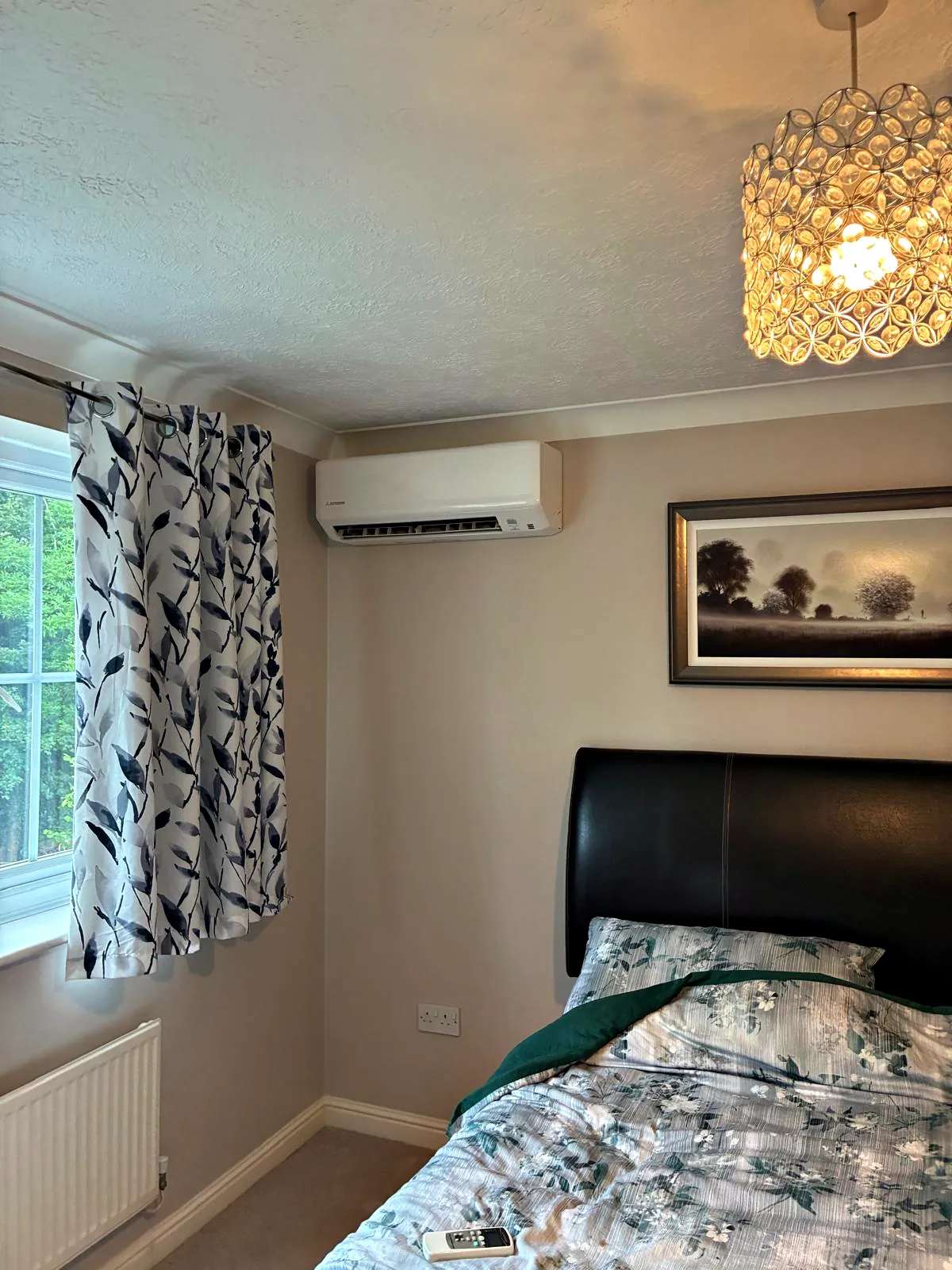
Domestic Air Conditioning Installation
Single split, multi split and ducted systems for houses, bungalows, park homes and garden rooms.
Explore →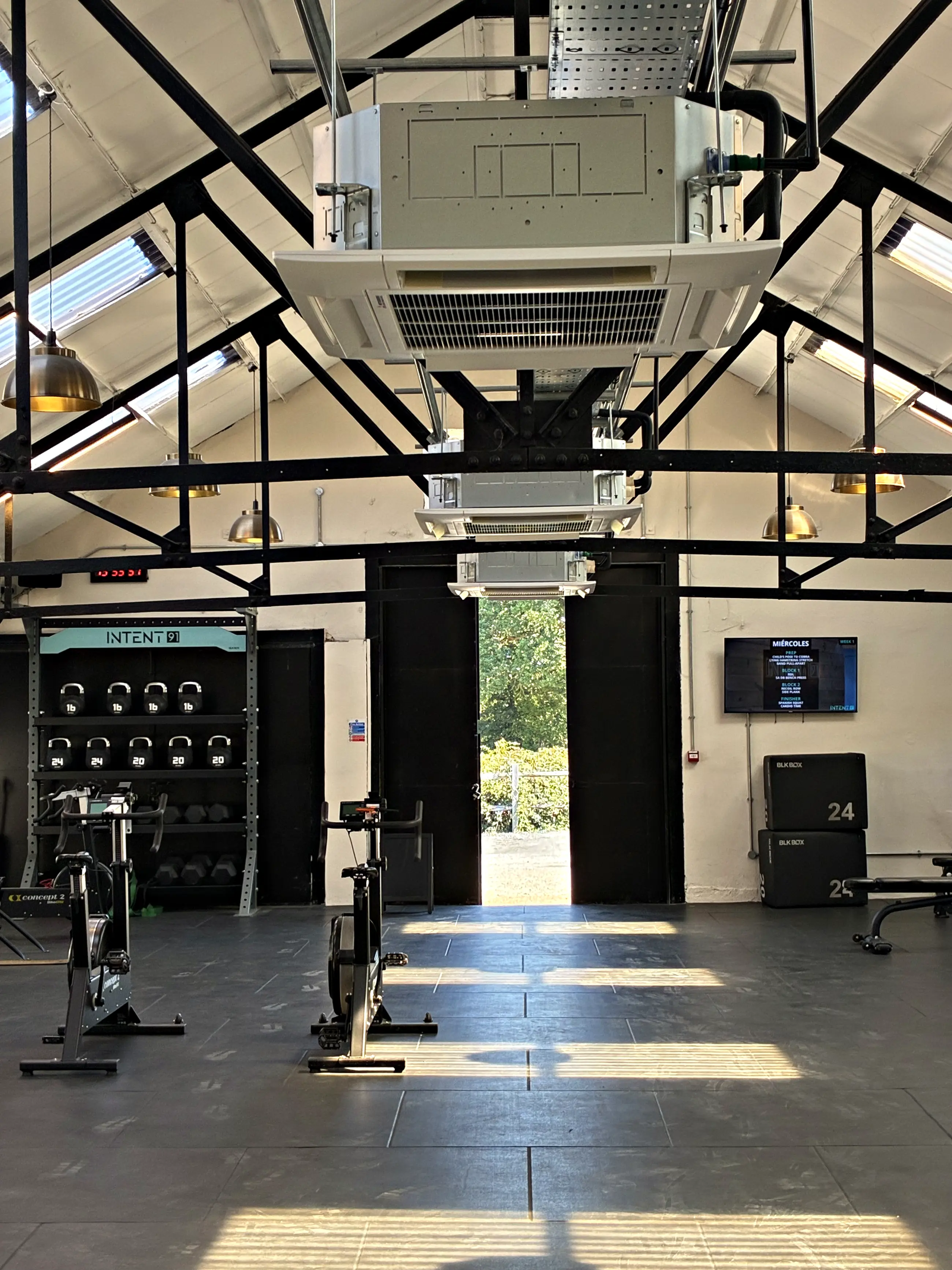
Commercial Air Conditioning
Design, installation and planned maintenance for offices, shops, bars, hospitality and industrial units.
Explore →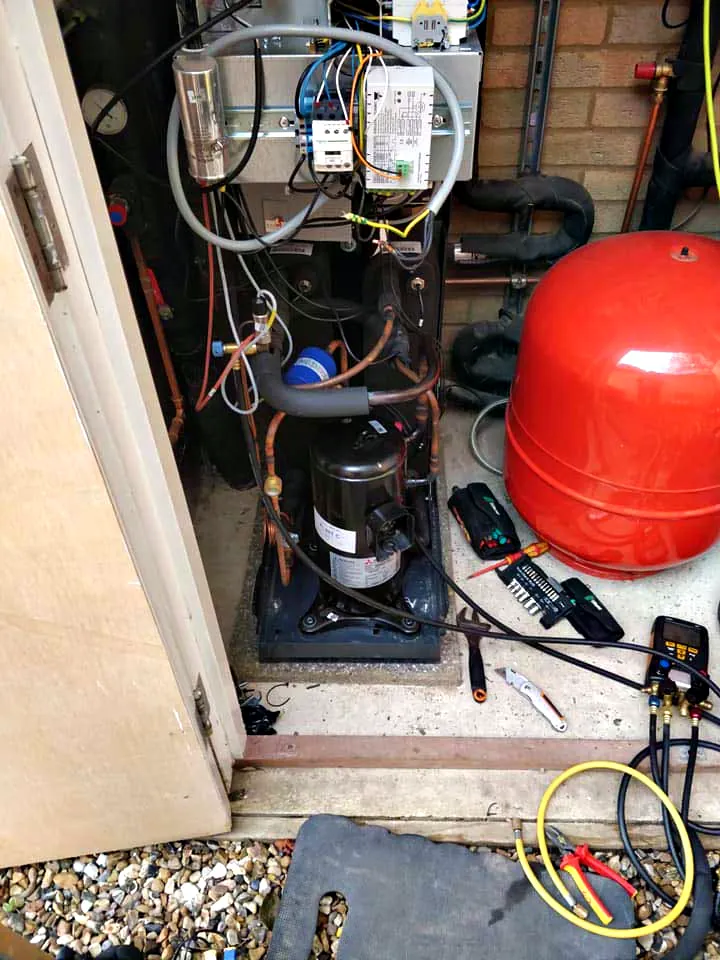
Air Conditioning Repairs
Fast diagnosis and repair on any major brand, priced before we start, genuine parts fitted.
Explore →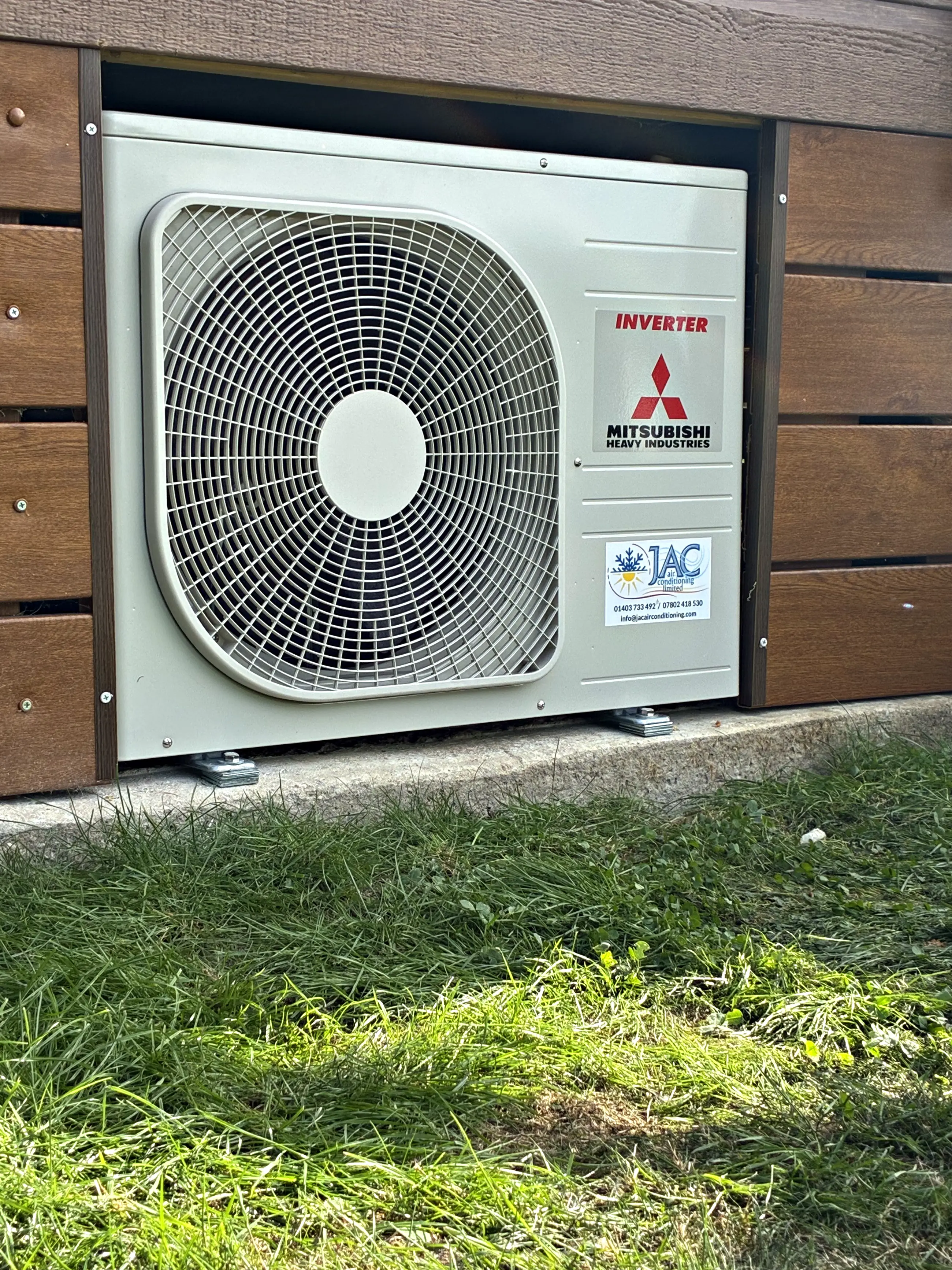
Air Conditioning Servicing
Filters, coils, drains, electrics and refrigerant, with a written record every visit.
Explore →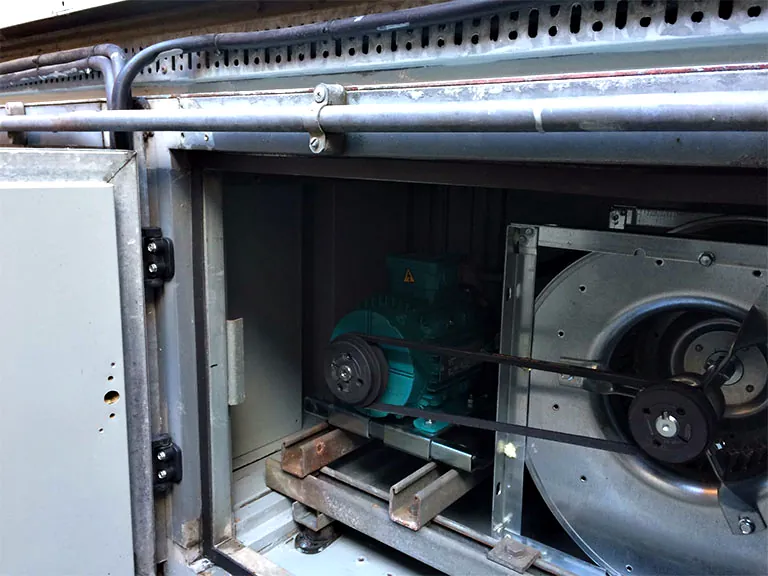
Planned Maintenance
PPM contracts for commercial sites, scheduled around your trading hours rather than ours.
Explore →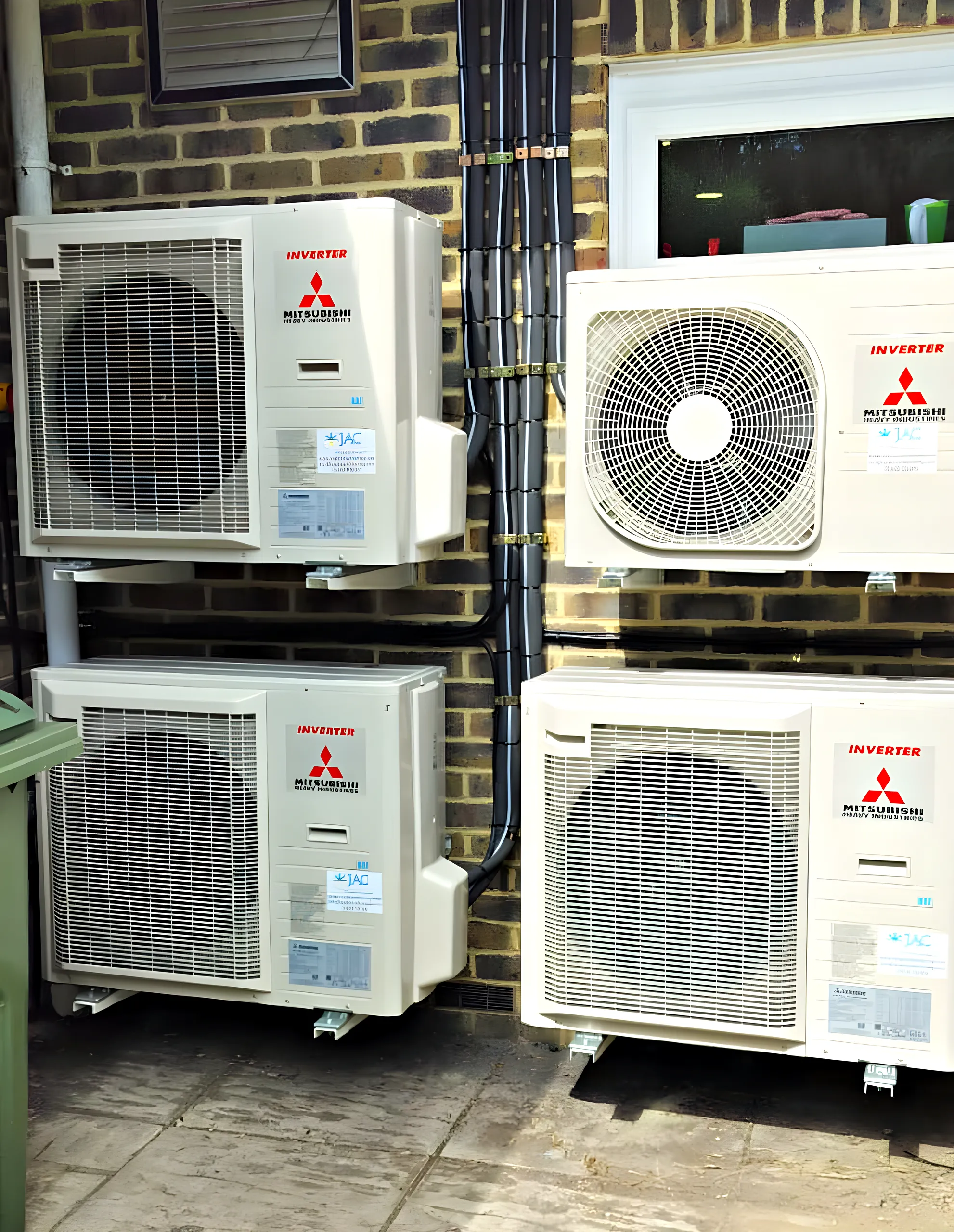
Specification Sheets
Download the data sheets for the Mitsubishi Heavy Industries and GENERAL systems we install.
Explore →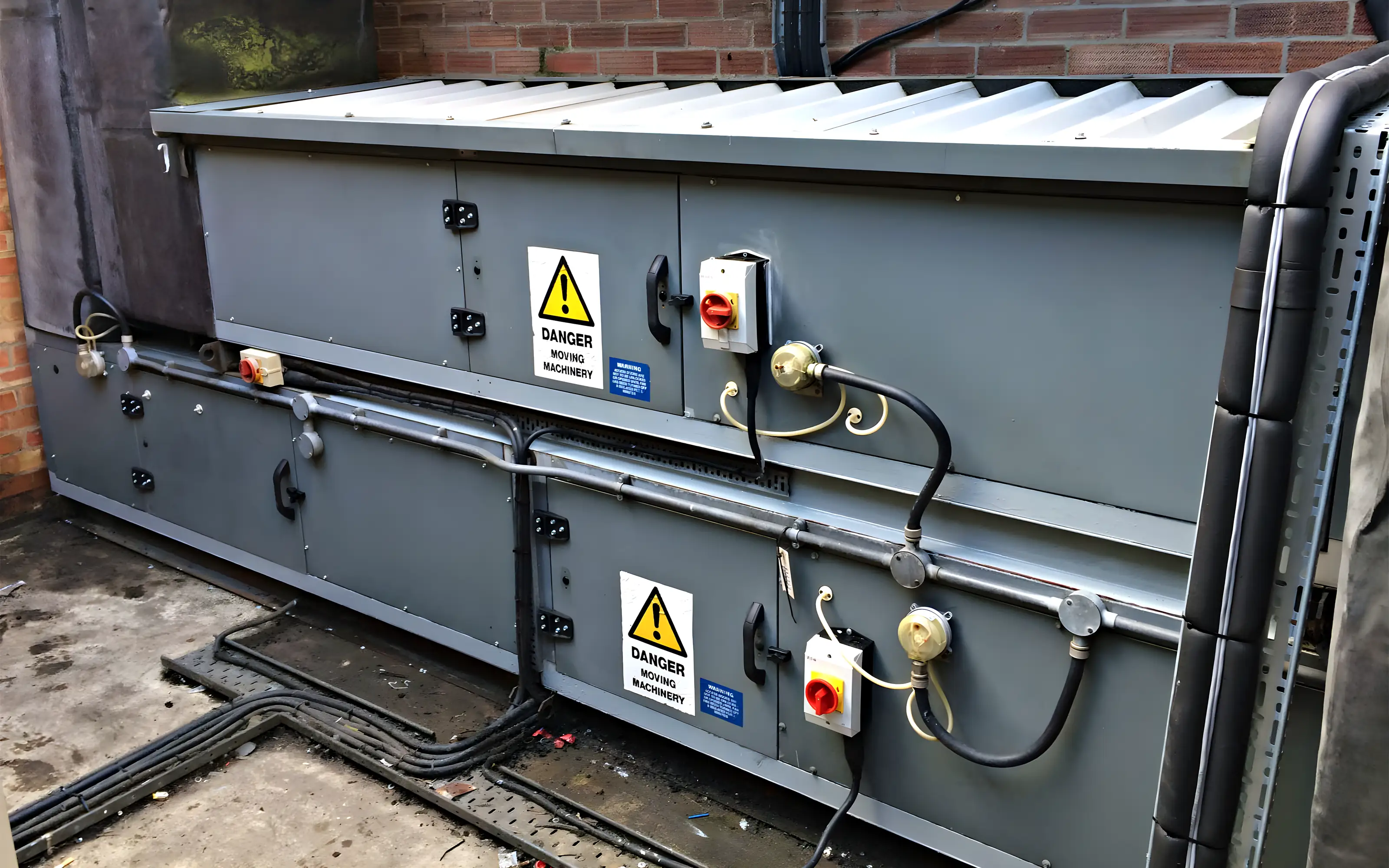
Air Handling
AHUs installed, maintained, repaired and refurbished. Filters, coils, fans, motors and dampers.
Explore →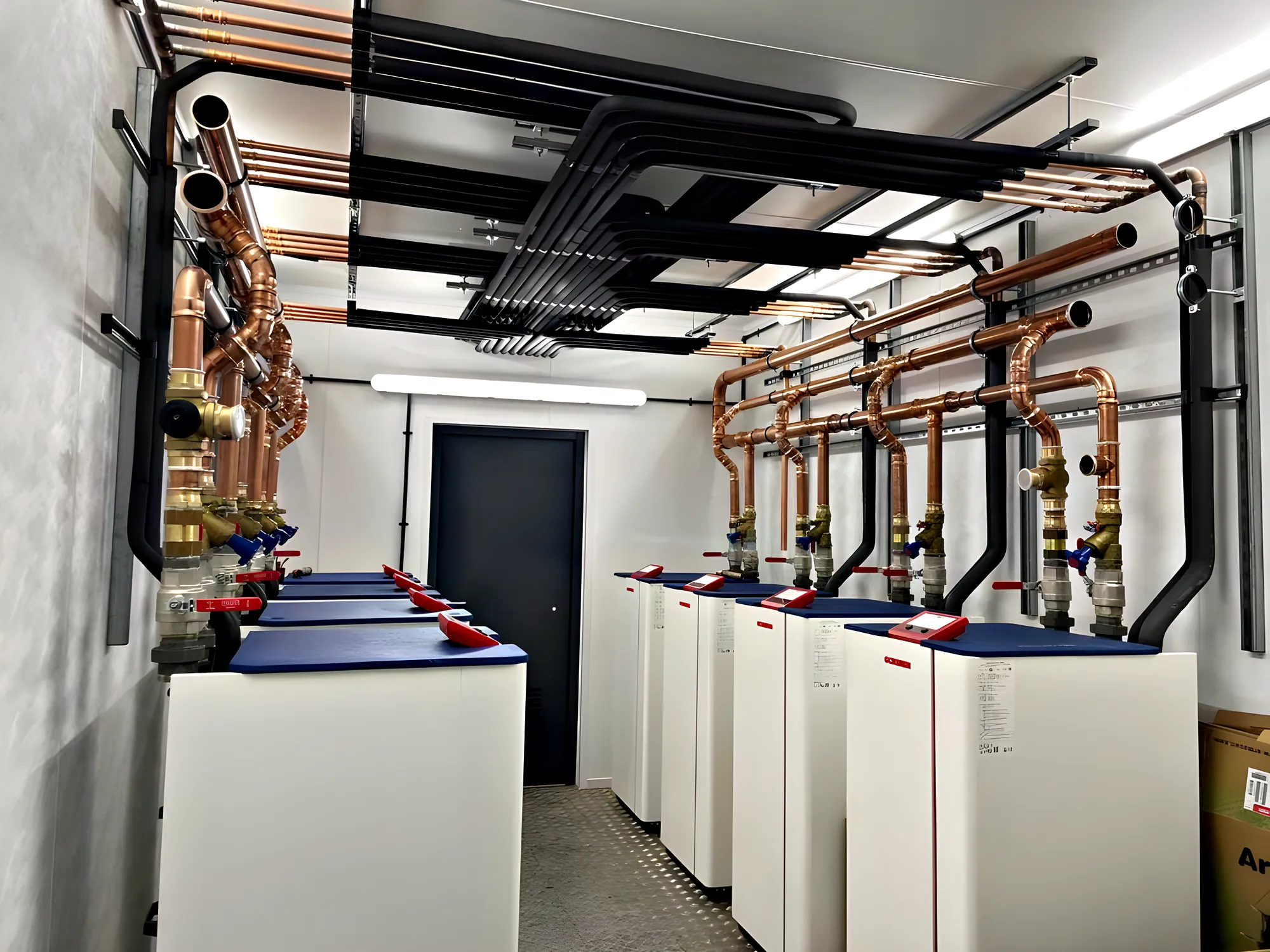
Mechanical Assembly
Pipework, manifolds, valves and plant room assembly, brazed, pressure tested and insulated.
Explore →Your Worthing Questions, Answered
Do I need my freeholder's permission for air conditioning in a Worthing flat?
Usually, yes. Many leases allow alterations only with the landlord's written permission, and the outside walls of a block or a converted house are often owned or controlled by the freeholder, so the hole for the pipes may need consent even if no planning permission is required. Check your lease first. If consent is needed, ask for it in writing before any work is booked, and we will supply the details of what we propose.
Can the outdoor unit go on the front of a seafront building on Marine Parade?
It is best avoided, and it may need consent. Many of the terraces on Marine Parade are listed, much of the street lies within conservation areas, and the council asks for equipment to be kept out of prominent places. The front also takes the full force of the salt air. We look at the rear or another position out of public view first, and we check with Worthing Borough Council before we drill.
How do you deal with sea air on a Worthing seafront installation?
Manufacturers treat salty places such as the seaside with caution: one Mitsubishi Electric installation manual tells installers to avoid them. We look for a sheltered position away from the sea facing front, follow the maker's instructions for the model chosen and check the outdoor unit closely at every service.
My flat is in one of the Marine Gardens blocks. What should I check?
Hastings, Romney and Winchelsea Courts are at the centre of the Marine Gardens conservation area, designated in July 2024. Its appraisal treats the loss of original windows and the enclosure of balconies as harmful, and suggests working with management companies and residents on traditional window designs. Talk to your freeholder or management company early about consent, and we will plan a unit position and pipe route that respects the building.
Will air conditioning in a tall block of flats need building regulations approval?
It might. The gov.uk guidance lists a fixed air conditioning system among the alterations that might need building regulations approval, and in a higher risk building, one of at least 7 storeys or 18 metres with at least two homes, building work needs Building Safety Regulator approval unless an exemption applies. We go through the height of the block and the terms of your lease at the survey, so you know what applies before anything is ordered.
Do you cover Goring, Findon and Lancing as well as Worthing itself?
Yes. From our Horsham office we cover the whole town and the villages around it, from Ferring and Goring by Sea in the west to Sompting and Lancing in the east, and north to Findon, High Salvington, Clapham and Patching on the Downs. Nicola can book your survey on 01403 733 492.
We Also Work Nearby
Book a Survey for Your Worthing Flat or House
Tell us whether the property is a flat or a house, which rooms you would like to cool and, for a flat, whether you have looked at your lease. We will come and see the property, work out where the pipes and the outdoor unit could go, and send a free written quotation that lists the units; you are then free to decide whether to go ahead. The office number is 01403 733 492, and our email address is info@jacairconditioning.com.