
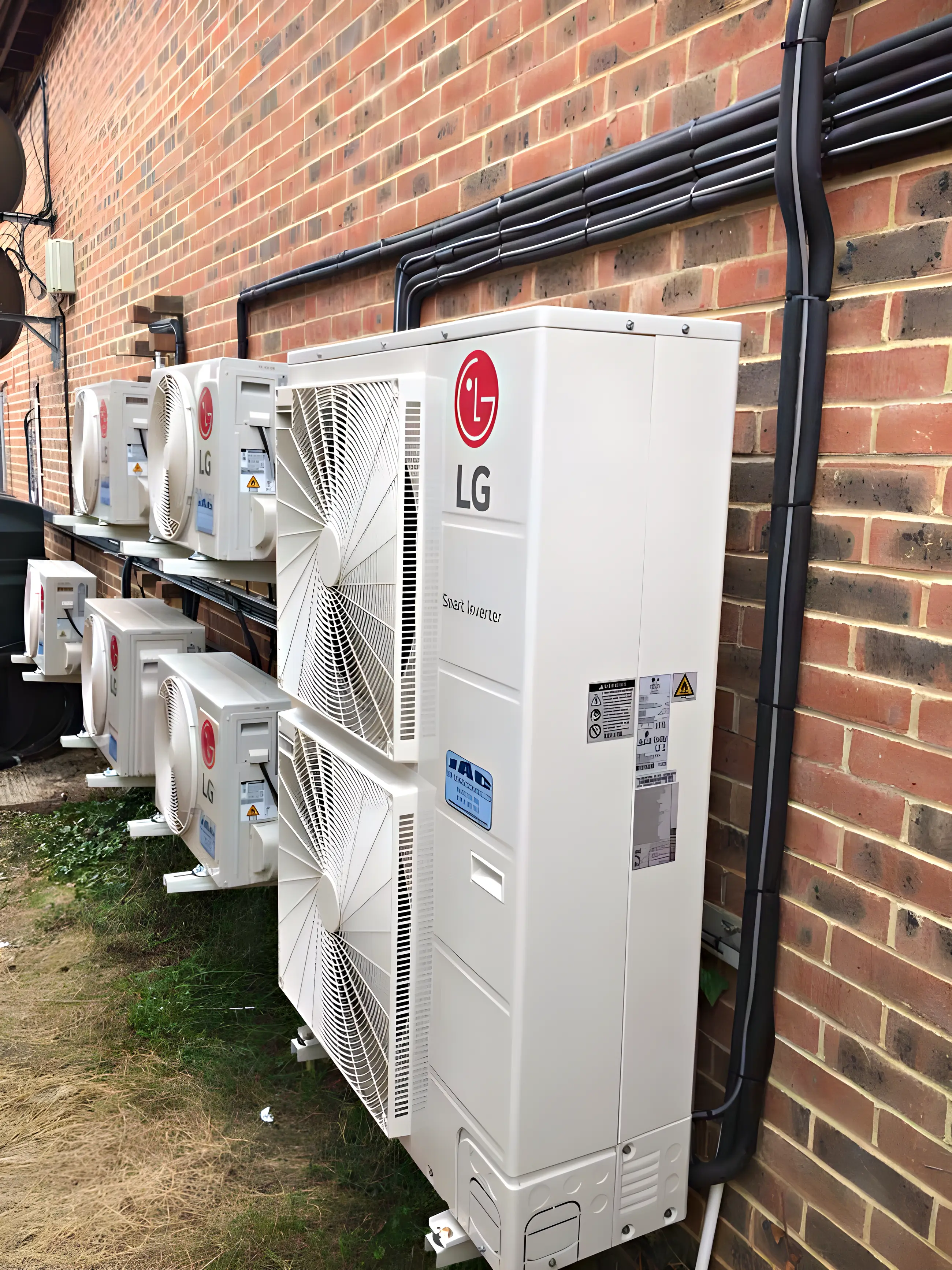
Planned Maintenance for Air Conditioning
Planned preventative maintenance contracts for offices, shops, hospitality and industrial sites across Sussex, Surrey and Lincolnshire, with the F-Gas leak checks and records handled by one REFCOM certified company.
What a Planned Maintenance Contract Is
A planned maintenance contract, often called a PPM contract, is an agreed schedule of visits for every air conditioning system on a site, set out and priced in advance. JAC Air Conditioning Ltd runs PPM contracts for commercial customers in Sussex and Surrey from our office in Horsham, and in Lincolnshire from our base at Fosdyke. Instead of calling an engineer when something stops, you have a calendar of visits that keeps the plant working and keeps you on the right side of the F-Gas rules.
The difference from a one off service is the planning and the paperwork. A contract starts with a list of every unit you have, what refrigerant it holds, how much, and where it sits. From that list we work out which systems legally need leak checks and how often, group the visits so engineers are not on site more often than they need to be, and keep a record of every attendance that you can show an auditor, an insurer or a landlord.
Planned maintenance suits sites that depend on cooling: server rooms, offices with full floors of staff, shops and bars that trade through the summer, gyms, and industrial units where machinery adds heat of its own. It also suits landlords and facilities managers who look after several buildings and want one company, one schedule and one set of records for all of them.
The F-Gas Leak Check Calculator
Pick the refrigerant and how much your system holds. Both are printed on the rating plate of the outdoor unit, and the calculator shows the leak check interval the law sets.
Your system holds
16.716.7 tonnes CO₂ equivalent
R32 has a global warming potential of 675.
R410A has a global warming potential of 2,088.
R407C has a global warming potential of 1,774.
R134a has a global warming potential of 1,430.
R404A has a global warming potential of 3,922.
So the law says
No mandatory leak check
Under 5 tonnes CO₂ equivalent the law sets no leak check interval. Most single room systems in homes sit here, and an annual service is still what keeps the manufacturer warranty valid.
No mandatory leak check
A hermetically sealed system is exempt below 10 tonnes CO₂ equivalent. An annual service still keeps the manufacturer warranty valid.
A leak check at least every 12 months
A certified engineer has to carry it out, and a record has to be kept for the system.
A leak check at least every 24 months
With automatic leak detection fitted, the interval doubles from 12 months to 24. A certified engineer still carries it out and a record is still kept.
A leak check at least every 6 months
From 50 tonnes the interval halves. A certified engineer has to carry it out, and a record has to be kept for the system.
A leak check at least every 12 months
With automatic leak detection fitted, the interval doubles from 6 months to 12.
A leak check at least every 3 months
At 500 tonnes and over, an automatic leak detection system is also a legal requirement.
A leak check at least every 6 months
At 500 tonnes and over, automatic leak detection is a legal requirement, and with it fitted the interval is 6 months.
Checks over two years
Automatic Leak Detection
Fitting it doubles the interval between leak checks, and from 500 tonnes it is a legal requirement.
Hermetically Sealed Systems
Exempt from the checks unless the system holds 10 tonnes CO₂ equivalent or more.
A guide to the published rules, not a legal assessment. We confirm the interval for every system when we draw up your asset register.
Arrange Your Leak Checks→No Mandatory Leak Check
Under 5 tonnes CO2 equivalent there is no legal leak check interval. Most single room domestic systems sit here. An annual service is still what keeps the warranty valid.
At Least Every 12 Months
From 5 tonnes CO2 equivalent the system must be leak checked at least once a year by a certified engineer, and a record kept for it.
At Least Every 6 Months
From 50 tonnes CO2 equivalent the interval halves to six months.
At Least Every 3 Months
From 500 tonnes CO2 equivalent the interval is three months, and an automatic leak detection system is a legal requirement.
Common Refrigerants
| Refrigerant | GWP | Usually found in | Use it |
|---|---|---|---|
| R32 | 675 | Most new domestic and small commercial splits | |
| R410A | 2,088 | The standard for a decade; still everywhere | |
| R407C | 1,774 | Older systems and some replacements | |
| R134a | 1,430 | Chillers and some older commercial systems | |
| R404A | 3,922 | Refrigeration rather than comfort cooling |
Figures from the GB F-Gas rules; global warming potentials from the regulation’s own table.
What a PPM Contract With JAC Includes
Every contract is written around your site, but these six parts are in all of them.
Asset Register
A list of every indoor and outdoor unit with its make, model, location, refrigerant type and charge, which forms the basis of the whole contract.
F-Gas Leak Checks
Leak checks at the intervals the regulations set for each system, carried out by engineers working under our REFCOM company certificate.
Scheduled Visits
Visits booked ahead at times that suit your trading hours, grouped so one attendance covers as many systems as possible.
Written Records
A record of every visit, every check and any refrigerant added or recovered, kept on file and sent to you after each attendance.
Repairs Priced First
Faults found on a visit are explained and priced before any repair is carried out, on any major brand.
Forward Planning Notes
Notes on ageing units, older refrigerants and repairs worth budgeting for, so they are planned for before they become urgent.
F-Gas Leak Checks Explained Plainly
Most air conditioning systems use a fluorinated greenhouse gas as their refrigerant, and in Great Britain the retained EU Regulation 517/2014, as amended, sets out how often those systems must be checked for leaks. The duty sits with the operator, which is normally the business or landlord that controls the system, not the company that installed it. If a system needed checking and was not checked, it is the operator who has to answer for it.
How often a system must be checked depends on its charge measured in tonnes of CO2 equivalent, not in kilograms. To work it out, multiply the refrigerant charge in kilograms by the global warming potential of the gas, known as its GWP, and divide by a thousand. The GWP figures for the common refrigerants are R32 675, R410A 2,088, R407C 1,774, R404A 3,922 and R134a 1,430, so the same weight of gas can fall into very different bands depending on which refrigerant it is.
Only a certified company may install, service or repair a refrigerant circuit. JAC Air Conditioning Ltd holds REFCOM F-Gas company certificate REF1019419, valid to 25 May 2028, covering all systems under or over 3 kg and hermetically sealed systems over 6 kg. The intervals that apply are set out below.
- Under 5 tonnes CO2 equivalent: no leak check required
- 5 to under 50 tonnes: every 12 months, or every 24 with automatic leak detection
- 50 to under 500 tonnes: every 6 months, or every 12 with leak detection
- 500 tonnes and over: every 3 months, or every 6 with leak detection, which is mandatory at this size
- Hermetically sealed systems under 10 tonnes: exempt
The Records That Keep You Covered
A leak check that is not written down is hard to prove. For each system, the operator is expected to keep a record of the refrigerant type and quantity, the leak checks carried out, any gas added or recovered, any repairs made, and the details of the company that did the work. When an auditor, an insurer, a landlord or a buyer of the building asks to see that record, it has to exist and it has to be complete.
Under a JAC contract we build that record for you and keep it up to date after every visit. You receive a copy each time, and the full history of each unit is available when you need it, including after changes of staff in your own team. Where a site has had several contractors over the years and the records are patchy, the first visit may be spent putting the asset register right before anything else is planned.
How a Contract Fits Around a Working Building
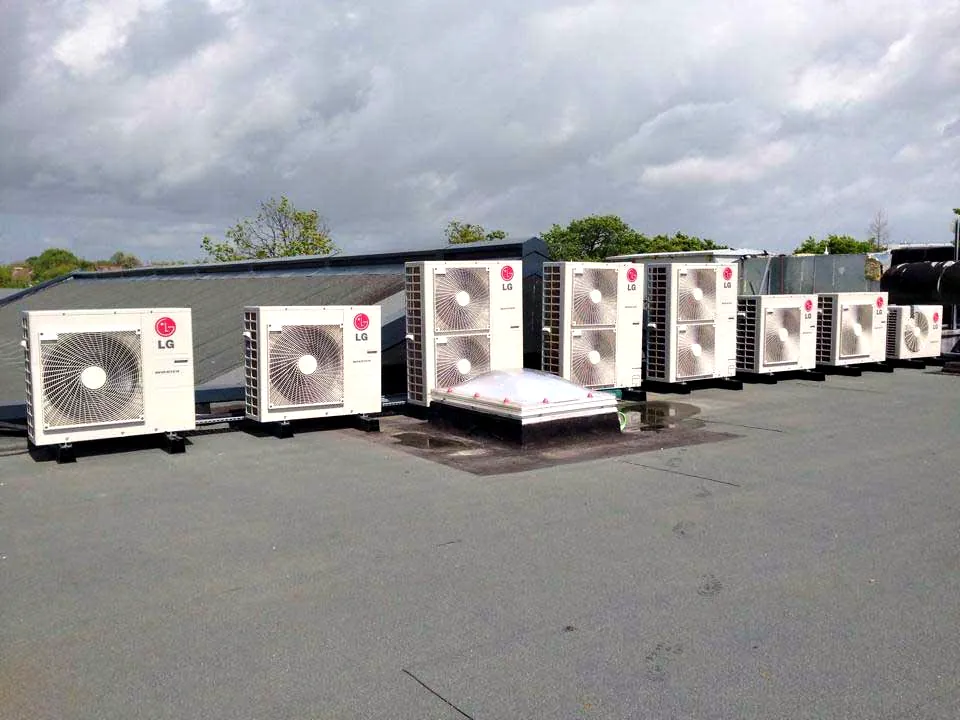
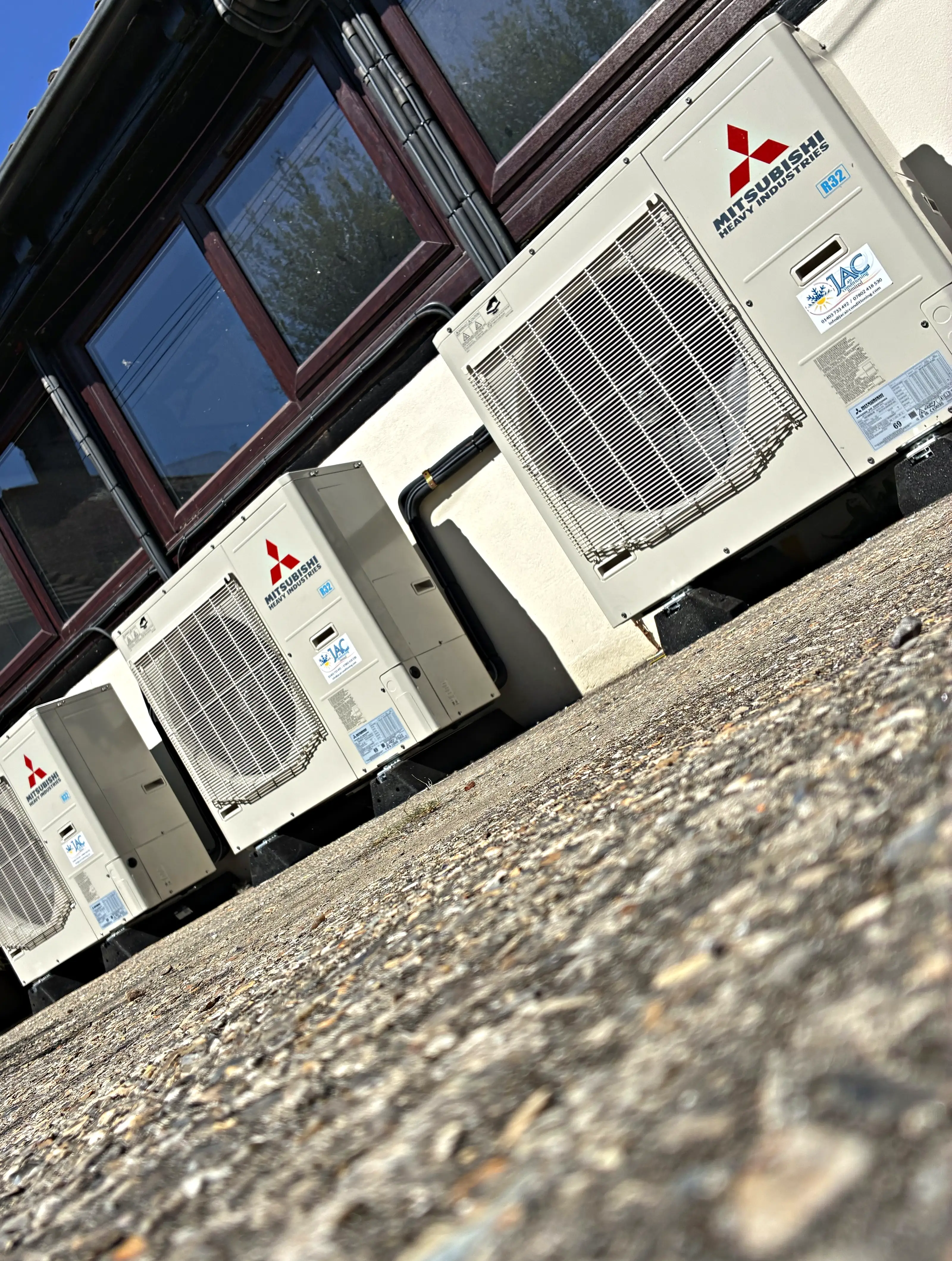
A planned visit should never be the reason a shop shuts or an office empties. We agree visit times before the contract starts: early mornings for retail, quiet afternoons for hospitality, weekends for offices where that suits, and agreed windows for server rooms, planned around the equipment's need for cooling. Where units sit above ceilings or on roofs, access is arranged in advance with the building manager.
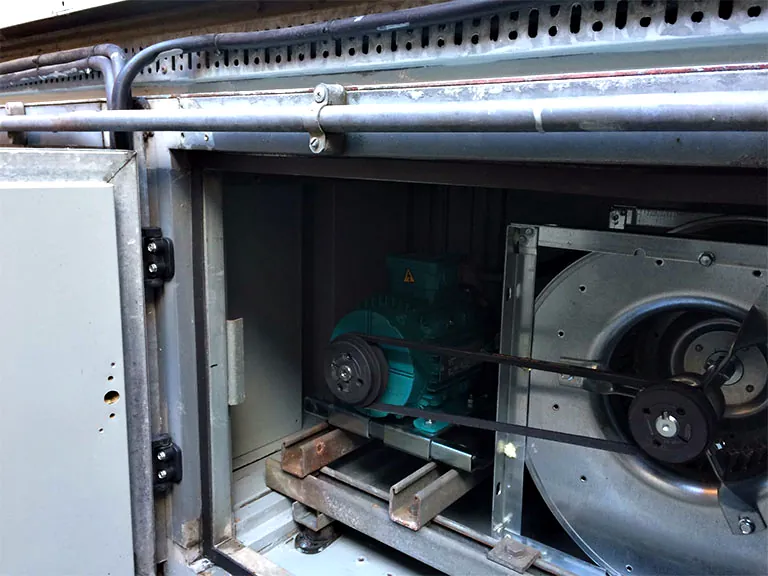
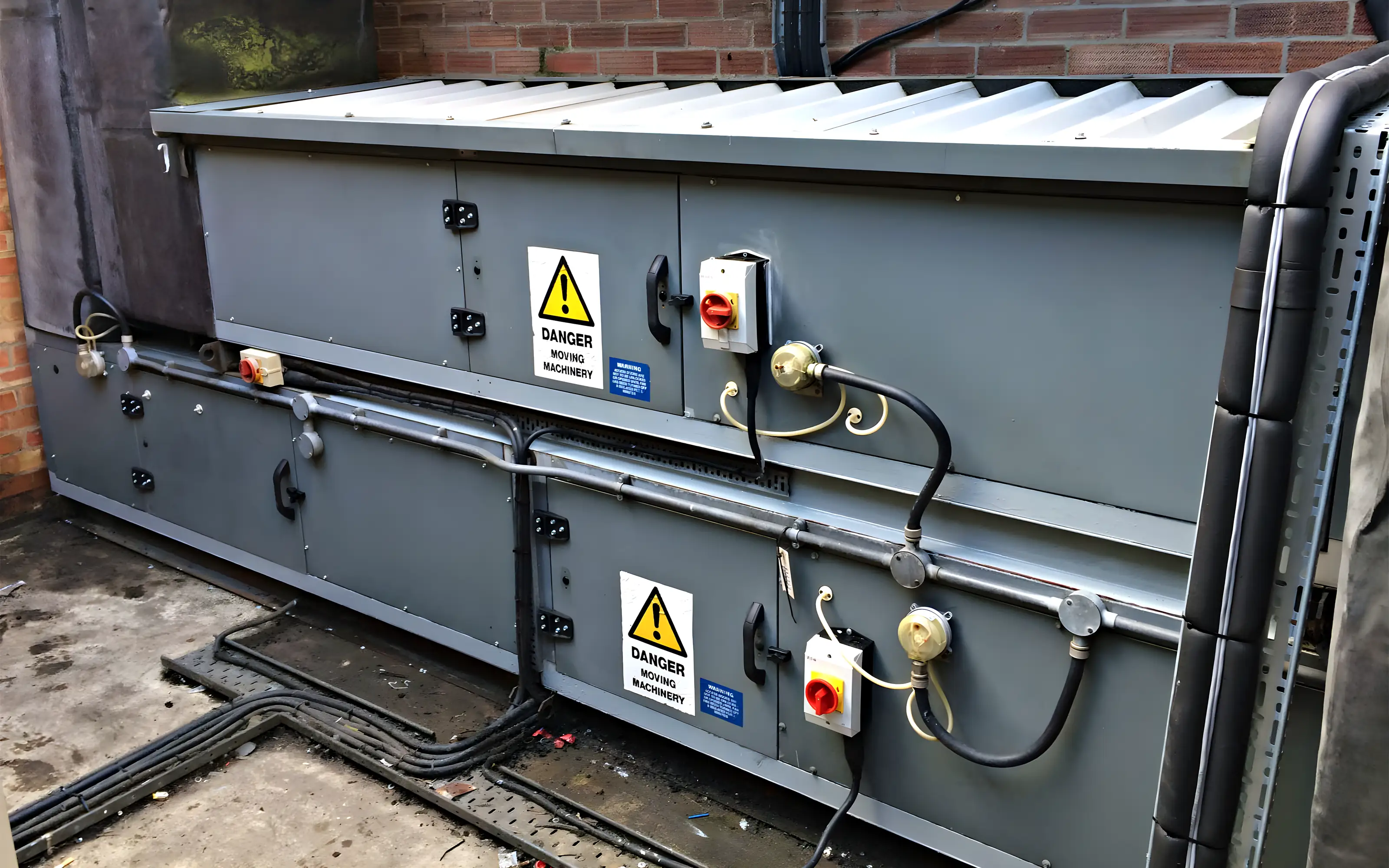
The work on each visit follows our air conditioning servicing routine for split and multi split systems, and our air handling unit maintenance for the larger plant that moves fresh air through a building. Putting both under one contract means one schedule and one report, rather than separate contractors working to separate calendars and leaving gaps between them.
Contracts for One Site or Several
A contract can cover a single office with a handful of wall units, or a group of shops, offices or industrial units spread across Sussex, Surrey and Lincolnshire. It is built the same way in both cases, starting from the asset register, but larger portfolios gain the most, because visits can be grouped by area and every site reports in the same format.
If you are planning new plant or extending a building, our commercial air conditioning team can write the maintenance plan at the design stage, so access, isolation and leak detection are thought about before anything is fixed to a wall. We service and repair every major brand, not only the ones we fit, so an existing site with a mix of manufacturers can still come under a single contract.
How a Planned Maintenance Contract Starts
From the first call to the first scheduled visit, the steps are the same for every site.
Site Survey
Jay or Oscar visits, looks at every system and notes its access, location and condition.
Asset Register
Each unit is recorded with its refrigerant and charge, and its CO2 equivalent shows whether it needs leak checks.
Written Proposal
You receive a visit schedule and a written price, with every system on the site named on it.
Planned Visits
Visits go in the diary at agreed times, and each one ends with a written record sent to you.
Review and Renewal
Before the contract renews, we go through the records with you and point out anything worth planning for.
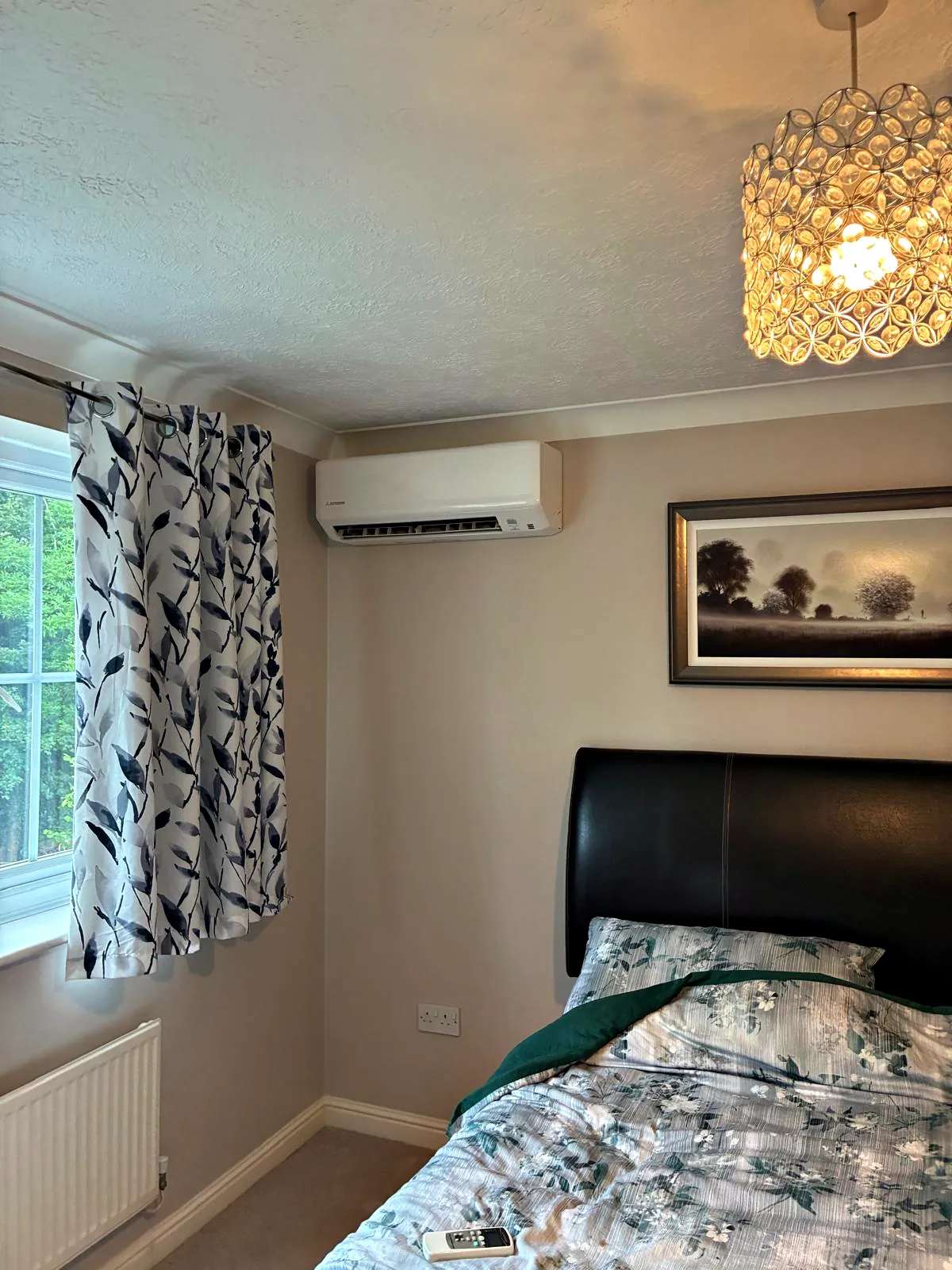
Really happy with JAC’s work. I got 3 quotes to install A/C in 2 upstairs bedrooms. JAC’s was the cheapest quote but still used Mitsubishi units. After agreeing to go ahead the works were booked in quickly. We were really happy with the installation. Everything looks neat inside and outside. We’re really happy and wouldn’t hesitate to recommend JAC - in fact we recommended them straight after the works were finished to a friend who is thinking about something similar.
Planned Maintenance Questions, Answered
Is a PPM contract the same as an air conditioning service?
Not quite. A service is a single visit to clean and check a system. A planned maintenance contract is the structure around those visits: the asset register, the F-Gas leak check interval for each unit, the visit calendar and the records. A contract usually includes servicing, but the contract is what makes sure nothing is missed and that the paperwork is complete when someone asks to see it.
Who is responsible for F-Gas leak checks, the owner or the contractor?
The operator is responsible, which is normally the business or landlord that controls the system. The checks must be carried out by certified engineers, such as ours, working under JAC Air Conditioning Ltd's REFCOM certificate REF1019419, but the duty to make sure they happen and are recorded stays with the operator. A planned maintenance contract is the simplest way to meet that duty without having to track it yourself.
Does my office air conditioning need a leak check?
It depends on the charge measured in tonnes of CO2 equivalent. Systems under 5 tonnes need no leak check. From 5 to under 50 tonnes the interval is every 12 months, or every 24 with automatic leak detection, and larger systems are checked more often. Small single systems are often below the threshold while larger ones are not, so we work it out for each unit when we build your asset register.
Can you take over a site that another company installed?
Yes. We service and repair every major brand, not only the ones we install, so a site with a mix of manufacturers can come under one contract. The first visit is usually spent building or correcting the asset register, checking the condition of each system and finding out what records already exist, so we know where the site stands before the first scheduled visit.
Will maintenance visits disrupt our business?
They should not. Visit times are agreed before the contract starts and planned around your trading hours, which might mean early mornings in a shop, quiet afternoons in a bar or restaurant, or a fixed window in a server room. Where an engineer needs access above ceilings or onto a roof, we arrange it in advance with whoever manages the building.
Do you cover sites in Lincolnshire as well as Sussex?
Yes. Sites in Sussex and Surrey are looked after from our Horsham office on Worthing Road, and sites in Lincolnshire from our base at Fosdyke near Boston. One contract can include premises in both regions, and the records for every site are kept in the same format, so a business with buildings in the south and in Lincolnshire has one set of reports to read.
You Might Also Need
Planned Maintenance Across Sussex and Surrey
From the Horsham office we cover Guildford · Godalming · Horsham · Dorking · Brighton · Worthing · Chichester · Bognor Regis · Haywards Heath · Burgess Hill · Billingshurst · Cranleigh · Hassocks · Storrington, and the villages around them, with Lincolnshire covered from our base at Fosdyke. See every area we cover.
Talk to Us About a PPM Contract
If you look after air conditioning on a commercial site in Sussex, Surrey or Lincolnshire and want the leak checks, the servicing and the records handled by one family run company, call the office on 01403 733 492 or send the details through our contact page. We will arrange a survey and give you a free, no obligation quotation in writing.