
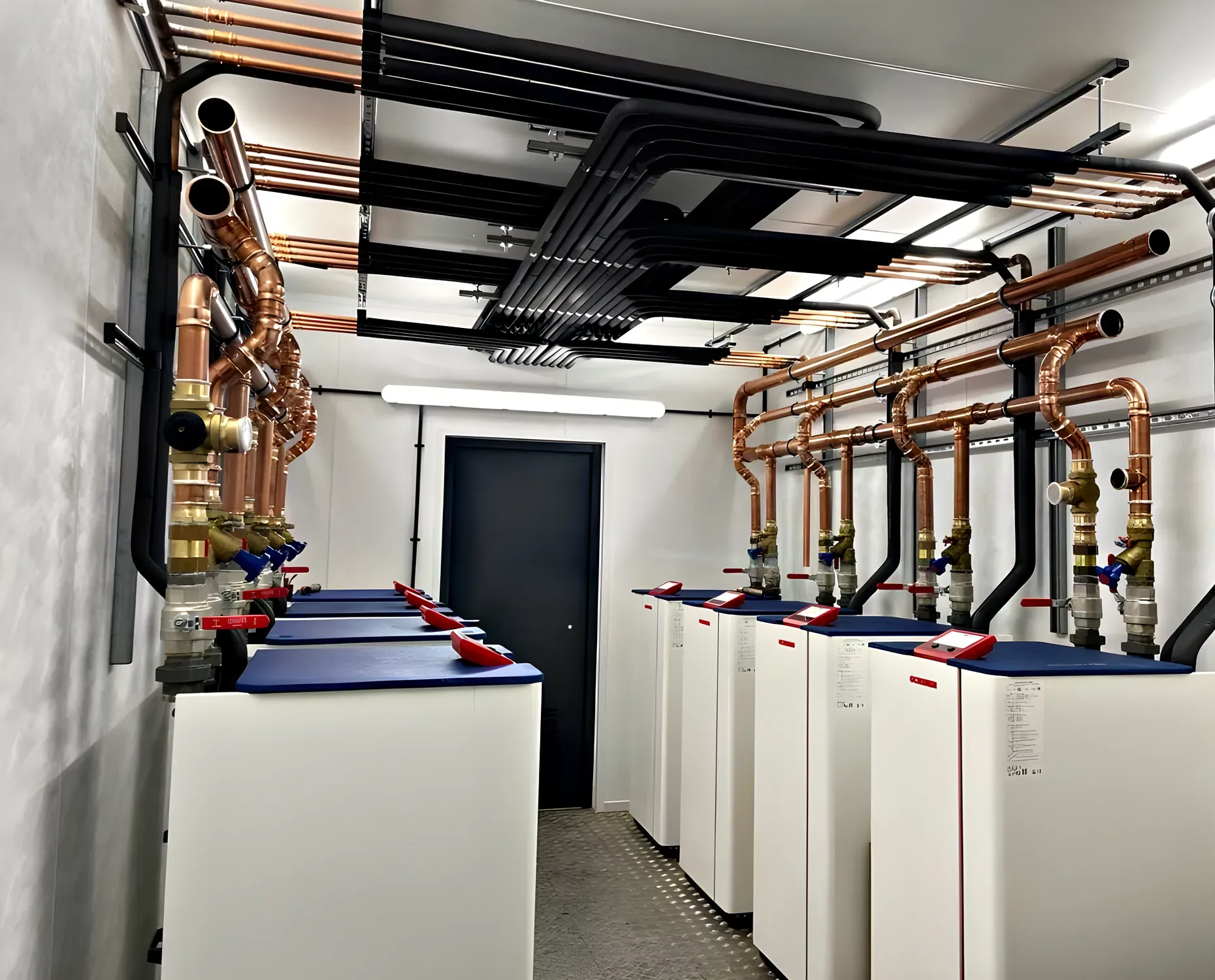
Mechanical Pipework Assembly for Plant Rooms
Pipework, manifolds, valves and plant room assembly for air conditioning and air handling plant across Sussex, Surrey and Lincolnshire, brazed, pressure tested and insulated by our own engineers.
What Mechanical Assembly Means at JAC
Mechanical assembly is the pipework and fixed parts that join plant together: the refrigerant lines between outdoor and indoor units, the headers and manifolds that split one supply into many, the valves that let each part be isolated, and the frames and supports that hold everything in place. JAC Air Conditioning Ltd carries out mechanical assembly as a service in its own right, for plant rooms, rooftop plant and building services projects in Sussex and Surrey from Horsham, and in Lincolnshire from Fosdyke.
Good pipework is easy to overlook because, once it is insulated and clipped to a wall, nobody sees it again. It is also where many long term faults begin. A poorly made joint can leak slowly for years, a missing support can let a pipe sag and crack, and insulation with gaps in it can drip condensation onto the ceiling below. Mechanical assembly done properly lets the plant it serves run as it was designed to.
We take on assembly work for building owners, facilities managers and main contractors, either as part of a JAC installation or as a separate package on a larger project.
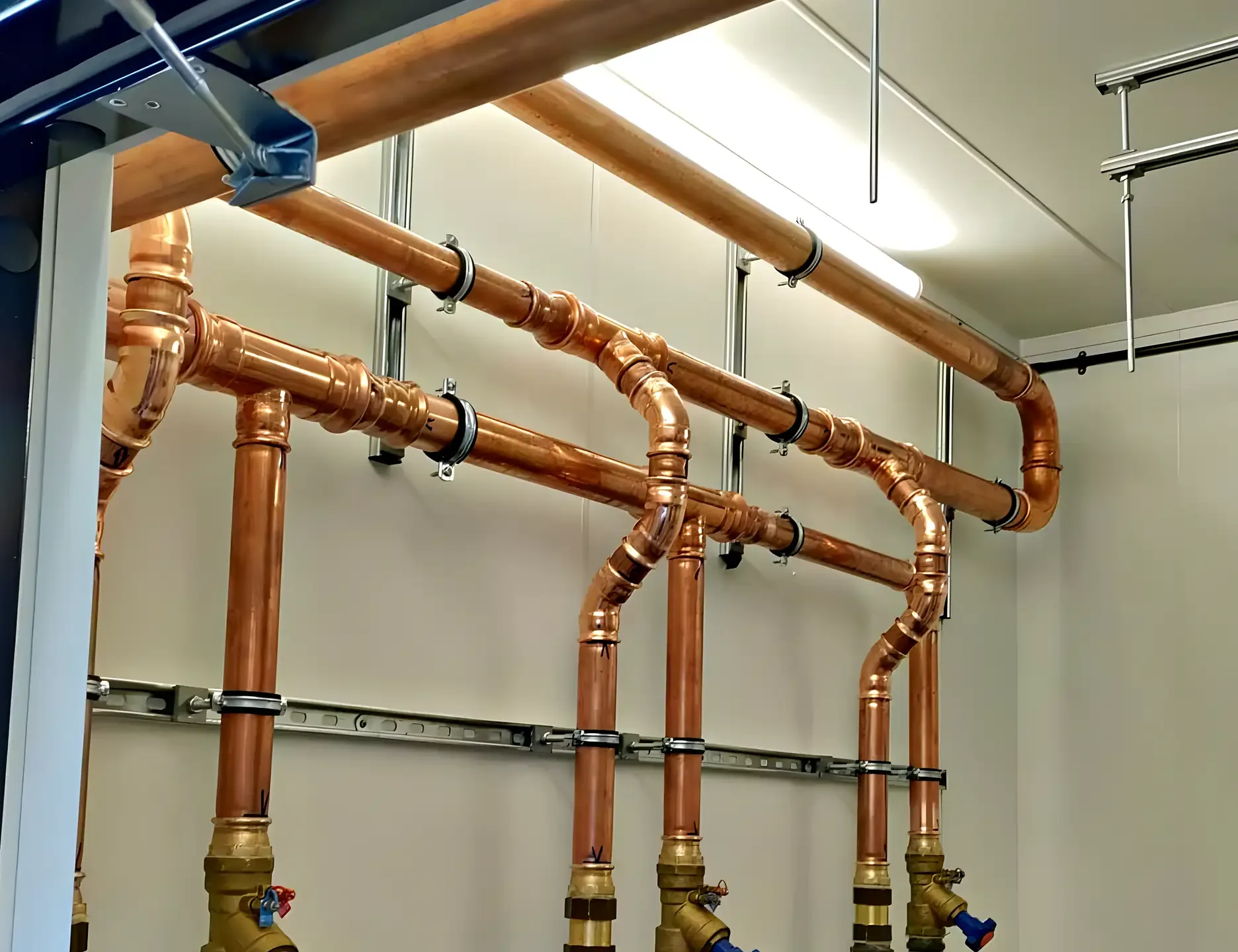
Plant Room Build Up, From Frame to Finish
The same order on every job, from the first bracket to the last label. Pick a stage, or drag the slider, to watch the room go together.
Stage 01 of 06
Frame and Supports
Before any pipe is cut, the frame goes up: steel channel fixed to the floor and the wall, with brackets set where each pipe will run. Plinths lift the plant clear of the floor.
Why It MattersPipework expands and contracts as it warms and cools, so the supports hold it firmly while allowing for that movement.
Stage 02 of 06
Headers and Manifolds
Headers run the length of the room and branch off to each unit. A manifold divides one supply into several circuits, with spare connections capped for plant added later.
Why It MattersRoutes are kept short and direct, with no more bends than needed and room left around every joint for maintenance.
Stage 03 of 06
Isolation Valves
Every branch gets an isolation valve, and so does each header where it enters the room, so one unit can be shut off and worked on while the rest keep running.
Why It MattersValves are placed where an engineer can reach them, and each one is labelled with what it isolates.
Stage 04 of 06
Brazed Joints
Each copper joint is cut square, cleaned and brazed with dry nitrogen flowing gently through the pipe. The nitrogen pushes the air out, so the inside of the joint stays clean.
Why It MattersWithout it, black oxide scale forms inside the pipe, breaks away once the system runs, and can block filters, valves and the fine passages of a compressor.
Stage 05 of 06
Pressure Test
The finished pipework is filled with dry nitrogen to a test pressure suited to the system, isolated and left to stand. If the gauge holds, the joints are sound.
Why It MattersIf it falls, the leak is found and the test starts again. Afterwards the pipework is evacuated with a vacuum pump, and both results are written down.
Stage 06 of 06
Insulation and Labelling
Cold pipework is wrapped in closed cell insulation, sealed at every joint and seam so moist air cannot reach the pipe. Each pipe is labelled with what it carries and which way it flows.
Why It MattersYou receive a record of the test results and the work carried out, the starting point for the plant room’s maintenance.
Mechanical Assembly Work We Carry Out
Each assembly is built, tested and finished by the same engineers, so nothing is handed over half done.
Refrigerant Pipework
Copper pipework between indoor and outdoor units, sized and routed for the system it serves.
Headers and Manifolds
Headers and manifolds that divide one supply between several units or circuits, set out so each branch is easy to trace.
Valve Assemblies
Isolation and service valves placed so each part of the plant can be shut off and worked on without disturbing the rest.
Brazed Joints
Joints brazed with dry nitrogen flowing through the pipe, which keeps the inside of each joint clean.
Pressure Testing
Every assembly pressure tested and held before it is put into service, with the result written down.
Insulation and Finishing
Pipework insulated, sealed at the joints, supported and labelled, so the finished plant room is tidy and safe to work in.
Planning a Plant Room Layout
A plant room assembly starts on paper. Before any pipe is cut, we look at where each piece of equipment will sit, how the pipes will run between them, where valves must be reached, and how an engineer will get to every part in future. Routes are kept as short and direct as the space allows, with no more bends than needed and enough room left around valves and joints for maintenance.
Supports are planned at the same time. Pipework expands and contracts as it warms and cools, so brackets and clips have to hold it firmly while allowing for that movement. Where pipes pass through walls or floors, sleeves protect them and the openings are made good afterwards.
Planning matters most where the plant will sit under a planned maintenance contract for years to come, because every decision about access becomes a decision about how easily a future engineer can do the job.
Brazing That Stays Sound
Copper refrigerant pipework is usually joined by brazing, which melts a filler metal into the joint at high temperature. Without care, that heat forms a black oxide scale on the inside of the pipe. The scale breaks away once the system is running and can block filters, valves and the fine passages inside a compressor. To prevent it, our engineers pass a gentle flow of dry nitrogen through the pipe while they braze, which pushes the air out and leaves the inside of the joint clean.
Each joint is made with the pipe ends cut square, cleaned and properly fitted before heat is applied, so the filler runs right into the joint rather than sitting on the surface. It takes longer than cutting corners, and it is the reason a well made system can run for years without its refrigerant escaping.
Installing a refrigerant circuit is work that only a certified company may carry out. JAC Air Conditioning Ltd holds REFCOM F-Gas company certificate REF1019419, valid to 25 May 2028.
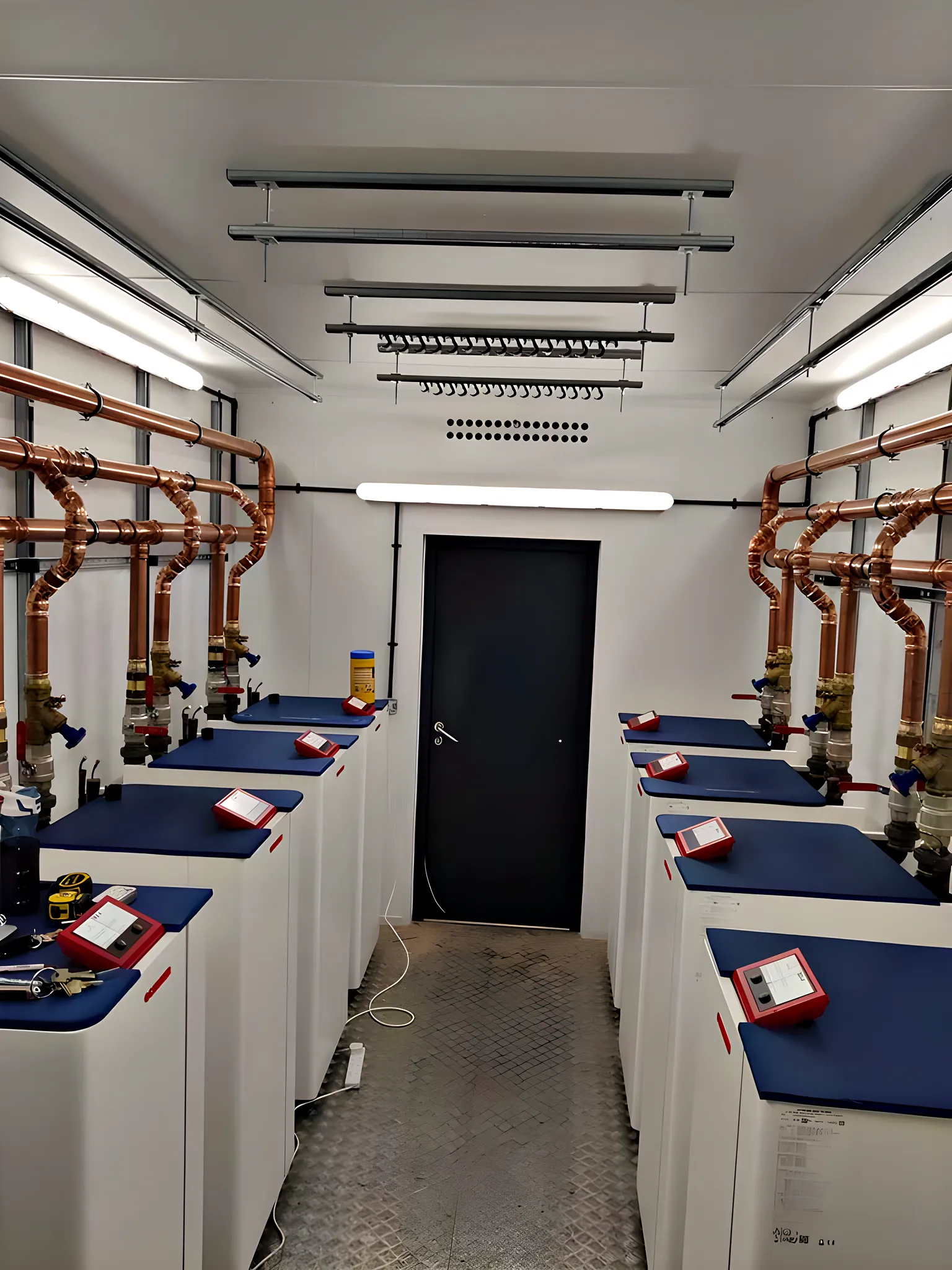
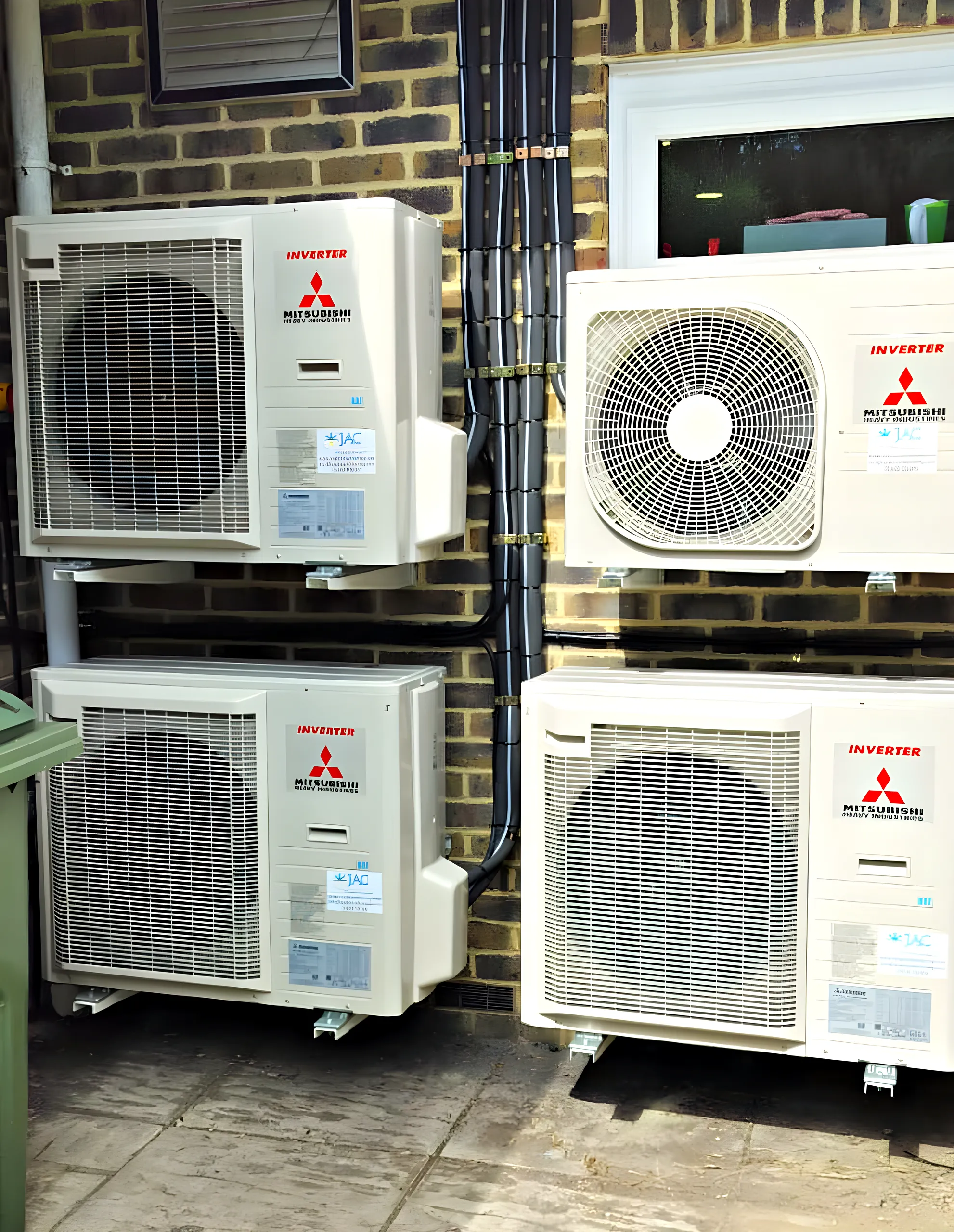
Pressure Testing Before Anything Is Charged
Once an assembly is complete, it is pressure tested before any refrigerant goes near it. The pipework is filled with dry nitrogen to a test pressure suited to the system and the refrigerant it will carry, then isolated and left to stand. If the pressure holds, the joints are sound. If it falls, the leak is found and repaired, and the test starts again from the beginning.
After a successful test the nitrogen is released and the pipework is evacuated with a vacuum pump, which draws out air and moisture. Moisture left inside a refrigerant circuit can react with the oil and refrigerant and shorten the life of the compressor, so this stage is never rushed. The test and the evacuation are both recorded, giving you evidence that the pipework was proved before it went into service.
These are the same standards we apply to every air conditioning installation we carry out, from a short run through a single wall to pipework that crosses an entire plant room.
Insulation, Labelling and Handover
Cold pipework needs insulating. It draws condensation from the surrounding air, and without insulation that water drips onto ceilings, walls and equipment. Insulation also stops the pipe gaining heat on its way to the indoor unit, which would make the system work harder. We use closed cell insulation, sealed at every joint and seam so moist air cannot reach the pipe, and protect it wherever it runs outdoors or could be knocked.
The finished plant room is labelled so that anyone who follows can see what each pipe carries, which way it flows and what each valve isolates. You receive a record of the test results and the work carried out. Where the assembly serves an air handling unit or several air conditioning systems, that record becomes the starting point for its maintenance.
How a Mechanical Assembly Job Runs
Every assembly follows the same order, from the first look at the space to the written record at handover.
Survey the Space
We look at the plant room or roof, the equipment it will hold and how engineers will reach it later.
Set Out the Routes
Pipe routes, supports, valve positions and wall openings are marked out before any cutting begins.
Assemble and Braze
Pipework, manifolds and valves are fitted and brazed with dry nitrogen flowing through the pipe.
Test and Evacuate
The assembly is pressure tested and held, then evacuated to remove air and moisture.
Insulate and Hand Over
Pipework is insulated, supported and labelled, and you receive the written test record.
Outstanding service from start to finish. Very confident to recommend this company, extremely professional and friendly. Happy costumer!
Mechanical Assembly Questions, Answered
What is mechanical pipework assembly?
It is the building of the fixed pipework, manifolds, valves and supports that join items of plant together, such as the refrigerant lines between air conditioning units or the pipework in a plant room. At JAC Air Conditioning Ltd every assembly is brazed, pressure tested and insulated by our own engineers, then labelled so whoever maintains it later can see what each pipe and valve does.
Why do you braze with nitrogen flowing through the pipe?
Brazing heats copper to a high temperature, and in air that forms a black oxide scale on the inside of the pipe. Once the system runs, the scale can break off and block filters, valves and the compressor. Passing dry nitrogen through the pipe while brazing pushes the air out, so the inside of the joint stays clean. It is widely accepted good practice, and we use it on every joint.
How is new pipework pressure tested?
The finished pipework is filled with dry nitrogen to a test pressure suited to the system, isolated and left to stand. A pressure that holds shows the joints are sound; a pressure that falls means a leak, which is found, repaired and tested again. The pipework is then evacuated to remove air and moisture before any refrigerant is added, and both stages are recorded for you.
Why does refrigerant pipework need insulation?
Cold pipework draws moisture out of the surrounding air, and without insulation that condensation drips onto ceilings, walls and equipment below. Insulation also stops the pipe picking up heat on its way to the indoor unit, which would make the system work harder. Closed cell insulation, sealed at every joint, keeps moist air away from the pipe and protects it where it is exposed.
Do you work for main contractors on larger projects?
Yes. We can take on mechanical assembly for building owners, facilities managers and main contractors across Sussex, Surrey and Lincolnshire, either as part of a JAC installation or as a separate package. We work to the programme on site, coordinate with the other trades over routes and access, and hand over the pressure test records when the work is complete.
Are your engineers qualified for this work?
Our engineers are CITB qualified and City and Guilds qualified, and registered with the Construction Safety Scheme. JAC Air Conditioning Ltd holds REFCOM F-Gas company certificate REF1019419, valid to 25 May 2028. F-Gas company certification is required of any company that installs, services or repairs refrigerant circuits. We are also a Mitsubishi Heavy Industries 3 Diamond Dealer and members of the Federation of Small Businesses.
You Might Also Need
Mechanical Assembly Across Sussex and Surrey
From the Horsham office we cover Guildford · Godalming · Horsham · Dorking · Brighton · Worthing · Chichester · Bognor Regis · Haywards Heath · Burgess Hill · Billingshurst · Cranleigh · Hassocks · Storrington, and the villages around them, with Lincolnshire covered from our base at Fosdyke. See every area we cover.
Discuss Your Plant Room Project
If you have a plant room, rooftop or building services project in Sussex, Surrey or Lincolnshire that needs pipework built properly, call JAC Air Conditioning Ltd on 01403 733 492, or send the drawings and details through our contact page. Jay or Oscar will look at the job and give you a free, no obligation quotation in writing.