
Air Conditioning in Guildford
We install, service and repair air conditioning across Guildford, from timber framed shops on the High Street to Victorian terraces and garden suburb houses, with every outdoor unit sited to suit the building.
A Town Built on a River Crossing
Guildford grew up at a ford over the River Wey, where the river breaks through the chalk ridge of the North Downs. The steep High Street climbs from that crossing and was laid out as a Saxon new town in the 10th century, above the floodplain. Much of what makes an air conditioning job here different comes from that long history: old walls, tight frontages and a large share of protected buildings.
Guildford borough has 40 conservation areas, covering many parts of the town centre and many of its villages, and over 1,000 buildings on the statutory list of buildings of special architectural or historic interest. So before we talk about units and sizes, we look at the building itself: what the walls are made of, where an outdoor unit could sit out of sight, and how the pipework can reach it without cutting through anything that matters.
JAC Air Conditioning Ltd has been trading as a family firm since 2010, working across Surrey and Sussex from our office in Horsham. Jay and Oscar, our engineers, look over each property, price the job and fit the system themselves, under our REFCOM F-Gas company certificate REF1019419, which runs to 25 May 2028.
Guildford's Buildings and What They Mean for Air Conditioning
Guildford's streets change character quickly, and each type of building asks for a different approach to the outdoor unit and the pipe route.
The Town Centre Streets
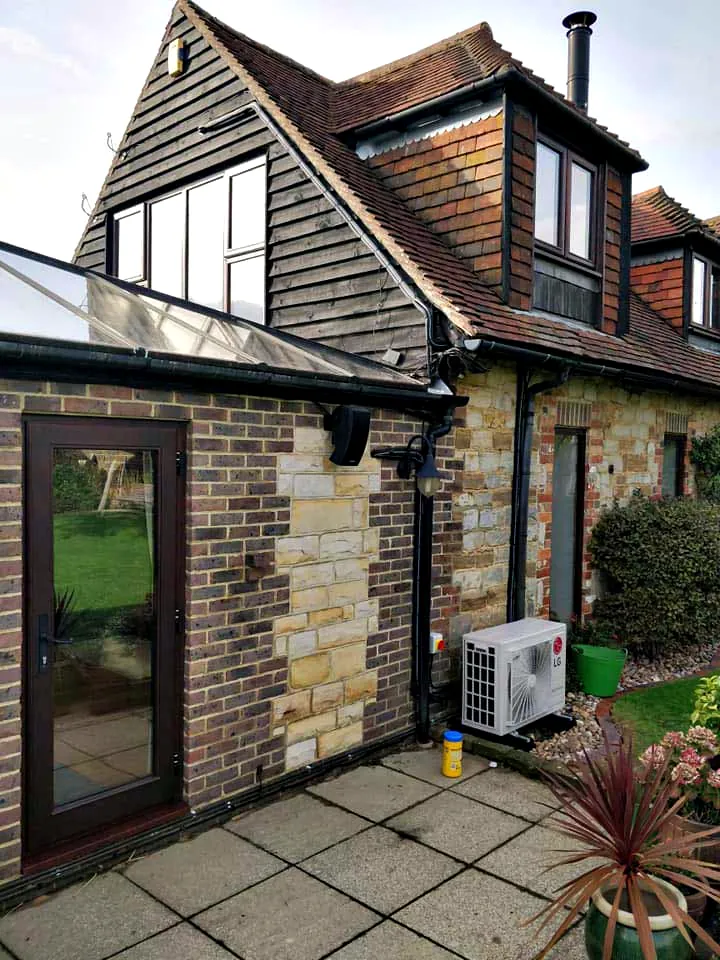
On the High Street, Quarry Street, Castle Street and the lanes off the High Street, timber framed buildings with narrow frontages and peg tiled roofs stand beside walls of Bargate stone, clunch, flint, painted render and brick, and some earlier frames were refaced in the 18th century to give a Georgian front. Many are listed and sit inside the Town Centre conservation area, so an outdoor unit or a new wall opening may need consent. Timber frames and lime rendered walls should not be cored through casually, so we usually run the pipework along internal routes to a rear yard or roof, out of sight of the street.
Cottages and Terraces South of Sydenham Road
Chiselden Road and Brodie Road step down the hill in pairs of cottages and short terraces behind small front gardens, built in red brick with knapped flint panels and Bargate stone under Welsh slate, while larger villas stand along South Hill. Solid brick and stone take a cored pipe hole well, but flint and Bargate stone need careful drilling and neat making good. These streets are inside the Town Centre conservation area, so a unit on a wall facing the road may need permission, and a side or rear garden is usually the simpler place for it.
Charlotteville
Begun in 1862 to Henry Peak's designs for Dr Thomas Sells, Charlotteville mixes artisan cottages with larger villas and includes Guildford's first council houses, in Cline Road. An Article 4 direction covers every property in the Charlotteville and Warren Road conservation area, so changes to elevations facing a road may need planning permission. With little side access to most of the terraced cottages, the outdoor unit usually goes in the rear garden or yard and the pipe run stays off the front.
The Abbotswood Garden Suburb
Abbotswood, off London Road about a mile north of the town centre, was begun in 1912 by the developer George Taylor with the architect Alfred Claude Burlingham: detached Arts and Crafts houses first, then smaller houses and bungalows after the First World War, along winding tree lined roads. Half timbering and tile hanging need a careful pipe exit, and the larger houses often have loft space for a hidden route. It is a conservation area, with an Article 4 direction on land fronting a highway or public open space, so outdoor units are best screened in rear gardens and any frontage work is checked with the council first.
Bridge Street and Walnut Tree Close
Three and four storey brick buildings line Bridge Street, Onslow Street, Walnut Tree Close and Bedford Road, built up to the back of the pavement after Onslow Bridge opened in 1882, among them the Rodboro Buildings of 1901, one of the first purpose built car factories. Premises here usually suit a roof or rear yard condenser with the pipework run inside, and because the street is a conservation area, plant on the frontage may need permission. With bars and clubs open well into the night, unit noise and siting deserve careful planning.
Is Your Guildford Home in a Conservation Area?
Guildford borough has 40 conservation areas, covering many parts of the town centre and many of the villages. Here are twelve in and around the town; choose one to see what it covers and what it means for an outdoor unit.
01 of 12 Historic Town Centre
Guildford Town Centre
For an Outdoor Unit
Many buildings here are listed, so an outdoor unit, a new wall opening or a pipe run through old walls may need consent. We look for an internal route to a rear yard or roof, and we check before we drill.
Where we look first A rear yard or a roof, out of sight of the street.
What It Covers
The historic town centre: Guildford Castle, the High Street, a residential suburb and a mixed commercial, residential and civic area up to London Road Station, bounded by the River Wey to the west.
Its Character
A hilly Saxon street plan with a steep High Street, a very varied mix of Bargate stone, clunch, flint, render and brick, and many listed buildings including a large number listed grade I or II*.
02 of 12 Brick Commercial Streets
Bridge Street
For an Outdoor Unit
Plant on a frontage may need permission here. A roof or rear yard condenser with the pipework run inside usually suits these buildings, and with bars open late nearby we plan its position and sound with care.
Where we look first A roof or a rear yard, with the pipework inside.
What It Covers
The area centred on Bridge Street, between Walnut Tree Close and Park Street to the west and Onslow Street to the east, straddling the River Wey; designated 6 February 2003.
Its Character
The hub of the town's late 19th and early 20th century commercial and industrial growth, with flat three and four storey brick elevations built to the back of the pavement.
03 of 12 Victorian Planned Suburb
Charlotteville and Warren Road
For an Outdoor Unit
An Article 4 direction covers every property, so a unit on an elevation facing a road may need planning permission. Most cottages have little side access, so the rear garden or yard is usually the place.
Where we look first The rear garden or yard.
What It Covers
The suburb around Addison Road, Cline Road, Harvey Road and Warren Road; designated 23 January 1990.
Its Character
A Victorian planned suburb begun in 1862 to Henry Peak’s designs for Dr Thomas Sells, mixing artisan cottages with larger villas, and including Guildford’s first council houses, in Cline Road.
Article 4 directions covering every property here were confirmed in 2005. On elevations facing a road, path or open space, they can bring changes to windows, doors, roofs and walls under planning control.
04 of 12 High Victorian Villas
Waterden Road
For an Outdoor Unit
An Article 4 direction covers every property here too, so a unit on an elevation facing a road may need planning permission. In these larger plots a rear or side wall out of view is usually simpler.
Where we look first A rear or side wall, out of view of the road.
What It Covers
The area immediately east of the town centre bounded by London Road, Lower Edgeborough Road, Harvey Road and Jenner Road; designated 18 April 1989 and extended in 2004 to take in the Sydney Road and Austen Road triangle.
Its Character
A largely High Victorian residential suburb of large townhouses and villas set in substantial plots.
Article 4 directions covering every property here were confirmed in 2005. On elevations facing a road, path or open space, they can bring changes to windows, doors, roofs and walls under planning control.
05 of 12 Arts and Crafts Garden Suburb
Abbotswood
For an Outdoor Unit
An Article 4 direction covers land fronting a highway or public open space, so an outdoor unit is best screened in the rear garden, and we check any frontage work with the council first.
Where we look first A screened spot in the rear garden.
What It Covers
The Abbotswood estate off London Road, about a mile north of the town centre; appraisal adopted 20 October 2011.
Its Character
A garden suburb begun in 1912 by the developer George Taylor with the architect Alfred Claude Burlingham: detached Arts and Crafts houses first, then smaller houses and bungalows after the First World War, along winding, tree lined roads.
An Article 4 direction here covers land fronting a highway or public open space.
06 of 12 Garden City Principles
Onslow Village
For an Outdoor Unit
A unit that can be seen from the street may need planning permission. On these houses a side or rear wall out of view is usually the simpler place, and we check with the council first.
Where we look first A side or rear wall, out of view.
What It Covers
The core of Onslow Village at the south western tip of the urban area, between the A3 and Farnham Road; designated 7 February 1990.
Its Character
A 1920s community built by the Onslow Village Association on Garden City principles, on the high ground of the Hog's Back.
07 of 12 Former Hamlet and Chapel
St Catherine's
For an Outdoor Unit
A unit seen from the road may need planning permission, and old timber framed walls should not be cored through casually. We plan an internal pipe route where we can, and we check before we drill.
Where we look first A side or rear wall, with the pipework inside.
What It Covers
The southern approach to Guildford between the River Wey and Guildown Road, Sandy Lane and Braboeuf Manor; first designated in 1969 and enlarged in 1991.
Its Character
A former hamlet that grew in the 19th century, with a 14th century chapel, 16th century timber framed houses and fashionable later houses by architects including Norman Shaw and Lutyens.
08 of 12 Standalone Riverside Buildings
Millmead and Portsmouth Road
For an Outdoor Unit
The character here rests on individual buildings, so we look at how a unit on yours would be seen from the street and the river before we suggest a position, and we check with the council first.
Where we look first A wall out of view of the street and the river.
What It Covers
Millmead, Bury Street and the lower end of Portsmouth Road, beside the town centre and the River Wey.
Its Character
An area of varying architectural styles whose significance comes from a number of standalone buildings rather than a uniform built form.
The council has not published a character appraisal for this area; the note above is from a council planning committee report.
09 of 12 Former Army Barracks
Stoughton Barracks
For an Outdoor Unit
The keep and its gateway are listed grade II, so work to them may need listed building consent as well. Elsewhere, a unit out of view of the street is the usual aim, and we check before we drill.
Where we look first A rear or side wall, away from the listed keep.
What It Covers
The former Stoughton Barracks in Stoughton, north Guildford.
Its Character
A former army barracks whose keep and attached gateway are listed grade II; no council appraisal has been published.
10 of 12 No Published Appraisal
Stoke Fields
For an Outdoor Unit
With no appraisal published, we ask the council what applies to your address before we fit anything, and until then we treat every wall facing the street as one that may need permission.
Where we look first Your address, checked with the council first.
What It Covers
The council lists Stoke Fields as one of the borough’s conservation areas but has not published a character appraisal for it, so we say no more about its character here.
11 of 12 Linear Waterway
Wey and Godalming Navigations
For an Outdoor Unit
A unit on a wall facing the river or its towpath may need planning permission. We look first at a wall on the far side from the water, out of view, and we check before we drill.
Where we look first A wall on the far side from the water.
What It Covers
The full length of the Wey and Godalming Navigations as they pass through the borough, including the river through the town.
Its Character
A linear waterway conservation area; the Navigation was created between 1651 and 1653 to give Guildford merchants a route to London, and was extended to Godalming in 1764.
12 of 12 Former Gunpowder Works
Chilworth
Chilworth Gunpowder Mills
For an Outdoor Unit
Much of the area lies within the Surrey Hills and the Green Belt, so an outdoor unit should sit low and out of view. We agree the position with the council before we fit anything.
Where we look first A low, screened spot out of view.
What It Covers
The former gunpowder works along the Tillingbourne valley and the New Cut leat, between Postford and Blacksmith Lane, south east of Guildford; appraisal approved 17 July 2008.
Its Character
A former gunpowder works whose ponds, leats and watercourses still shape the valley; much of it lies within the Surrey Hills and the Green Belt.
An Outdoor Unit in Any Conservation Area
In a conservation area, an outdoor unit that can be seen from the street may need planning permission, and on a listed building it may need listed building consent as well. Before we fit anything we check with the council (Guildford Borough Council, and West Surrey Council from 1 April 2027), and we look first at rear and side walls that cannot be seen from the road.
Not sure if you are in one? See the council’s conservation areas page, or ask us and we will check your address.
A guide drawn from the council’s published appraisals and records (the appraisals date from 2003 to 2017). The drawings show the kind of place, not your street. Boundaries can change, and the council’s decision on each address is what counts.
What We Fit in Guildford Homes and Businesses
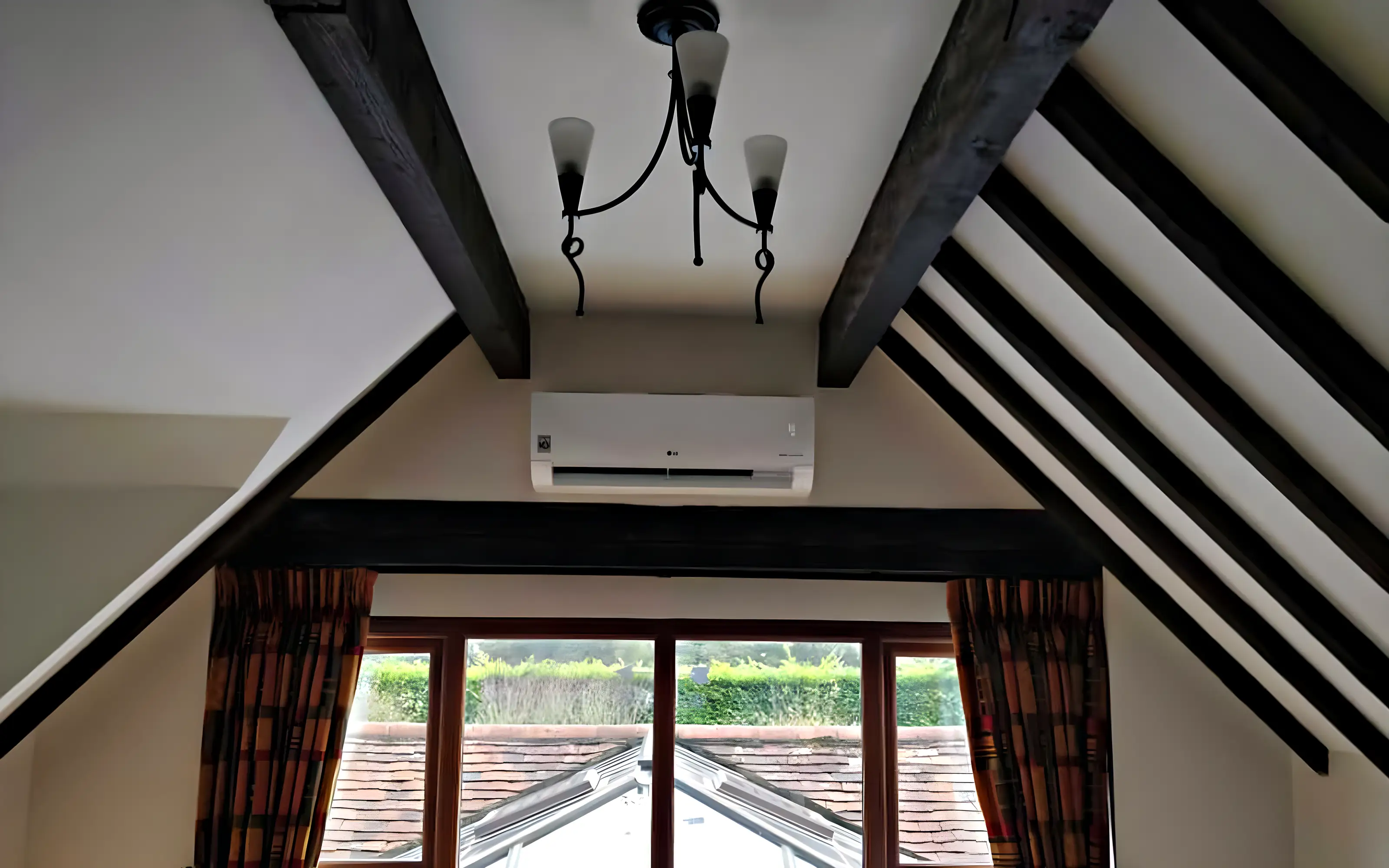
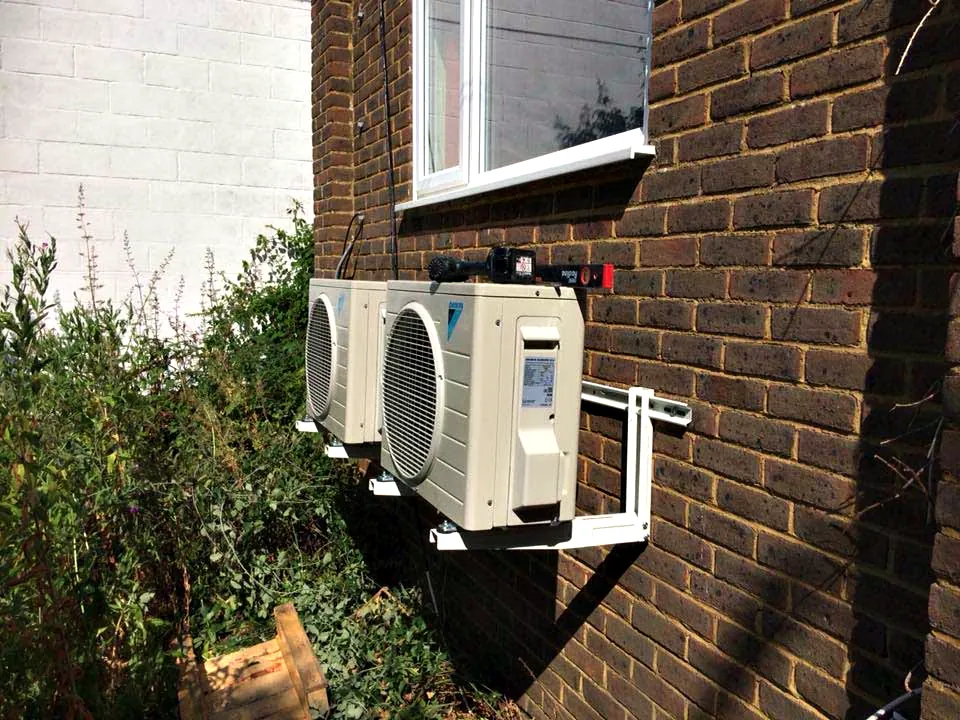
Most homes in Guildford are well served by a wall mounted split system: one indoor unit in a bedroom, living room or home office, joined to a compact outdoor unit by a pair of insulated copper pipes, a condensate drain and a cable. Where several rooms need cooling, a multi split runs a number of indoor units from a single outdoor unit, which keeps the equipment on the outside of the house to a minimum. That counts for as much in a Charlotteville terrace as it does behind a listed frontage.
For flats over shops, garden rooms and loft conversions, we decide first where the outdoor unit can go and then choose the indoor unit to suit, rather than the other way round. Ducted systems suit larger open rooms, ceiling cassettes are for offices and shops, and the systems we fit heat in winter as well as cool in summer. Our page on air conditioning installation explains how we survey, size, fit and commission each system.
We install Mitsubishi Heavy Industries, Mitsubishi Electric, Daikin, Fujitsu, GENERAL, Samsung and LG, and as a Mitsubishi Heavy Industries 3 Diamond Dealer we hold that manufacturer's top dealer level. Every quotation is free, follows a survey of the property and names the units it includes.
- Bedrooms and home offices in terraces and villas
- Flats above town centre shops
- Garden rooms and loft conversions
- Offices, shops, bars and restaurants
Planning, Listed Buildings and Conservation Areas in Guildford
Guildford Borough Council uses Article 4 directions in its conservation areas. On elevations facing a road, path or open space, they can bring changes to windows, doors, roofs and walls, and the installation of a satellite dish or antenna, under planning control. An outdoor unit on an elevation like that may need permission too, so on the front or side of a house in a conservation area we treat planning as a question to settle before the work, not after it.
The Town Centre conservation area is notable for its many listed buildings, a large number of them listed grade I or II*, and it contains two scheduled monuments: Guildford Castle with its gardens, and 72 and 74 High Street. For a listed building, an outdoor unit, a new wall opening or a pipe run through historic fabric may need listed building consent as well. We check before we drill, and where consent looks likely we tell you at the survey, so it can be sought before an installation date is fixed.
Other conservation areas around the town include Waterden Road, Onslow Village on the high ground of the Hog's Back, St Catherine's on the southern approach, Millmead and Portsmouth Road beside the river, Stoughton Barracks, and the Wey and Godalming Navigations, which follow the river through the town. Article 4 directions covering every property were confirmed in 2005 for both the Charlotteville and Warren Road and the Waterden Road conservation areas. Boundaries can change over time, so we confirm the current position with the council for each address.
Planning in Guildford is also changing hands. From 1 April 2027 a new West Surrey Council takes over from Guildford Borough Council as the planning authority, so we will confirm with whichever council is responsible at the time whether your installation needs an application. The town centre appraisal also records the Surrey Hills, now known as a National Landscape, and an Area of Great Landscape Value to the south along the North Downs, with Green Belt adjoining the conservation area off Quarry Street.
Commercial Air Conditioning in Guildford
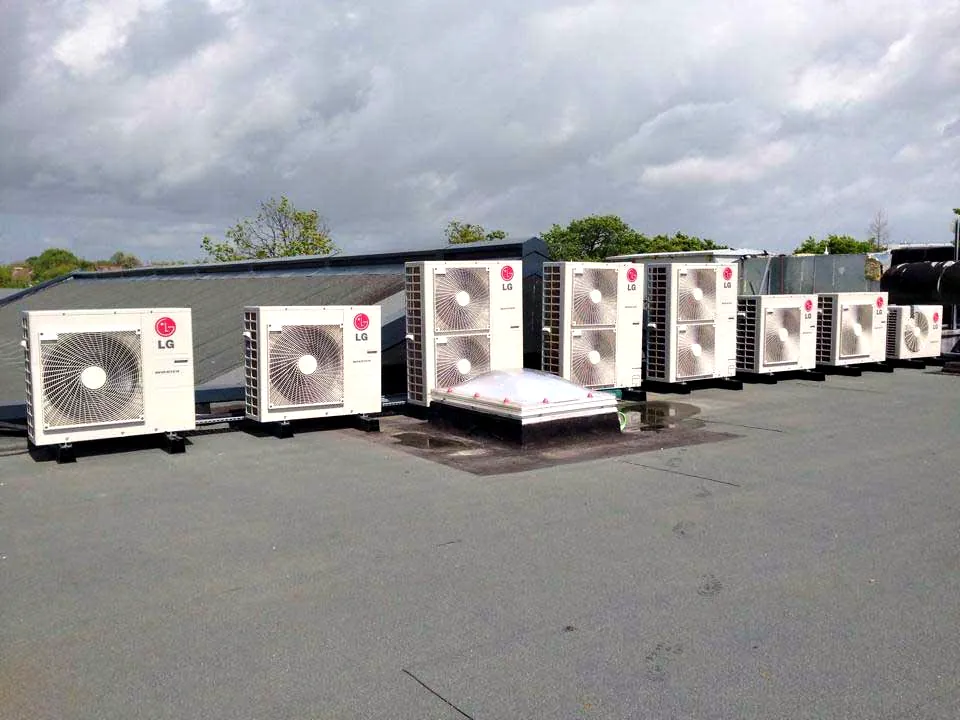
From the 1980s Guildford developed as an important sub regional shopping centre, helped by the Friary Centre, built in the mid 1970s. Shops, cafés and restaurants in the centre often trade from older buildings with little room at the front, so the plant usually goes on a rear roof or in a service yard, with the indoor units chosen to suit the shop floor. We schedule the work around your trading hours, before opening, after closing or in phases, so the doors can stay open.
Offices bring questions of their own. Quarry Street has a number of imposing listed buildings, and most of them have been converted into offices, where a ducted or cassette system has to be planned around historic ceilings and walls. Surrey Research Park, established in 1985 and owned and operated by the University of Surrey, provides offices for technology and research led companies in AI, space, life sciences, games and cybersecurity. Server and comms rooms in buildings like these need cooling that runs all year round, sized to the equipment rather than the floor area.
Around Bridge Street, bars and clubs keep the street busy well into the night, so the position and sound of an outdoor unit matter to neighbours as much as to the business. Our commercial air conditioning service covers design, installation and planned maintenance for offices, retail, hospitality, gyms, server rooms and industrial units.
Planned maintenance contracts include the F-Gas leak checks the law requires, and the interval for those is set by how many tonnes of CO2 equivalent the system holds. Anything from 5 to under 50 tonnes needs a check every 12 months, or every 24 months with automatic leak detection, and one holding 50 to under 500 tonnes needs a check every 6 months, or every 12 with leak detection. We keep the records for you.
Air Handling and Commercial Air Conditioning Servicing in Guildford
Office buildings of the size found on Surrey Research Park, and the listed buildings on Quarry Street now used as offices, often rely on an air handling unit to bring fresh air into rooms that cannot simply open a window. Air handling maintenance in Guildford keeps that supply steady, with the belts, bearings and motor checked before a fault shows up as a stuffy floor.
An older unit with a sound casing is a good candidate for air handling refurbishment in Guildford, rather than a replacement that needs a crane and a long shutdown. For shops around the Friary Centre and offices across GU1 to GU4, commercial AC servicing in Guildford can be booked alongside on a planned maintenance contract, with the F-Gas records kept together.
Visits and Servicing From Our Horsham Office
Guildford is about 16 miles from our office on Worthing Road, Horsham, in a straight line, and we cover every part of the town across the GU1, GU2, GU3 and GU4 postcode districts. Nicola arranges surveys from the office on 01403 733 492, and an engineer comes to look at the rooms, the walls and the outside space before anything is priced.
Once a system is in, regular servicing keeps it running properly and keeps the manufacturer warranty valid. On each air conditioning servicing visit we clean the filters and coils, clear the condensate drain, test the fans and electrics, check the refrigerant pressures and controls, and leave you a written record. We service and repair every major brand, so a system fitted by another installer is no obstacle.
If something stops working, ring the office during the day; for an emergency, or outside office hours, the engineers' mobile is 07802 418530. We also look after the towns around Guildford, including air conditioning in Godalming, to which the Wey Navigation was extended in 1764, as well as Cranleigh, Dorking and the villages in between.
Villages Around Guildford We Cover
We visit the villages around Guildford as readily as the town itself, and many have conservation areas of their own, so the same care over the outdoor unit applies.
- ShalfordGU4
Just south of Guildford, Shalford has had its own conservation area since 1973.
- ChilworthGU4
The conservation area at Chilworth traces the former gunpowder works along the Tillingbourne valley, and much of it lies within the Surrey Hills and the Green Belt.
- ComptonGU3
West of Guildford, Compton was designated in 1971 as one of the borough's earliest conservation areas.
- Wood Street VillageGU3
The council designated a conservation area at Wood Street Village in 1973.
- WorplesdonGU3
North of Guildford, Worplesdon has a conservation area that dates from 1973.
- East ClandonGU4
A village of largely medieval origin north of the A246, built up within the Hatchlands estate, East Clandon has many older timber framed houses around its 12th century church.
- West ClandonGU4
Next to East Clandon, West Clandon has had a conservation area since 1973.
- ShereGU5
Shere, a village of Saxon origin, grew along the Tillingbourne between the North Downs and the greensand hills of Hurtwood, and was bypassed in 1960.
- RipleyGU23
Six miles north east of Guildford, Ripley served as a coaching stop halfway between London and Portsmouth and is now bypassed by the modern A3.
- AlburyGU5
East of Guildford, Albury has a conservation area designated in 1989.
Our Services in Guildford
The same engineers on every job, from a single bedroom unit to a plant room.
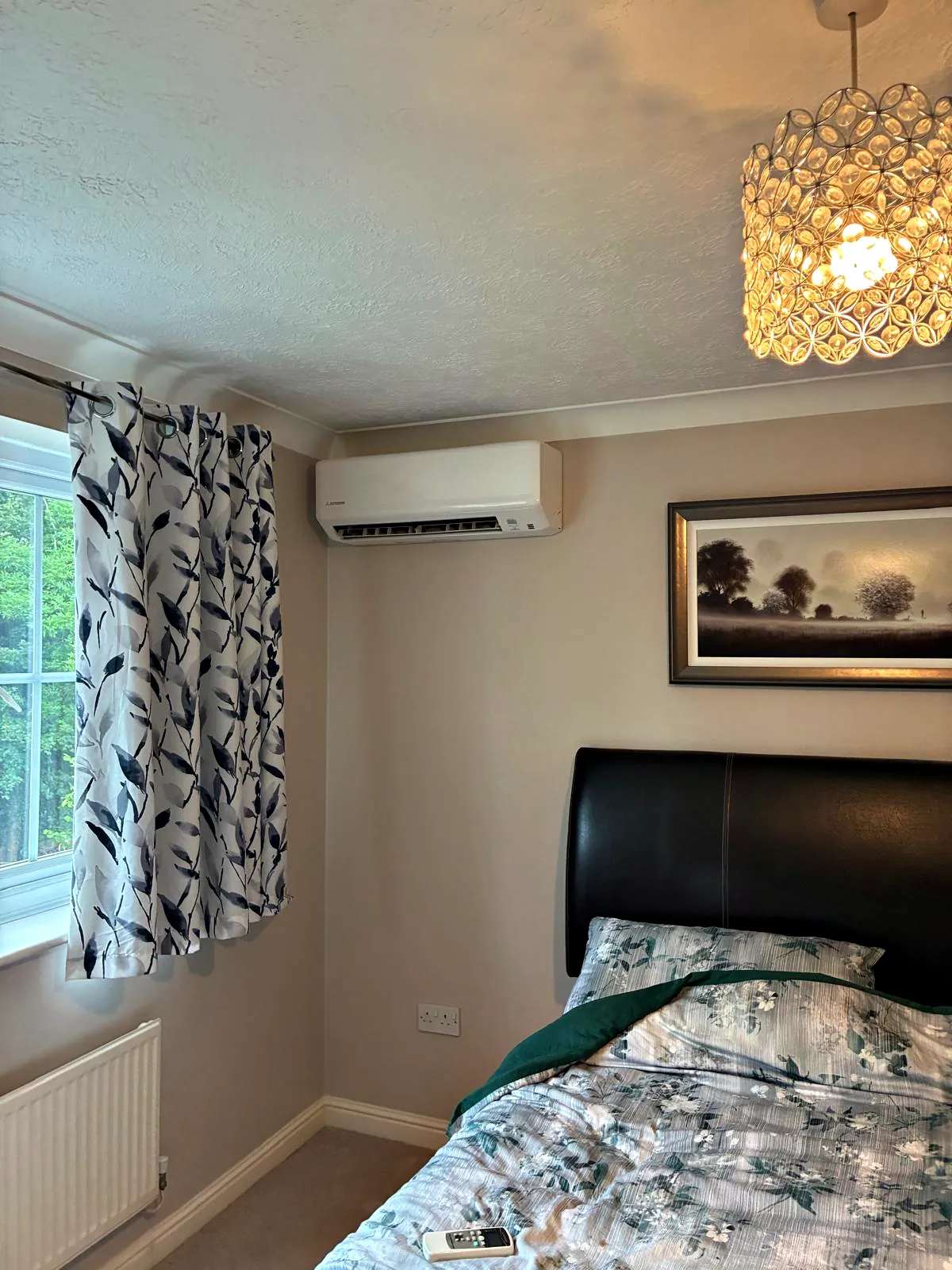
Domestic Air Conditioning Installation
Single split, multi split and ducted systems for houses, bungalows, park homes and garden rooms.
Explore →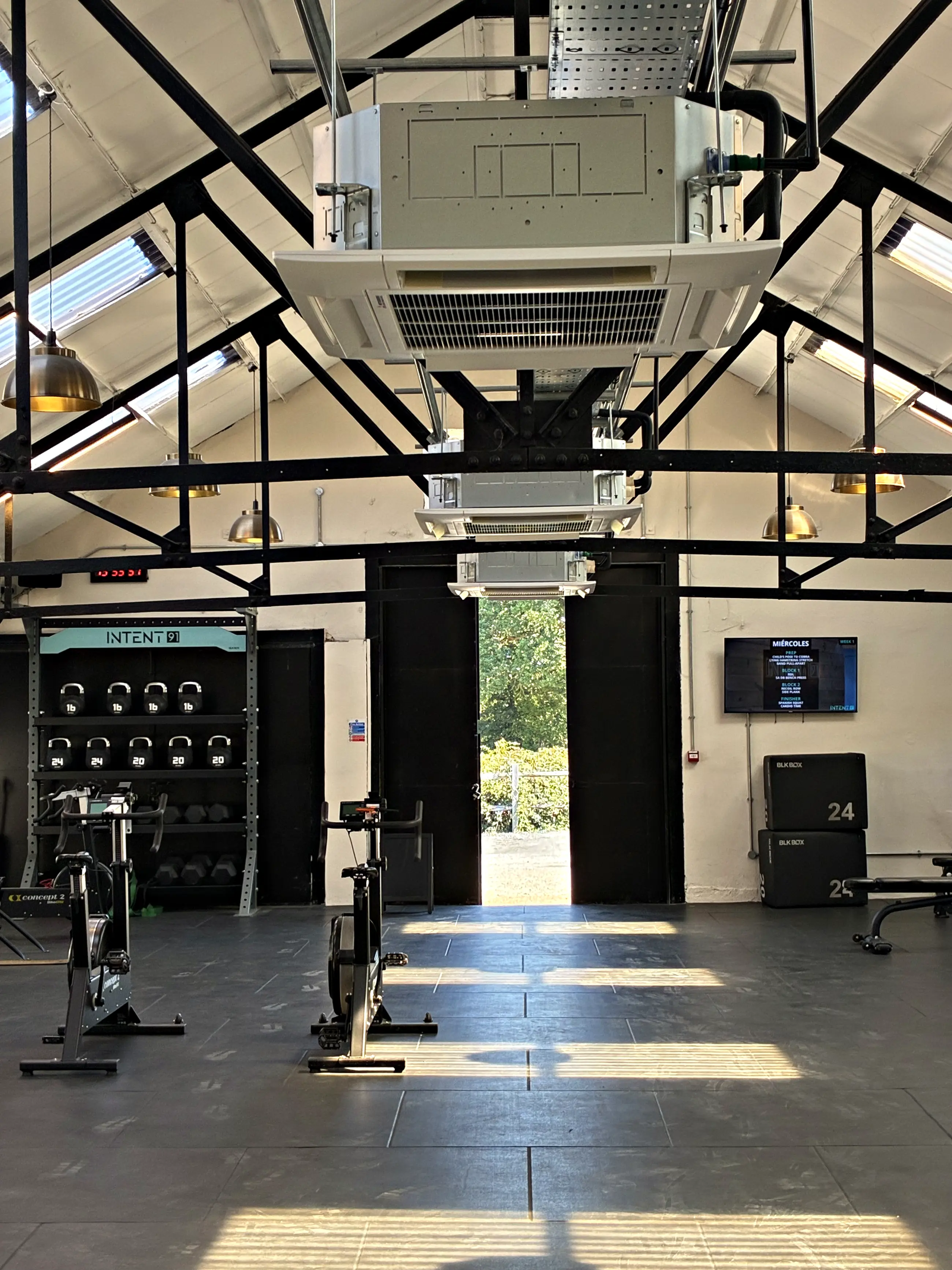
Commercial Air Conditioning
Design, installation and planned maintenance for offices, shops, bars, hospitality and industrial units.
Explore →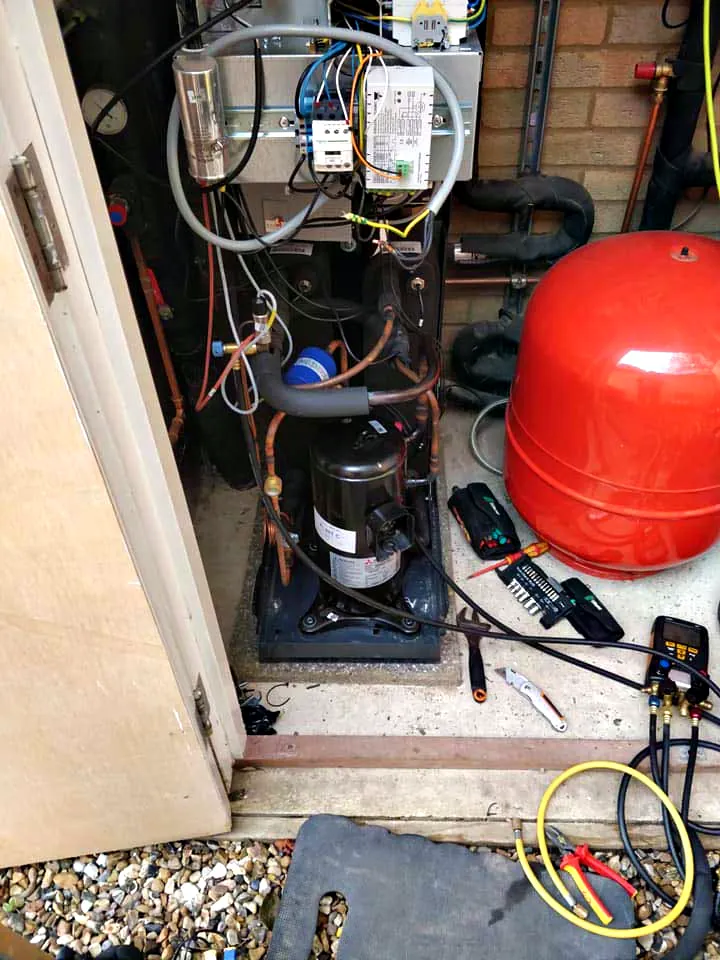
Air Conditioning Repairs
Fast diagnosis and repair on any major brand, priced before we start, genuine parts fitted.
Explore →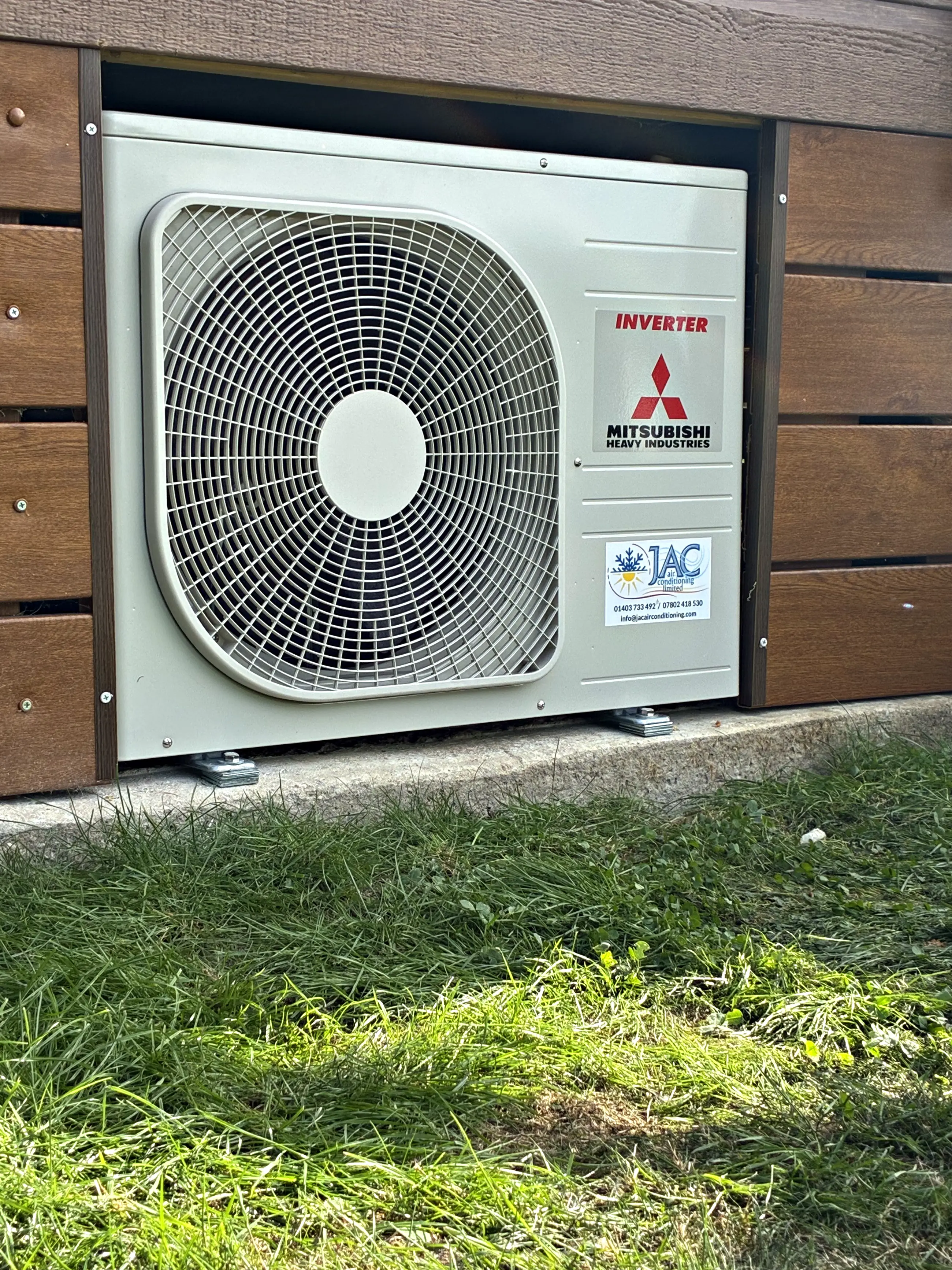
Air Conditioning Servicing
Filters, coils, drains, electrics and refrigerant, with a written record every visit.
Explore →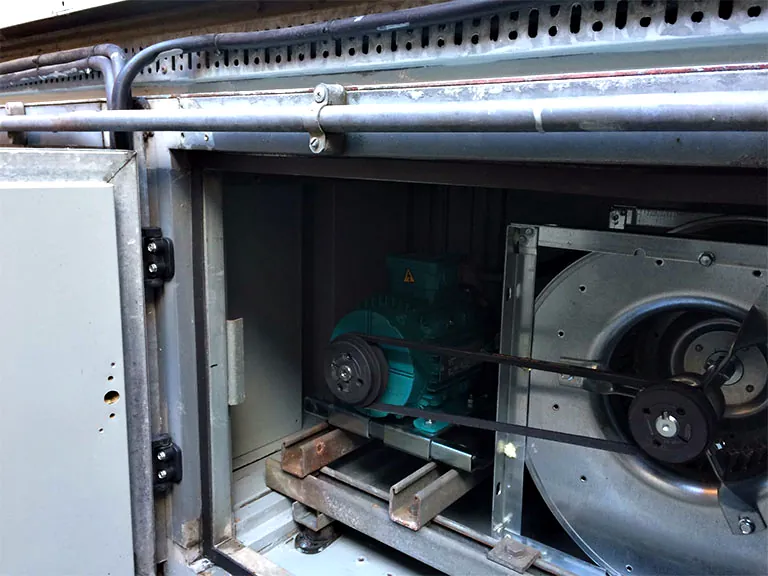
Planned Maintenance
PPM contracts for commercial sites, scheduled around your trading hours rather than ours.
Explore →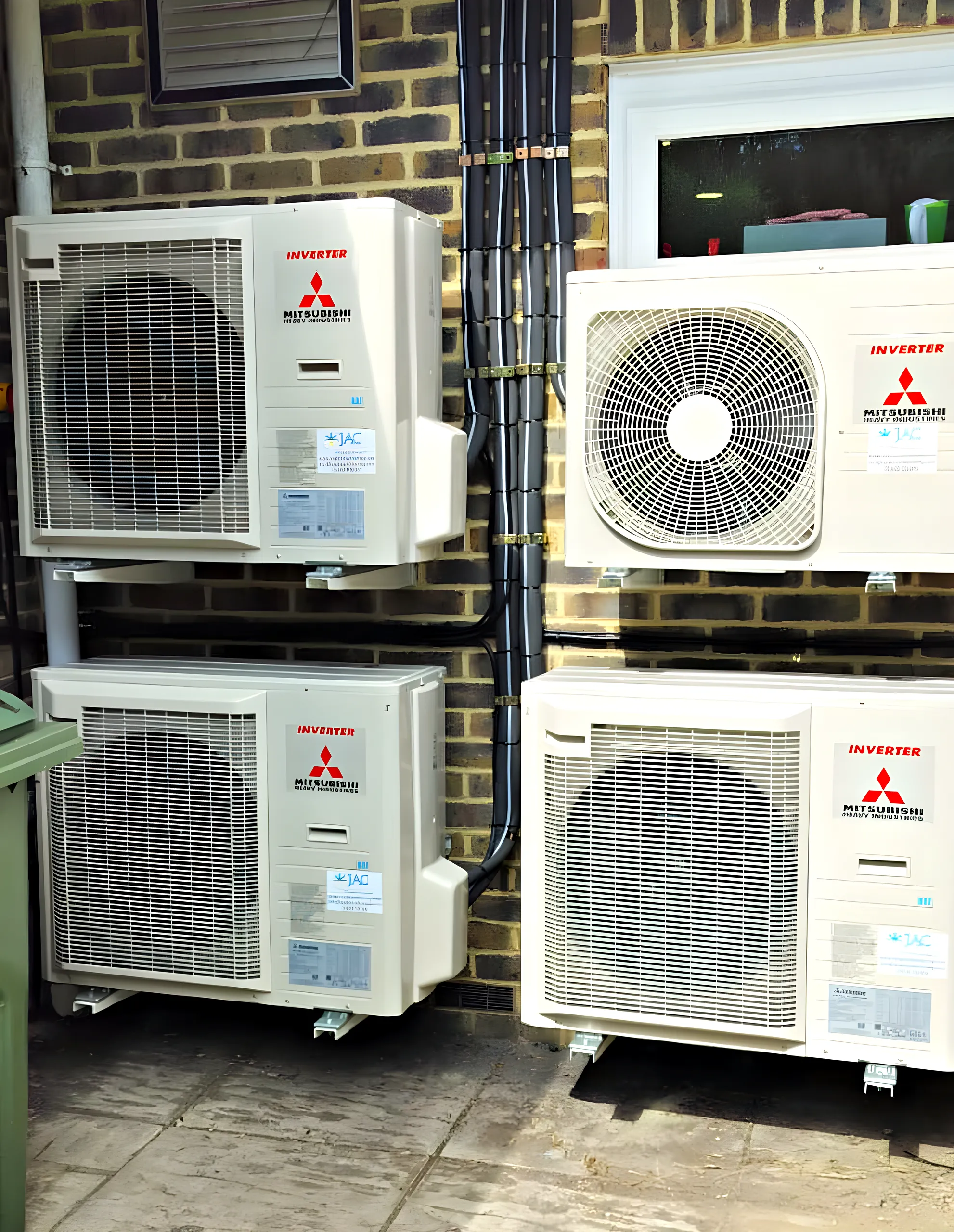
Specification Sheets
Download the data sheets for the Mitsubishi Heavy Industries and GENERAL systems we install.
Explore →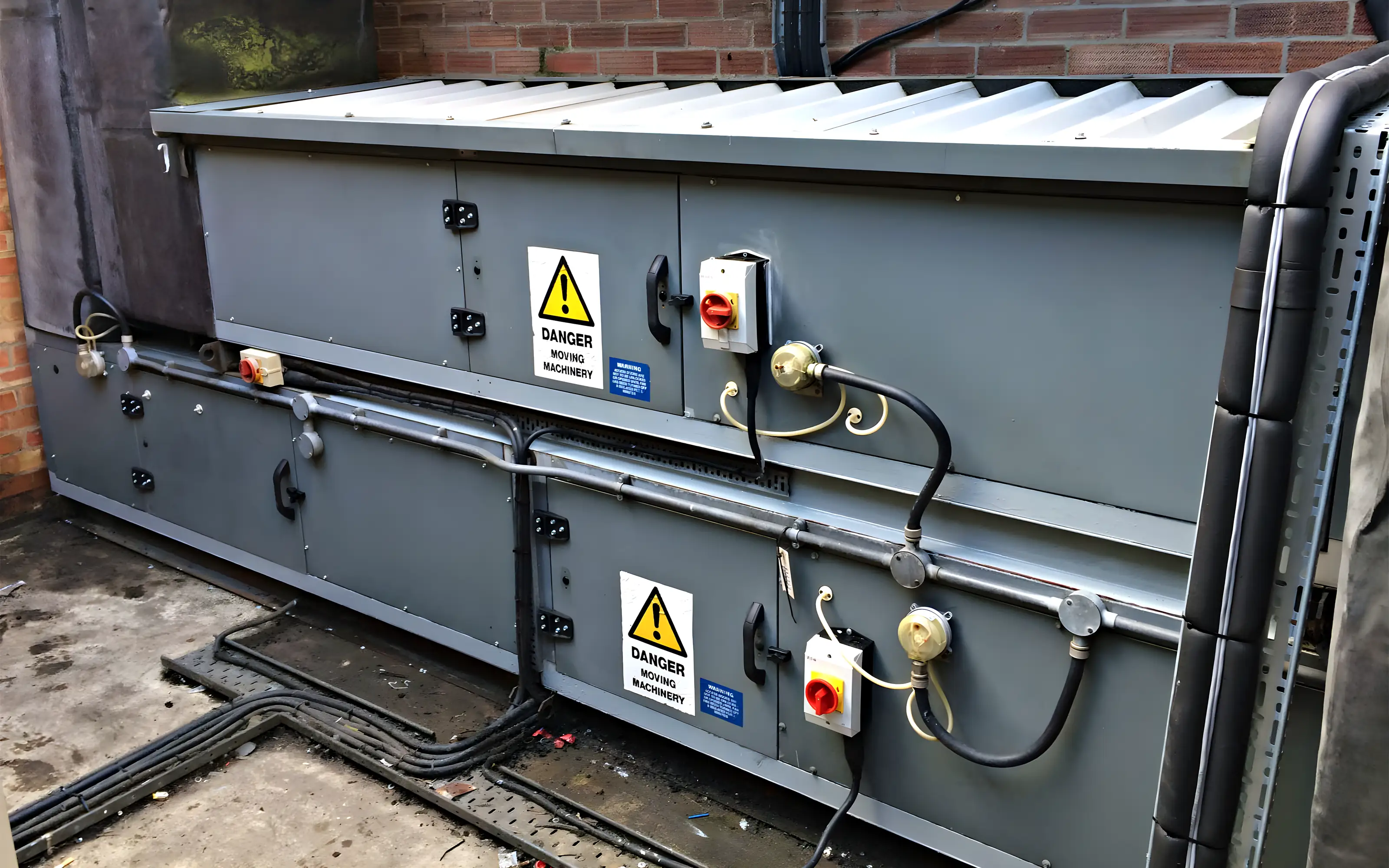
Air Handling
AHUs installed, maintained, repaired and refurbished. Filters, coils, fans, motors and dampers.
Explore →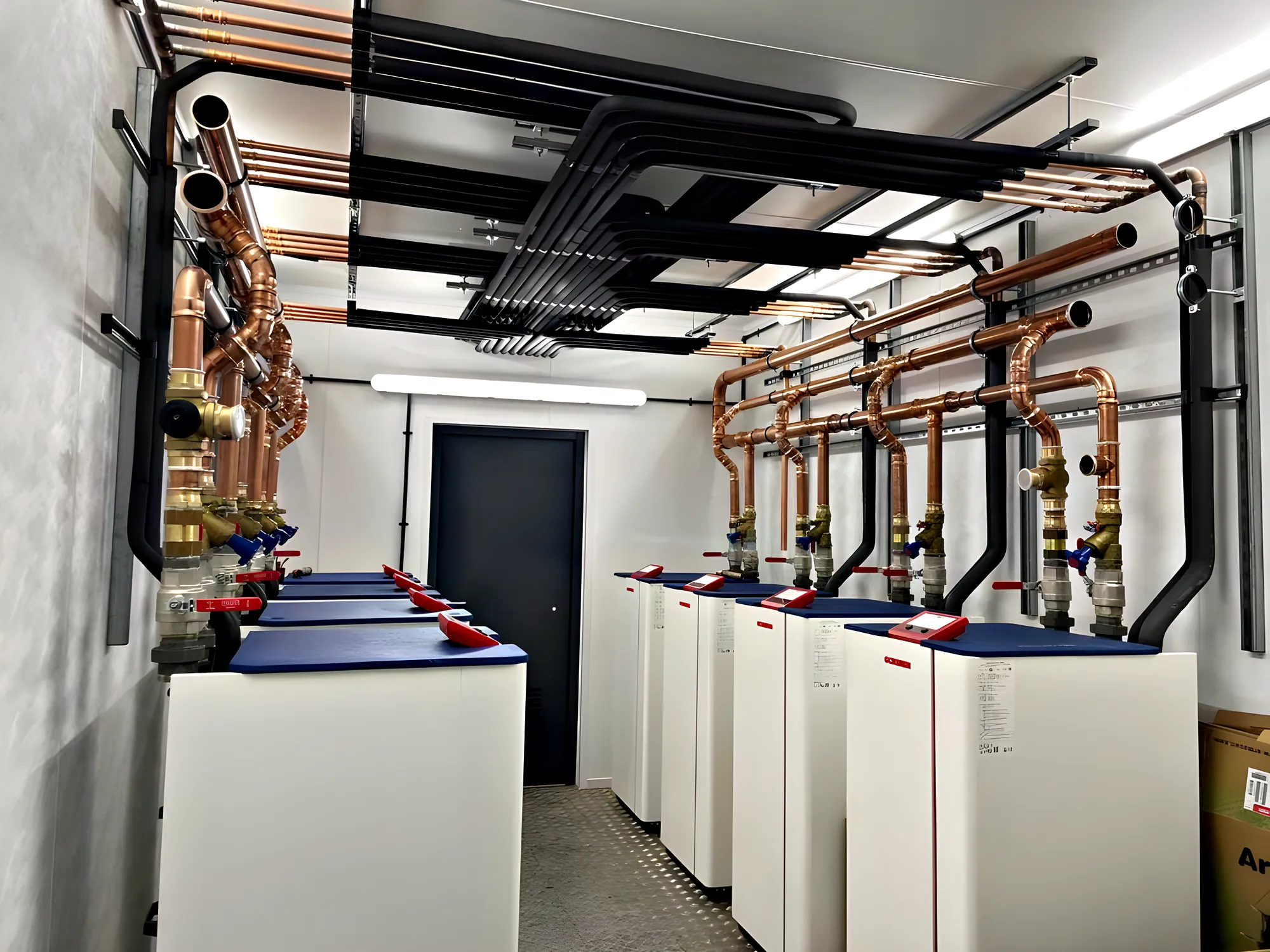
Mechanical Assembly
Pipework, manifolds, valves and plant room assembly, brazed, pressure tested and insulated.
Explore →Your Guildford Questions, Answered
Is planning permission needed for air conditioning in a Guildford conservation area?
The answer turns on the building and the wall you have in mind. Guildford Borough Council uses Article 4 directions in conservation areas, and these can bring changes to elevations facing a road, path or open space under planning control. A unit at the rear of a house is usually simpler, but one on a front or side wall may need permission. We check before we drill, and the survey is when we would raise it if an application looks likely.
My cottage is in Charlotteville. Can the outdoor unit go at the back?
In most cases the rear garden or yard is the right place. Every property in the Charlotteville and Warren Road conservation area is covered by an Article 4 direction, so a change to an elevation facing a road may need planning permission, and most of the cottages have little side access in any case. We keep the pipe run off the front of the house, take it inside where we can, and confirm the planning position with the council before installing.
Can you fit air conditioning in a listed building on the High Street?
Often, yes, though it takes more planning. Many High Street buildings are listed and inside the Town Centre conservation area, so an outdoor unit or a new hole through the wall may need consent. Timber frames and lime render should not be cored casually, so we look for an internal route to a rear yard or roof where the unit cannot be seen from the street, and agree the approach before anything is drilled.
Who will handle planning in Guildford after April 2027?
From 1 April 2027 a new West Surrey Council takes over from Guildford Borough Council as the planning authority. If your installation might need planning permission or listed building consent, we will tell you at the survey which council to approach at that point. The way we survey, quote and fit the system stays exactly the same; only the name on any application may be different.
Can you cool a server room in a Guildford office?
We can, and it is work we plan carefully. Server and comms rooms give off heat day and night, so they need a system designed to run all year and sized to the equipment rather than the floor area. We design, install and maintain this kind of cooling for offices, and in Guildford that can mean anything from a converted listed building in the town centre to a modern business unit, with the plant position planned to suit each one. We can also add it to a planned maintenance contract with the F-Gas leak checks recorded.
How far do your engineers travel to reach Guildford?
Guildford is about 16 miles from our Horsham office in a straight line. We cover the whole town and the GU1 to GU4 postcode districts, along with villages such as Shalford, Shere and Ripley. The office on 01403 733 492 books surveys, installations and servicing, while emergencies and out of hours calls go to the engineers on 07802 418530.
We Also Work Nearby
Book a Survey in Guildford
Tell us which rooms you would like to cool or heat, what kind of building it is and where you think an outdoor unit could go, and we will book a survey on a day and at a time to fit around you. The quotation that follows is free, written and names the units, with no obligation. Phone us on 01403 733 492, email info@jacairconditioning.com, or pass the details on through our contact page.